
 Posted by
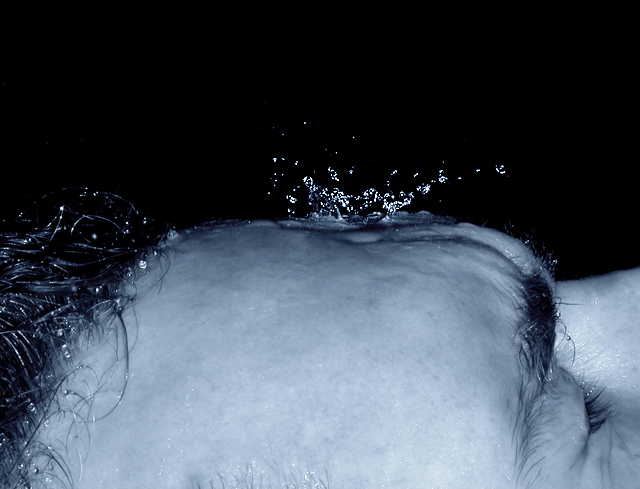
Chinese water torture consists of dripping cold water onto the forehead of an immobilized prisoner, for hours or days. It doesn’t bore a hole in the skull, but the immobility, sleeplessness and cold make it devastating. Despite its name it isn’t Chinese: it was first described by Ippolito de’ Marsili of Bologna in the 15th century, and the name probably comes from a Houdini act.
The most famous Chinese torture is perhaps the water torture, which is widely described in various books and used in many stories. The first one to describe it, and perhaps to invent it, was the Italian Ippolito de’ Marsili who was born in Bologna in 1450.
Method of execution
The prisoner is tied to a chair and immobilized. From a certain height a drop of cold wateris dropped on the victim’shead, continuously, always in the same spot and for an extended period of time. The best place to get results, however, is the forehead because it is a very sensitive point. This was achieved by immobilizing the prisoner in a sitting position, pulling his head back and keeping it steady.
It is said that in the long run the drops cause insanity and drill into the skull to form a hole.
But is it really so? Scholars have analysed the phenomenon, trying to figure out if this form of torture could actually create such damage.
Actually be subjected to this type of torture causes devastating effects.
The skull is not perforated, in order to dig a hole it would take thousands of years, but the fact of being immobilized for prolonged periods of time is already a torture in itself, also currently used. The drop of water falling rhythmically, then, prevents the prisoner from relaxing and sleeping, and in the long run it would cause the body temperature to drop. The forced position causes circulation problems and muscle pain, while the cold water causes chills. The combination of these elements can eventually cause the death of the victim, if the torture goes on long enough.
In 2007 the drip torture was also put to the test by the TV show MythBusters. The hosts found that the drops alone, on someone free to move, didn’t cause much distress. But when the volunteer, Kari Byron, was strapped down and immobilised, after a while she panicked and asked to stop the experiment. Their conclusion was that the torture “works”, but the real torment isn’t so much the drop as being held down, unable to do anything.
Origin of the name
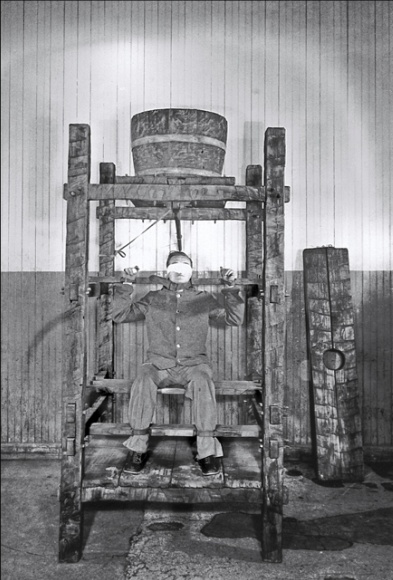
It is thought that the inventor of this torture was Ippolito de’ Marsili, an Italian scholar who lived in 1450. In an essay he wrote how the idea had come to him by looking at a drop of water which, over time, had managed to bore a hole into hard rock.
“But Lilith, why is it called Chinese torture then?”
The modern name is probably due to the “Chinese water torture cell” that is a rectangular and vertical tank filled with water, used by magicians such as Houdini for escape acts. The first one was built in 1911.
Houdini first performed the act in Berlin in 1912. He was lowered upside down into the water-filled tank with his ankles locked in place, and freed himself within minutes behind a curtain. It was one of his most famous and dangerous stunts. By the way, it isn’t true that Houdini drowned in the cell, as the 1953 film starring Tony Curtis suggests: he died in 1926 of peritonitis, after his appendix ruptured.
Part of the name may also go back to the novels of British writer Sax Rohmer who, in the 30s wrote about an evil Chinese criminal calledFuManchu, who always obsessed over torturing his enemies.
An interesting story, don’t you think? Part legend and part reality, this torture is surely one of the most famous in the collective imagination.
🦋 Emadion lives through its readers. If this story kept you up at night, buy me a coffee: it helps me bring you the next nightmare.
☕ Support Emadion on Ko-fi


hey
Hey