
 Posted by
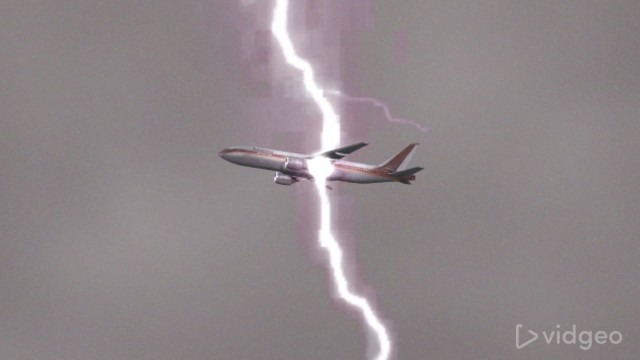
On December 24, 1971 LANSA Flight 508, struck by lightning, broke apart in mid-air over the Peruvian Amazon. Juliane Koepcke, 17, fell about 3,000 meters strapped to her seat and survived. For 11 days she walked alone through the forest following a stream, until she found a loggers’ shelter. She was the only survivor of the 92 people on board. Today she is a biologist specializing in bats.
Juliane Koepcke is a German-Peruvian biologist who in 1971, at just 17, survived a plane crash in the Peruvian rainforest, after a fall of about 3,000 meters.
The crash
Juliane was born in Lima on October 10, 1954, the only child of two German zoologists who had emigrated to Peru, Maria and Hans-Wilhelm Koepcke. At 14 she moved with her parents into the Amazon rainforest, where they founded the Panguana research station, and there her father taught her how to survive in the jungle.
On December 23, 1971 Juliane graduated in Lima. Her mother would have liked to leave earlier, but she insisted on attending the ceremony, so they booked a flight for Christmas Eve. All flights were full except one with LANSA, an airline with a very poor reputation that her father had urged them to avoid.
On December 24, 1971 Juliane and her mother boarded LANSA Flight 508 from Lima to Pucallpa. During the flight the plane entered a violent thunderstorm and lightning struck the right wing. A fire broke out and the plane broke apart in mid-air.
Juliane found herself falling, still strapped to her row of seats, from about 3,000 meters. When she hit the ground, in the forest, she had a concussion, a broken collarbone, a deep cut on her right arm, an eye injury and a torn knee ligament. But she was alive.
She searched for her mother and the other passengers, without success. All she found was a bag of sweets, which would be her only food for days.
Surviving in the forest
She then found a small stream and, following her father’s teachings, followed the current: a stream leads to a river, and along rivers sooner or later you find people. So she began walking in the water, sometimes letting the current carry her.
At night it was almost impossible to sleep because of insect bites. The wound on her arm became infected and filled with fly larvae.
After nine days she saw a boat tied up near a hut, with a can of gasoline next to it.
Remembering her father’s advice she poured the gasoline on the wound, to drive out the larvae. According to her account, dozens of them came out of her arm.
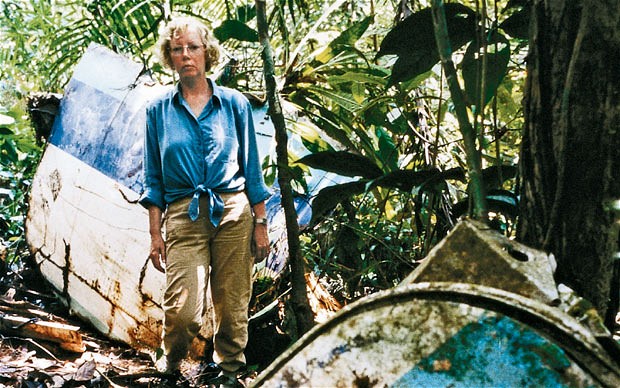
Juliane didn’t want to steal the boat, which belonged to someone else, and decided to wait. A few hours later the loggers who used the hut as a shelter came back. They treated her wound and took her by canoe, on an 11-hour journey, to a more inhabited area, from where she was flown to hospital. She had spent 11 days alone in the jungle.
How did she survive the fall?
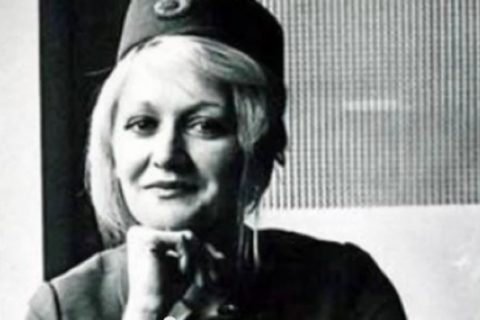
As in the case of Vesna Vulović, many have wondered how anyone can survive a fall from a plane. In Juliane’s case several factors were in her favor:
- she remained strapped to her seat, which was vital
- she was in the window seat, in a row of three that stayed together: according to experts the row of seats acted as a kind of parachute or rotor, slowing her fall
- the updrafts of the thunderstorm may have slowed her further
- the dense vegetation of the forest cushioned the impact
Her father’s survival advice was also essential, making her follow the stream instead of wandering through the forest.
The saddest thing is that, as was discovered later, at least 14 other passengers had survived the fall but died waiting for rescue.
Juliane Koepcke today
After recovering, Juliane helped search teams find the wreckage. Her mother’s body was found on January 12, 1972. Juliane was the only survivor of the 92 people on board.
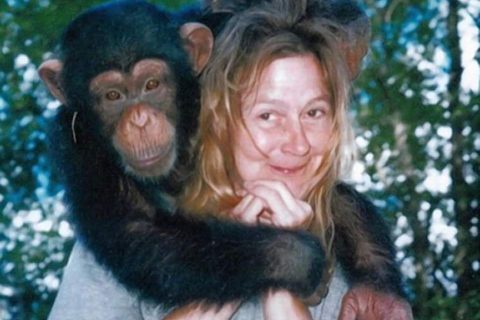
Back in Germany, she studied biology like her parents and specialized in bats. In 1989 she married entomologist Erich Diller and since 2000, after her father’s death, she has run the Panguana research station. In 2011 she published her autobiography, “When I Fell from the Sky”, and in 2019 the Peruvian government awarded her the Order of Merit. In a 2010 interview she said:
I had nightmares for a long time, for years, and of course the grief about my mother’s death and that of the other people came back again and again. The question “Why was I the only survivor?” haunts me. It always will.
Her story has inspired films and documentaries, including “Miracles Still Happen”, a heavily fictionalized Italian film from 1974, and the documentary “Wings of Hope” (1998) by Werner Herzog. Herzog had a personal reason for telling it: he too was supposed to take that flight, but changed his plans at the last minute.
🦋 Emadion lives through its readers. If this story kept you up at night, buy me a coffee: it helps me bring you the next nightmare.
☕ Support Emadion on Ko-fi

Inspireing