 Posted by
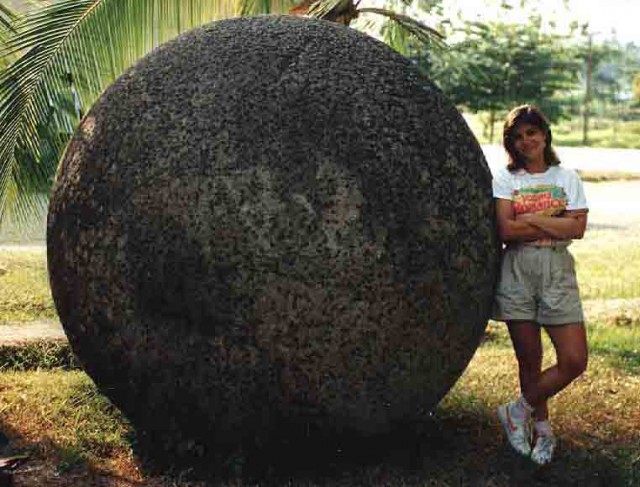
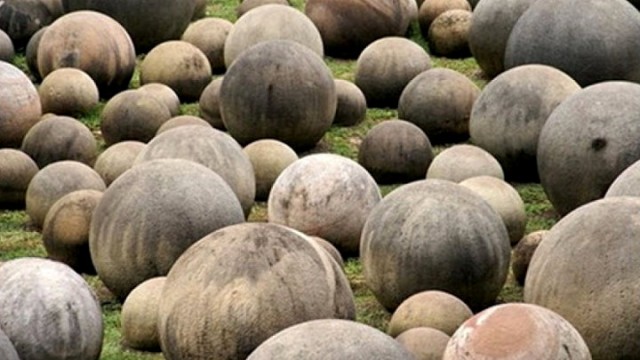
In Costa Rica, in the Diquís Delta and on Isla del Caño, there are more than 300 stone spheres, some perfectly round, reaching over 2 meters in diameter and 15 tons in weight. They were carved by the Diquís culture roughly between 600 and 1500 AD and discovered in the 1930s. Their meaning remains a mystery. Since 2014 they have been a UNESCO World Heritage Site.
In Costa Rica there are more than three hundred stone spheres, concentrated on Isla del Caño and in the Diquís Delta. Locally they are simply known as “Las Bolas” (the balls) and are thought to have been created by the now extinct Diquís culture.
These spheres arouse a lot of curiosity, and many people claim the Diquís civilization had advanced knowledge that allowed it to work stone so precisely.
The stone spheres of Costa Rica
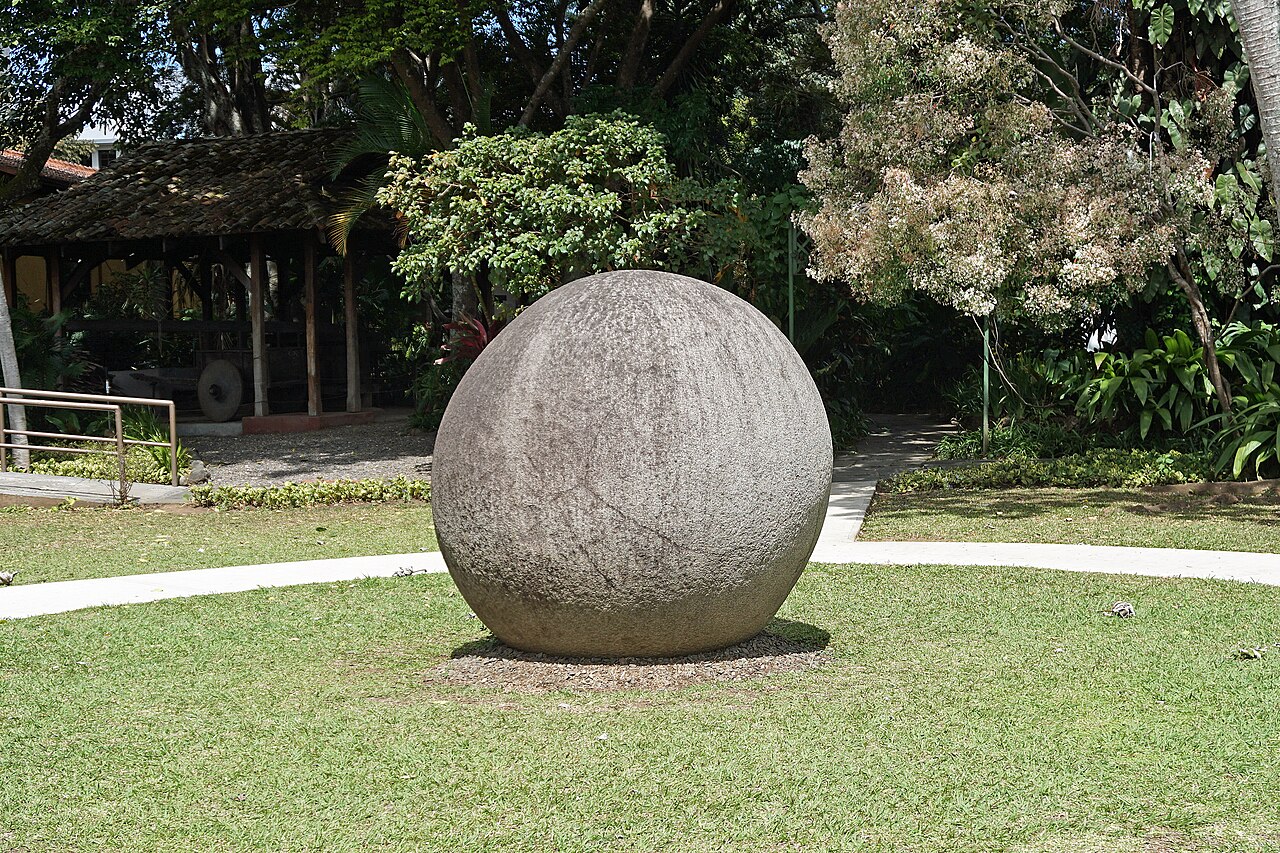
The spheres vary greatly in size: from a few centimeters in diameter to over two meters. The largest weigh as much as 15 tons.
They were carved mainly from gabbro, an igneous rock, but a dozen are made of shell-rich limestone and another dozen of sandstone. They appear to have been made by hammering natural boulders with other rocks to round them off, and then polishing them with sand.
The precision of many spheres is astonishing, and some suggest the Diquís civilization knew how to soften stone to give it the desired shape.
It isn’t the first time the precision of ancient civilizations has amazed people: think of of the Ollantaytambo buildings: , where it was also suggested that the ancient inhabitants could liquefy stone. In reality the degree of precision of the spheres varies a lot: some are almost perfect, others much less so.
The gabbro was taken from quarries in the hills, a few kilometers from where the spheres were found, and some unfinished spheres have also been found there.
Discovery
The first spheres were found in the 1930s, when the United Fruit Company was clearing the jungle for banana plantations. Workers pushed them aside with bulldozers, damaging some.
Soon a rumor spread that gold was hidden inside them, so workers began drilling them and blowing them up with dynamite.
Sadly many spheres were destroyed this way before the authorities stepped in. Some of the dynamited ones have been reassembled and are on display at the National Museum in San José, while many others ended up as garden decorations. The first scientific study was carried out by Doris Stone, daughter of a United Fruit executive, and published in 1943.
Dating and meaning
The first spheres are thought to have been created around 600 AD and most after 1000, but before the Spanish conquest. They are hard to date precisely, because the only possible method is to look at the layers of soil they lie in, and almost all have been moved from their original location.
Scholars believe they were placed in lines along the paths leading to the chiefs’ houses, but their exact meaning is still unclear.
According to some archaeologists they may represent the sun and the moon in their different phases. Others think they were made with advanced techniques unknown to us, and some even by the mysterious civilization of Atlantis.
In June 2014 the pre-Columbian chiefdom settlements with stone spheres of the Diquís were added to the UNESCO World Heritage list, and the same year the spheres were declared a national symbol of Costa Rica.
How do you think they were created, and by whom?
🦋 Emadion lives through its readers. If this story kept you up at night, buy me a coffee: it helps me bring you the next nightmare.
☕ Support Emadion on Ko-fi