 Posted by
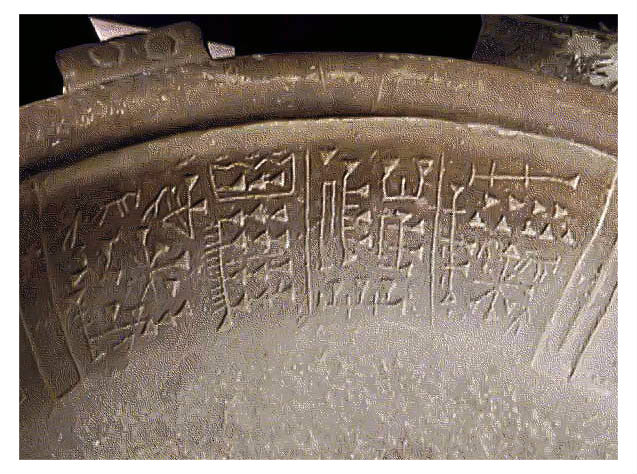
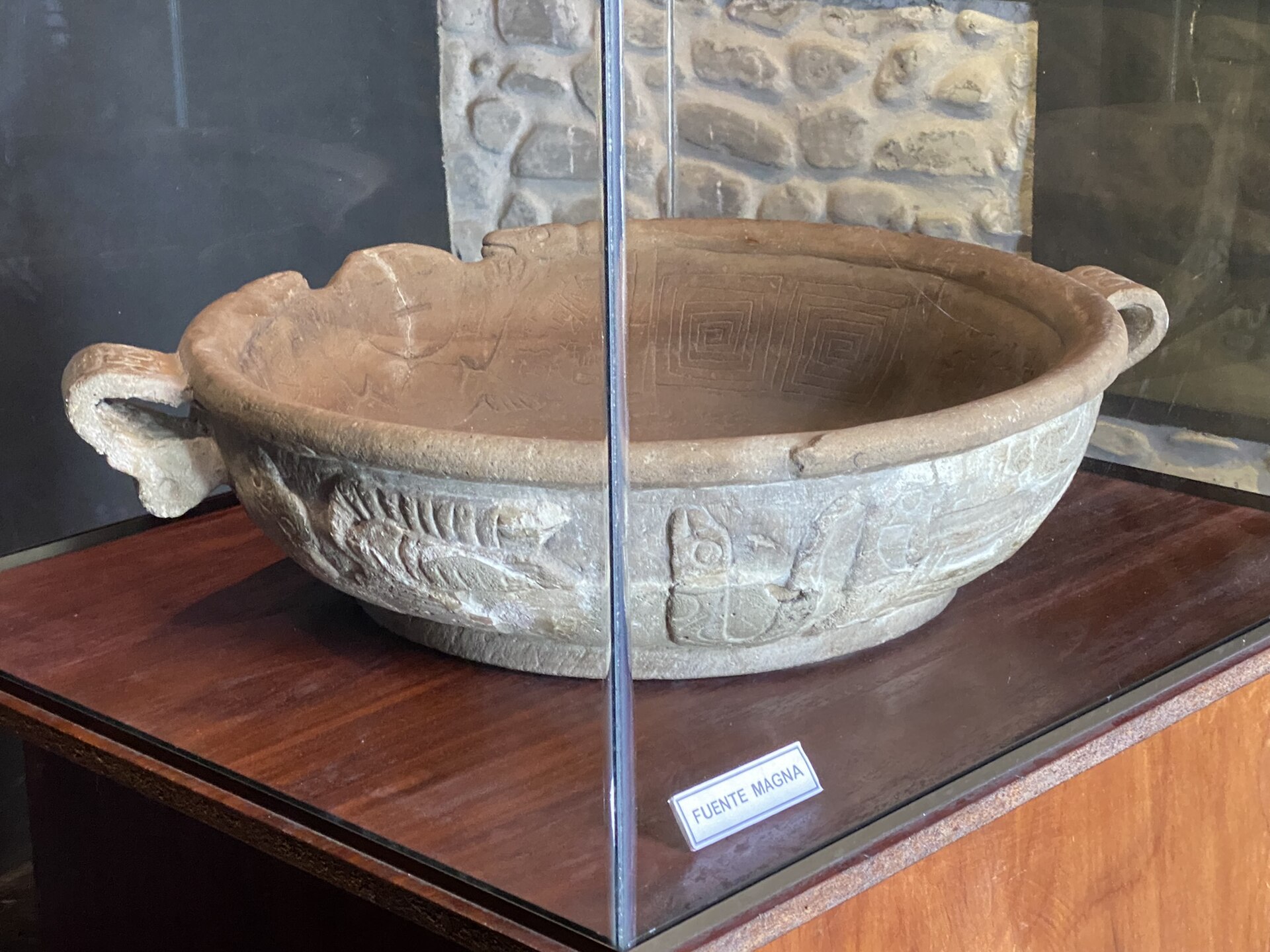
- What it is: a large stone bowl, similar to a libation vessel, with engravings that resemble cuneiform writing.
- Where it was found: near Chua, on the shores of Lake Titicaca, Bolivia, around 1950.
- Where it is: at the Museo de Metales Preciosos on calle Jaén, La Paz.
- Date: unknown; it has never been scientifically dated.
- According to experts: the inscriptions are not real cuneiform and the bowl is probably a fake or a local object.
Fuente Magna is the name given to a large bowl found around 1950 in Bolivia, unusual because it bears inscriptions resembling a cuneiform script alongside signs that seem to belong to a local language, and drawings of animals typical of the Americas. In the centre, on the inside, a face is carved.
It would be an extremely important find, since it could prove links between the Sumerians and the peoples of pre-Columbian America. That is why it has been nicknamed the “Rosetta Stone of the Americas”.
The discovery
The bowl was found by chance by a farmer while working a field near Chua, about 70 kilometres from La Paz, on the shores of Lake Titicaca, on an estate said to belong to the Manjón family. The owner then reportedly gave it to the city of La Paz in 1960, according to some versions in exchange for new land.
Word of the find began to spread and reached a Bolivian archaeologist, Max Portugal Zamora, who decided to go and study it.
He tried to translate the inscriptions but, unfortunately, without success. The bowl thus remained in the “Museo de Metales Preciosos” for several years, until two other researchers, Bernardo Biados and Freddy Arce, decided to study it in turn.
They went to the area and began looking for information on the find. They were put in touch with Maximilian, a 92-year-old man who recognised the photo of the bowl. Maximilian said he had used the bowl as a trough to feed the pigs, but they learned nothing more.
The translation
The two researchers then sent photos of the find to another scholar, Clyde Ahmed Winters, hoping he could decipher the cuneiform inscriptions. Winters said he had succeeded, but we don’t know for sure whether his translation is correct.
In any case, according to him the language would be proto-Sumerian, dating back about 5,000 years. In his translation, Winters says the bowl was used for libations in rites for the goddess Nia.
Would this mean the Sumerians reached the Americas 5,000 years ago? It would explain the bowl, but not only that: according to supporters of this theory, the local language, Aymara, also shows many similarities with Sumerian.
The sceptics
As with all great discoveries there are sceptics, and in this case they are the vast majority of experts. Winters’ interpretations have never been accepted by specialists in the ancient Near East.
Archaeologists consulted in the United States, Germany and Israel, including Sumerian scholar James Ritter, concluded that the signs are not real cuneiform writing and were engraved after the discovery. The wedges point the wrong way, those that look right are upside down, almost none of the signs appear in any known sign list, and there are symbols mixed in that have nothing to do with cuneiform.
Archaeologist Keith Fitzpatrick-Matthews wrote that the inscriptions look as if they were made by someone who had seen a cuneiform text and was trying to copy it onto a surface they didn’t know how to work: in short, a fake. Historian Alexander H. Joffe suggested the signs are simply geometric decoration or meaningless imitation, and that the face inside looks more like the style of the local Tiwanaku culture, which flourished between 200 and 1000 AD.
Then there is the problem of provenance: researchers found no trace of the estate or of the Manjón family in local property records, and the bowl, being stone and lacking an excavation context, cannot be dated. Finally, the proposed translations change from one author to another and often contradict each other, even though Sumerian is a well-understood language.
After all, the Sumerians were skilled sailors and they certainly traded by sea with the Indus Valley, which they called Meluhha. From there to sailing around Africa and crossing the Atlantic, or the Pacific, however, is a long way, and so far there is no concrete evidence of contact between the Sumerians and the New World.
Could some of them really have reached the new continent, influencing local languages and religions? For many, this bowl would seem to prove it. For archaeologists, it is just an unconvincing imitation. The choice is yours.
🦋 Emadion lives through its readers. If this story kept you up at night, buy me a coffee: it helps me bring you the next nightmare.
☕ Support Emadion on Ko-fi