 Posted by
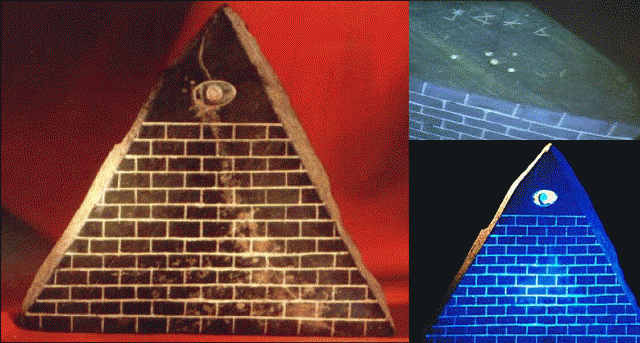
- What it is: a pyramid-shaped stone, about 25 centimetres tall, with a raised eye on top.
- Where and when: in La Maná, Ecuador, in 1984, according to those who made it famous.
- What’s special: it glows under ultraviolet light and its base reportedly bears the stars of Orion’s belt and an inscription.
- Who made it famous: Austrian exhibition curator Klaus Dona.
- Scientific studies: none; neither the find context nor a date is known.
One of the most discussed mysteries of recent decades is surely the so-called black pyramid. The pyramid-shaped stone, 25 centimetres tall, was reportedly found together with other artefacts in La Maná, Ecuador, in 1984. According to the most widespread account, it was found by gold prospectors digging tunnels under the jungle-covered mountains of the area.
A fluorescent pyramid
What makes it special is that thirteen rows of bricks are carved into the stone, and they glow when lit by ultraviolet light; at the top of the pyramid there is also a raised eye, which glows too and, according to those who studied it, doesn’t even look like a human eye.
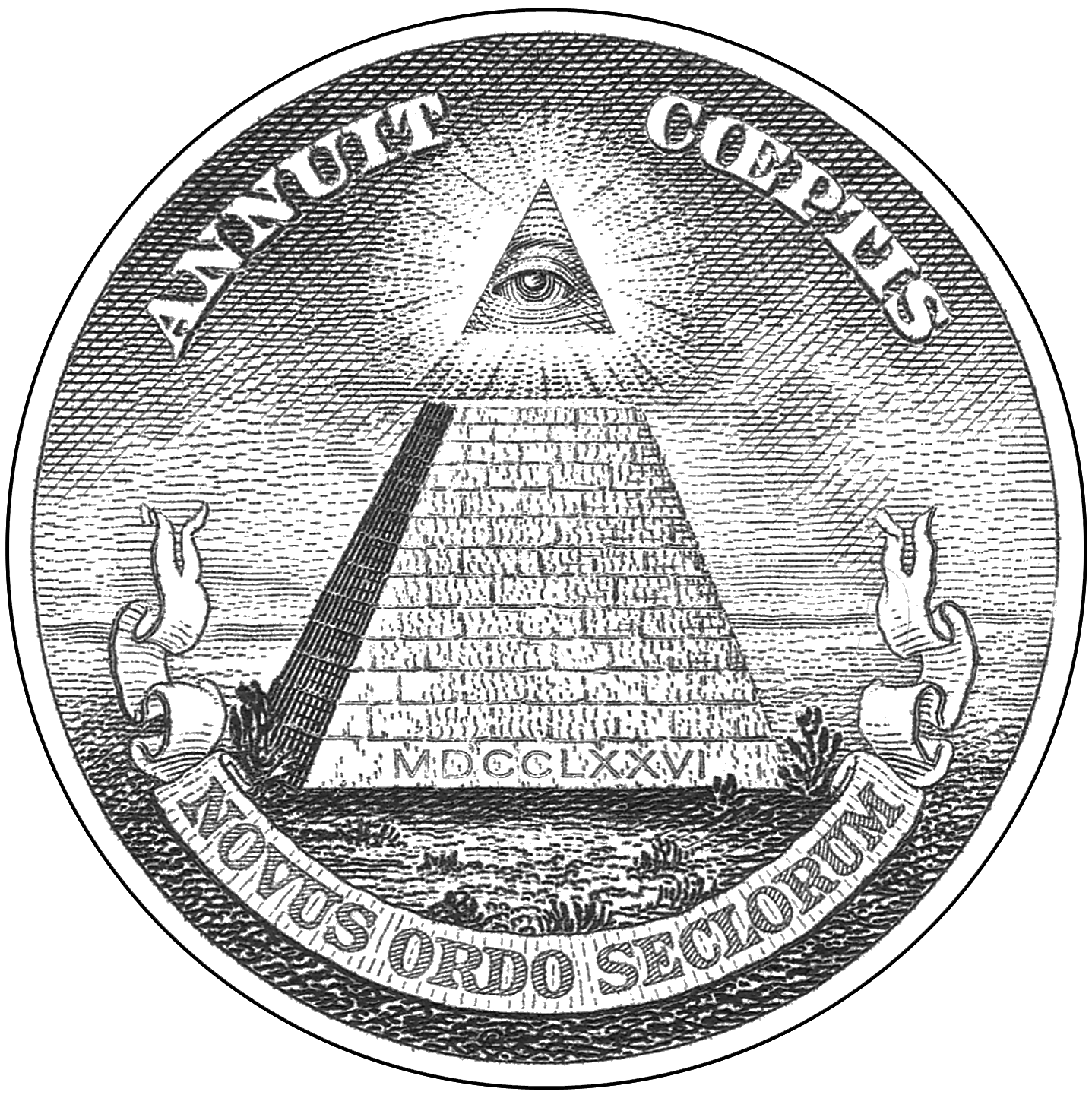
This symbol is often linked to the Bavarian Illuminati, founded in 1776, and it closely resembles the pyramid on the American dollar. In fact, the eye inside a triangle, known as the Eye of Providence, is much older: it already appears in Renaissance art as a symbol of God watching over humanity. On the reverse of the Great Seal of the United States, adopted in 1782 and placed on the one-dollar bill in 1935, there is precisely a pyramid of thirteen rows, like the thirteen original colonies, topped by the eye.
But that’s not all: on the base there are three small engravings, apparently inlaid in gold, in the shape and position of the stars of Orion’s belt, together with an inscription in an alphabet that, according to German linguist Kurt Schildmann, is older than Sanskrit and translates as:
“The Son of the Creator comes from here”.
According to this theory, the same alphabet has also been found on other artefacts in different parts of the world, such as Ecuador, Colombia, the United States, France, Malta, Italy, Turkmenistan and Australia. This would suggest there was a global language older than Sanskrit, which Schildmann called “pre-Sanskrit”.
It must be said, however, that these “other artefacts” include highly controversial objects, such as those from Glozel, France, whose authenticity has been debated since the 1920s, and that none of these translations has ever been accepted by linguists.
An ancient stone globe
And that’s not all: many other incredible artefacts were found at the same site, such as another fluorescent stone depicting a king cobra.
Something doesn’t add up, though, because this reptile is native to South and Southeast Asia and is not found in South America: so how could it be depicted in Ecuador?
Along with the pyramid and the cobra, many other decorated stones were found, all reflecting different colours when hit by ultraviolet light.
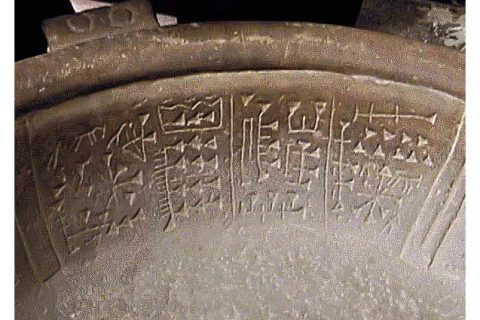
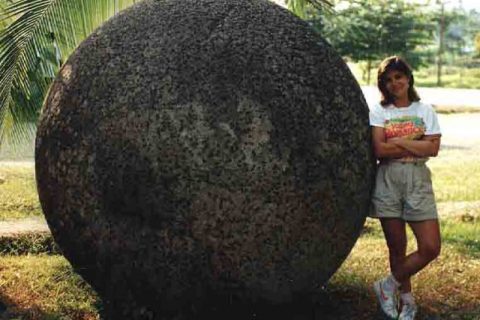
Another surprising find concerns stones with lines carved into them that trace a rough globe. Moreover, according to those who studied it, the place where the artefacts were found and ancient Babylon are connected on the map by a line. Could this also explain the Fuente Magna?
Who has studied the pyramid?
That is exactly the problem. The pyramid and the other La Maná objects were made known above all by Klaus Dona, an Austrian exhibition curator who in recent decades has shown them at exhibitions and talks on “unsolved mysteries”. Almost all the information about the discovery comes from his accounts: it is not known exactly who found them, where, or at what depth.
There are no studies published in scientific journals, nor material analyses or dating. The fluorescence in itself is no mystery: many minerals, and some modern glues and paints, glow under ultraviolet light. Without an excavation context it is impossible to say whether these objects are very ancient or recent.
Would this really confirm some theories that we come from space? Or are these just fascinating objects of unknown origin, around which a legend has been built?
🦋 Emadion lives through its readers. If this story kept you up at night, buy me a coffee: it helps me bring you the next nightmare.
☕ Support Emadion on Ko-fiSources
- MessageToEagle, Glowing Black Pyramid With The Third Eye
- Wikipedia, Eye of Providence
- Wikipedia, Great Seal of the United States
- Wikipedia, Glozel artifacts