 Posted by
- What they are: supernatural creatures of pre-Islamic Arab tradition and of Islam.
- What they are made of: according to the Quran, “smokeless fire”.
- Good or evil? Like humans, they can be believers or unbelievers and are accountable to God for their deeds.
- In the Quran: they are mentioned many times and there is even a surah devoted to them, number 72, called al-Jinn.
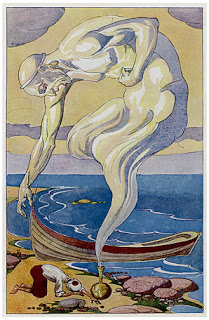
The jinn, often translated as “genie”, is a supernatural creature of pre-Islamic and Muslim culture. Often associated with an evil nature, jinn feature heavily in Middle Eastern tales and legends and are a constant presence in “One Thousand and One Nights”. The genie who comes out of Aladdin’s lamp is also a jinn, although the story of Aladdin, curiously, does not appear in the oldest Arabic manuscripts: it was added to the collection by French translator Antoine Galland in the early 18th century, who had heard it from a Syrian storyteller, Hanna Diyab.
The origin of the Jinn
The Quran dates their creation, by Allah, to before that of man, and states that they are creatures born of “smokeless fire”, unlike humans, made from clay, and angels, who according to Islamic tradition were created from light.
Just like humans, jinn have their own social organisation, with kings, courts, weddings and mourning. They eat, drink, marry, have children and die, although they live much longer than humans.
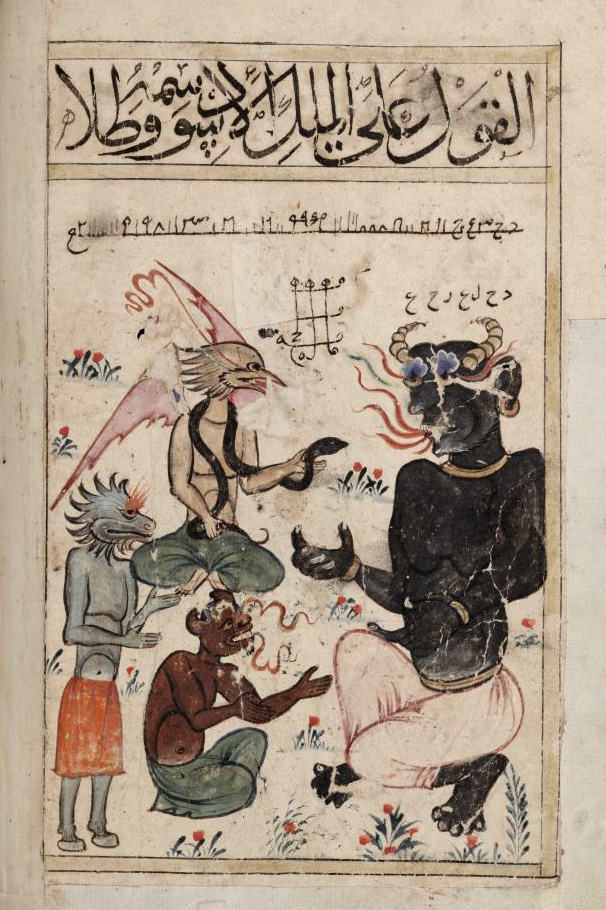
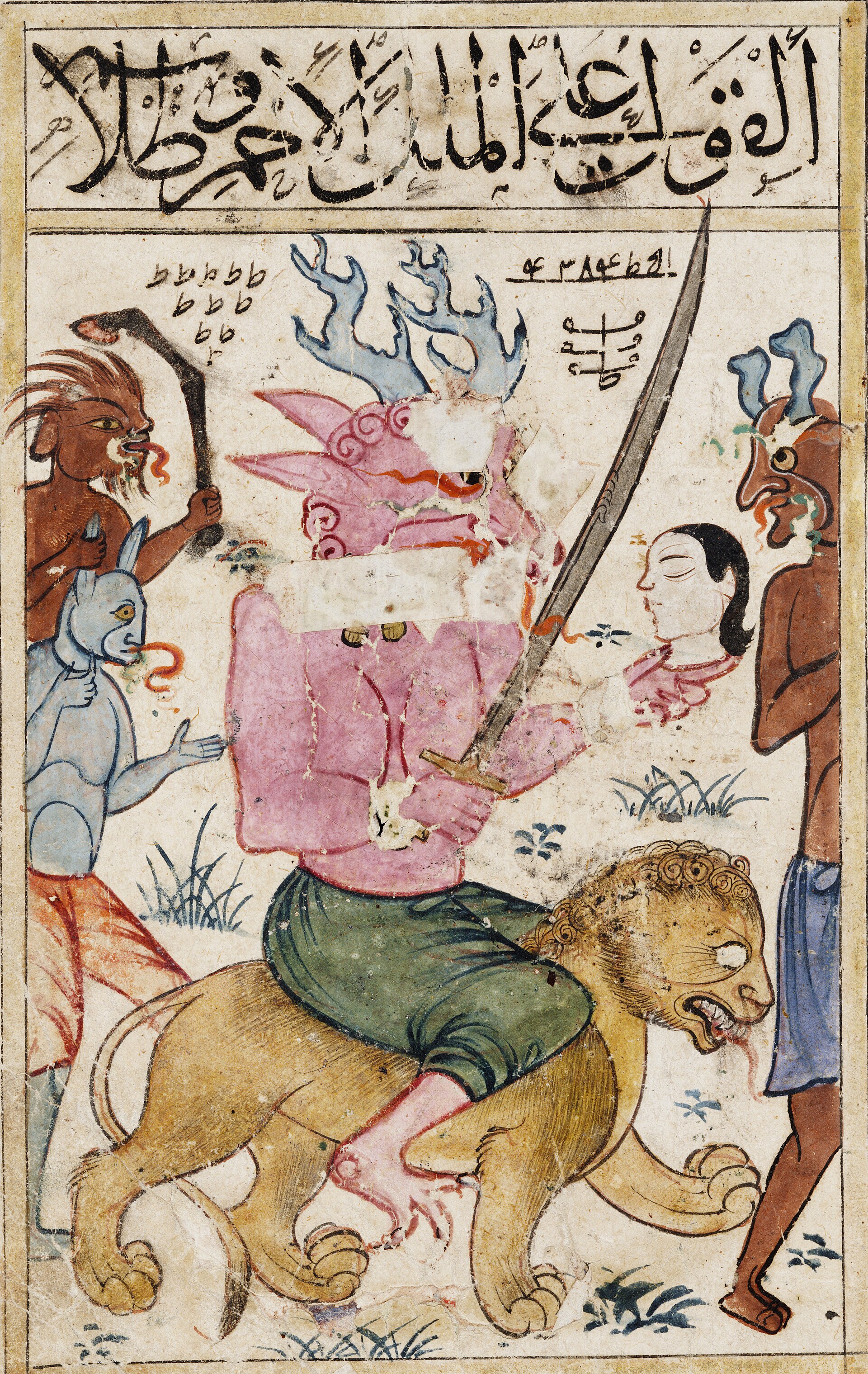
Folk tradition holds that there are 5 types of jinn, from the strongest, the Marid, to the Ifrit, the Shaitan, the Jinn, down to the weakest, the Jann, while a saying attributed to the Prophet Muhammad divides them into three categories:
- those with wings who can fly;
- those that look like dogs or snakes;
- those who are always travelling.
Although they are often described as evil, not all jinn are. According to tradition, Allah gave them their powers but not an evil nature: just as humans have free will, they can be Muslims or unbelievers, and are therefore responsible for their actions before Allah. They can go to paradise if they deserve it, or end up in hell.
In surah 72 of the Quran a group of jinn listens to the recitation of the Quran and converts, while Iblis, the devil, was according to many commentators a jinn who refused to bow before Adam.
The powers of the Jinn
One of their powers is to become invisible and change shape, turning not only into objects or plants but also into animals and even humans to achieve their goals. They can also fly and move at great speed.
Jinn can also possess people, just like demons in the Christian religion. The purpose of possession, according to some, would be to make people worship idols instead of God, leading them into sin. Even today in many Muslim countries there is ruqya, a healing practice based on reciting verses of the Quran, also used against possession by jinn.
On this subject I read an article on a website devoted to Islam, about jinn, which gave the example of the Indian statues that drink milk. I don’t know if you remember, but on 21 September 1995 news and videos went around the world of statues of Ganesha and other Hindu deities apparently drinking the milk offered by worshippers. The phenomenon started at a temple in New Delhi and within hours spread across India, Nepal, Europe and America, so much so that milk sold out in many cities.
According to the article I read, this was nothing but the prank of a jinn, trying to make people worship idols other than Allah. Scientists, on the other hand, explained it with capillary action: the milk was absorbed by the surface of the statue and then ran down it. There isn’t much footage available, but I found this:
Where Jinn are found
Jinn are typical of Islamic and pre-Islamic cultures, but there are counterparts in other religions and parts of the world. With the spread of Islam, belief in jinn reached Africa, Turkey, Persia, India and Southeast Asia, blending with local spirits.
And let’s not forget the genii of Ancient Rome, protective spirits that accompanied every man from birth and shaped his character and fate. Every family worshipped the genius of the head of the household at the lararium, the small household altar, and this is where our word “genius” comes from.
As we can see, “jinn” is the Arabic name for entities with powers, often evil, responsible for some strange human behaviour. Entities that can be evil but can also help a human, and that can be compared to ghosts, demons, ghouls and spirits of other traditions.
So, despite all the differences between religions and peoples, they all share the belief that spirits or genii have control over human actions and even human destiny.
Recommended reading: on this subject, definitely One Thousand and One Nights, where many tales feature a jinn as a character who helps or destroys the protagonist.
🦋 Emadion lives through its readers. If this story kept you up at night, buy me a coffee: it helps me bring you the next nightmare.
☕ Support Emadion on Ko-fi