 Posted by
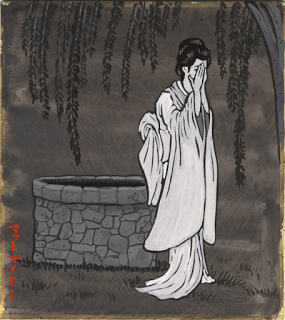
The story of Okiku is known in Japan as Banchō Sarayashiki (番町皿屋敷), which means “The Dish Mansion at Banchō”.
It is one of the best-known Japanese ghost stories and is often cited among the inspirations for Sadako, the girl in the well of Kōji Suzuki’s novel Ringu, which became the 1998 Japanese film and then the US remake “The Ring”. The legend tells of a girl who was thrown into a well and died, returning as a spirit to torment the man who killed her.
Okiku story
This story is about a girl named Okiku, but its origin remains unknown. The first written mention of it dates to July 1741, under the name Banchō Sarayashiki, for a bunraku (puppet theater) play staged at the Toyotakeza theater. Versions set in Harima Province take place in Himeji Castle, those set in Edo (today’s Tokyo) in the Banchō district. Being such a well-known legend, it has many versions and adaptations, but I will start with the traditional one.
Okiku was a very beautiful girl who worked as a servant for the family of samurai Aoyama Tessen.
The samurai often made sexual advances to Okiku, but she always rejected him.
One day Aoyama decided to hide one of 10 porcelain plates belonging to the family, accusing Okiku of having lost it. Losing or breaking such a valuable plate was punishable by death and when Okiku learned about the missing piece, she rushed to count the remaining ones, sure she had not broken any.
She counted and recounted them frantically but the plates were always nine.
The samurai then offered her a deal: he would spare her life, but she would have to become his mistress. Okiku refused and the samurai, full of rage, threw her into a well, killing her.
Okiku became a vengeful spirit (onryō) who tormented her murderer by counting from one to nine and then letting out a bloodcurdling scream that was supposed to represent the missing plate.
Or maybe, tortured, she was still looking for the tenth plate. In some versions, the spirit would have been exorcised shouting “ten!” after it had counted up to nine. Okiku would then think the tenth plate had been found and could finally rest in peace.
Ningyo Joruri Version
Hosokawa Katsumoto, lord of Himeji Castle, one day fell seriously ill. His heir, Tomonosuke, planned to give a set of 10 precious plates to the shōgun to secure his succession.
The castle’s chief retainer, however, Asayama Tetsuzan, wanted to seize power and planned to force Okiku, a lady-in-waiting engaged to Tomonosuke’s retainer Funase Sampei Taketsune, to help him murder the heir.
Tetsuzan hired a spy to see where the plates were stored and ordered him to steal one. Then he ordered Okiku to bring the box of plates to his chambers. There Tetsuzan tried to seduce her but she refused to give in his advances.
Tetsuzan then accused her of stealing one of the plates. He proposed her to become his mistress in exchange for her life but Okiku refused. Angry, Tetsuzan beat her with a wooden sword.
He then had her suspended over a well and lowered into it again and again with a pulley, beating her with the wooden sword every time she was raised.
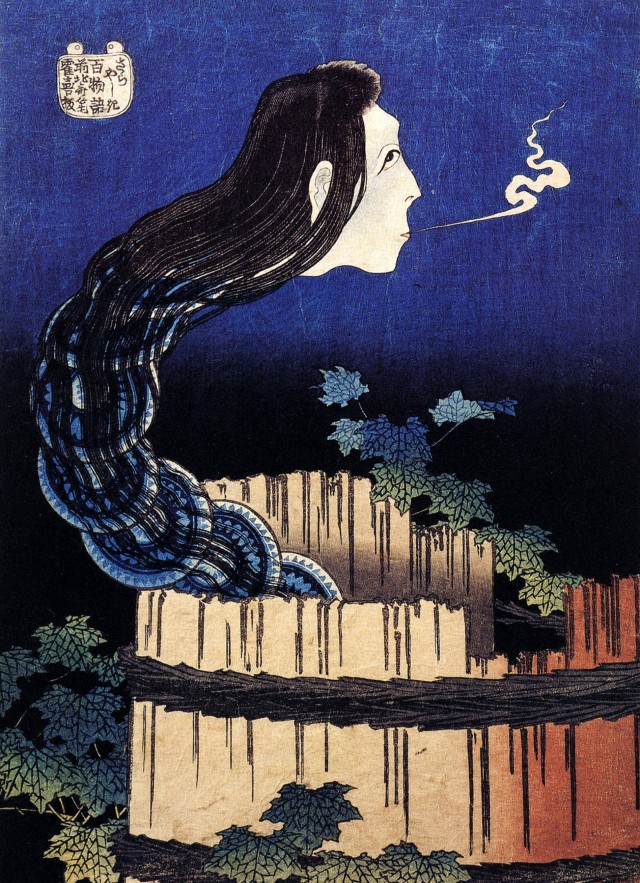
He asked her again to be his mistress and to help him kill Tomonosuke, but upon her continued refusal he plunged her into the well, killing her.
Shortly after, he heard a voice counting plates from the bottom of the well and realized it was Okiku’s ghost. Entirely unmoved, when her ghost rose from the well he just stared at her with contempt. The play ends on this very image.
Kido Okamoto Version
This version, written by Okamoto Kidō and first staged in February 1916 at the Hongōza theater in Tokyo, is far more romantic and psychological than the earlier ones. It is set in Edo in 1655: a vassal of the shogun, Aoyama Harima, fell in love with a young servant named Okiku. Aoyama promised to marry her and, when he received a marriage proposal through an aunt, he turned it down, reassuring Okiku of his love.
The girl, however, was not convinced and asked him to prove his love to her. She took one of the ten heirloom plates passed down for generations in the Aoyama family and broke it. The traditional punishment for breaking such an heirloom was beheading.
Aoyama, believing it was an accident, forgave her and reaffirmed his love, but she later confessed she had done it on purpose to test him.
Aoyama flew into a rage, broke the remaining plates, killed her and threw her body into a well.
Since then, the ghost of Okiku was seen entering the house and counting the plates from one to nine. One day Aoyama spotted the ghost in the garden and saw that her face was not vengeful, but calm and beautiful.
He then decided to take his own life to join his beloved in the afterlife.
Okiku’s well and her legacy
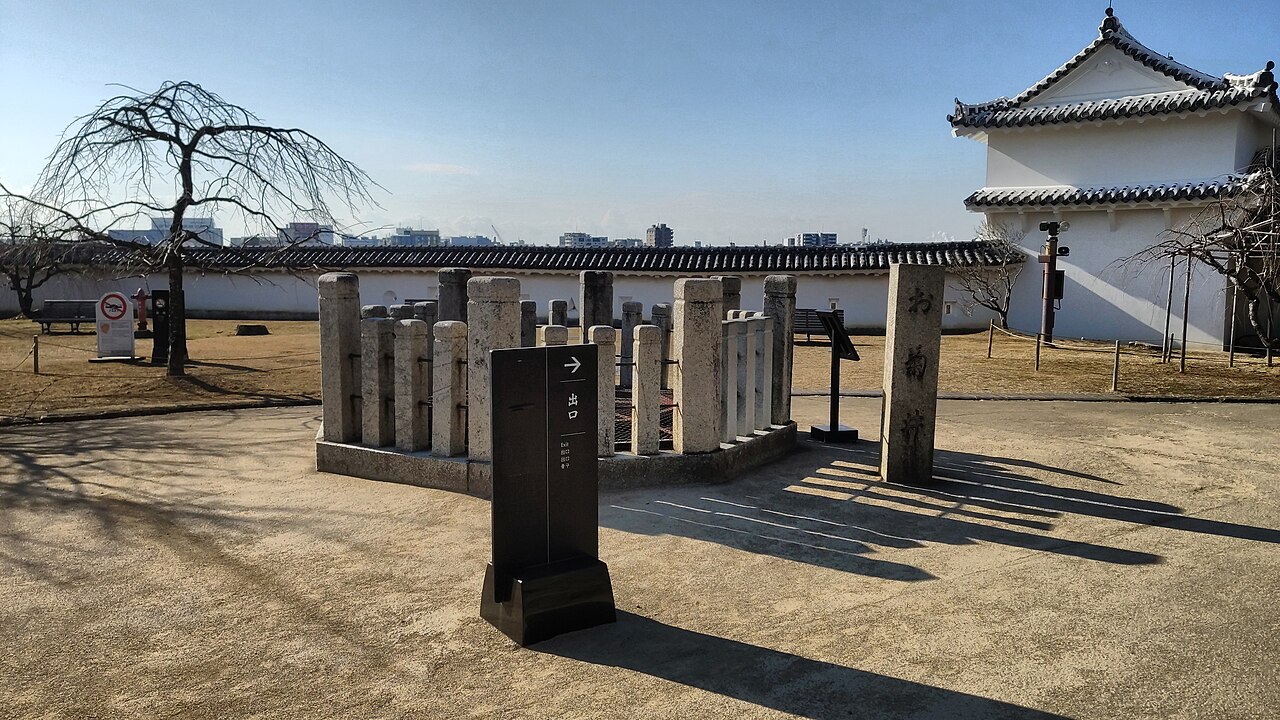
Since the puppet theater version is set in Himeji Castle, now a UNESCO World Heritage Site, one of the castle’s most visited spots is the Okiku-ido, “Okiku’s well”. Tradition says this is where Tetsuzan threw the girl’s body, and that her ghost still rises from the well every night to count to nine.
In 1795 old wells across Japan were infested by butterfly larvae that became known as “Okiku insects” (okiku mushi): covered in thin threads that made them look bound, they were widely believed to be Okiku reincarnated.
The legend has inspired many authors, from novelist Yūko Tsushima with Kikumushi to the manga Sadako at the End of the World, where The Ring’s Sadako meets Okiku herself.
🦋 Emadion lives through its readers. If this story kept you up at night, buy me a coffee: it helps me bring you the next nightmare.
☕ Support Emadion on Ko-fi