 Posted by
- Where: in the Sacred Valley of the Incas, Peru, about 72 km from Cusco, at 2,792 metres above sea level.
- Who built it: Inca emperor Pachacuti, who made it his royal estate around the mid-15th century.
- The mystery: stone blocks weighing tens of tonnes, cut and fitted perfectly.
- What archaeologists say: the stones came from quarries 5 km away, moved along ramps and roads built for the purpose.
Ollantaytambo is a small town in Peru, about 72 km from Cusco, from which you can take the train to Machu Picchu and where one of the routes of the famous Inca Trail begins.
Machu Picchu is the most famous place in the country, full of history and mystery since its discovery by explorer Hiram Bingham in 1911. Bingham himself, on his journey along the Urubamba River, stopped at Ollantaytambo.
But not everyone knows that Ollantaytambo is also shrouded in mystery. It is famous not only as the scene of one of the battles between the Incas and the Spaniards, the one in 1537, when Manco Inca defeated the conquistadors by flooding the plain below the terraces, but also because it holds one of the greatest architectural mysteries in the world.
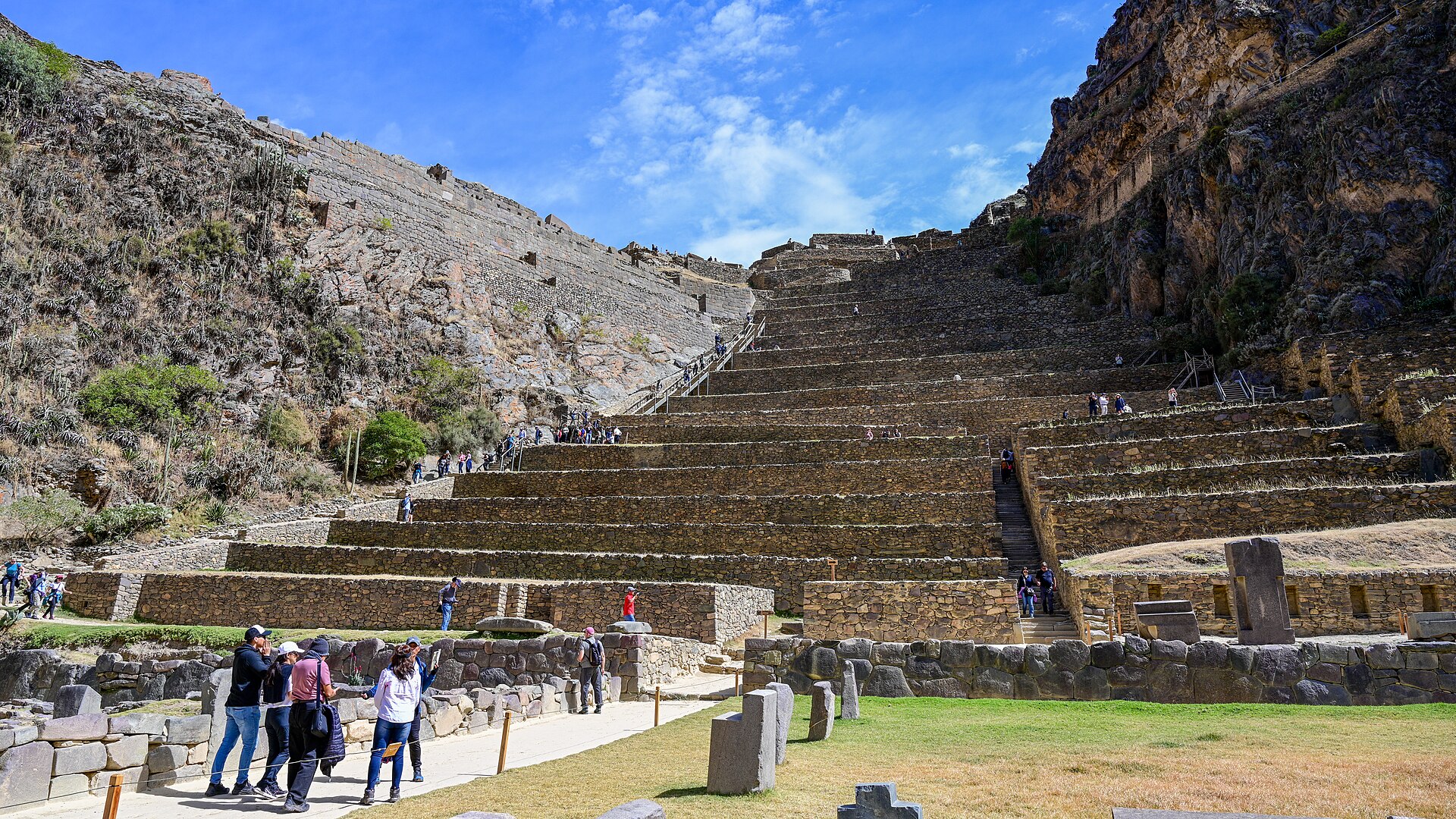
The mysterious buildings of Ollantaytambo
The construction of Ollantaytambo is attributed to Inca emperor Pachacuti, around the mid-15th century: he conquered and razed an existing village, made it part of his personal estate and rebuilt it with lavish buildings, terraces and irrigation channels. Archaeologists have also found traces of older settlements, of the Huari culture (600-1000 AD), and signs of human presence that may go back 3,500 years.
Some supporters of alternative theories, however, claim the town is much older and that its oldest parts would date back as far as 12,000 years, built by an unknown civilisation and only “inherited” by the Incas.
The mystery lies in the town’s architectural grandeur: there are many stone structures, irrigation systems still working and megalithic rocks perfectly carved and polished. Some houses in the centre, after all, have been continuously inhabited since the late 15th century, among the oldest in all of South America.
But was it really possible to achieve all this with primitive tools?
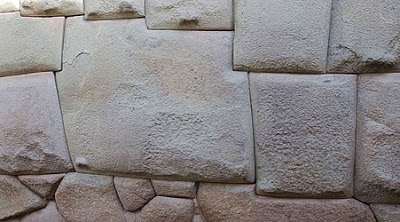
One of the most astonishing things, also found in nearby Cusco, is the way some buildings were made. The stones are dry-fitted, matched perfectly to one another without mortar, and the measurements are so precise that not even a sliver of light passes between one stone and the next.
It’s almost as if they had been fused together. This is even more incredible considering the blocks weighed several tonnes.
The Wall of the Six Monoliths
On this point, at the top of the temple hill there are six massive blocks of rose rhyolite, set in a row, forming the so-called Wall of the Six Monoliths of the Sun Temple. These blocks were cut elsewhere and then brought up the mountain, but how, considering each weighs tens of tonnes?
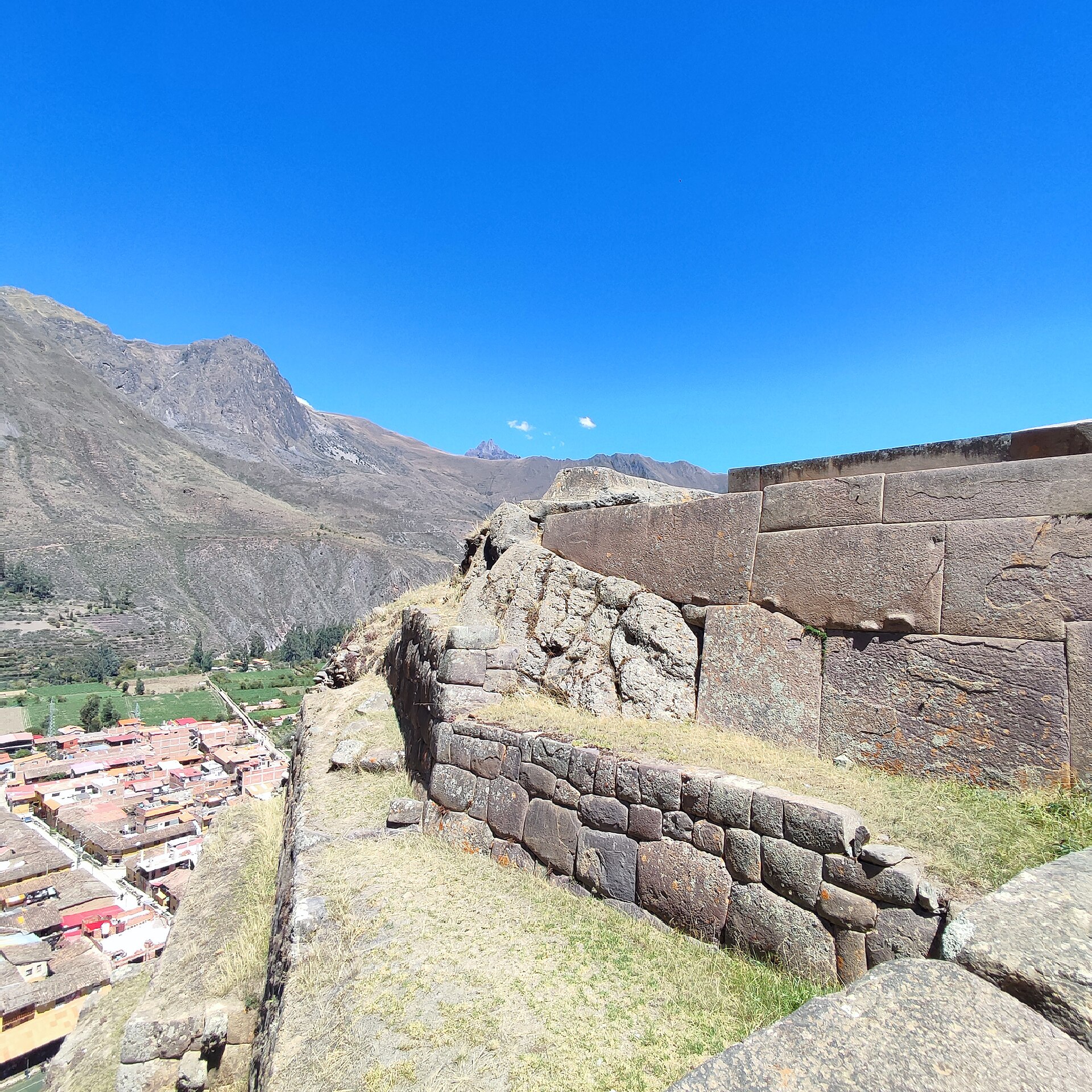
Even with the most modern technology it would be a hard task to achieve such a result.
Archaeologists actually know very well where those stones come from: the Kachiqhata quarries, on the other side of the Urubamba River, about 5 km from the town. From there ran a network of roads, ramps and slides, including a large ramp leading straight up to the Wall of the Six Monoliths.
Along the route dozens of blocks were left abandoned, called “piedras cansadas”, “tired stones”. Digging under these megaliths, archaeologists found roads purpose-built from clay and gravel to slide them along, and under one of them even wooden rollers. Architect Jean-Pierre Protzen, who studied Ollantaytambo for years, showed through experiments that the stones could be shaped and fitted using hammerstones of harder rock, a great deal of patience and an enormous workforce.
The Temple of the Condor
Another mystery would concern the so-called “Temple of the Condor”, where huge slabs of andesite were extracted from the “Wall of Living Rock”.
This work was done so skilfully that the cuts are perfect and the rock is not rough but smooth and polished, almost as if it had undergone a vitrification process.
How was all this possible? With what technology were the stones cut, moved, fitted and polished?
For many, the mystery deepens because very few tools were found near the building sites. But we mustn’t forget that the Sun Temple building site was never finished: the incomplete structures and the blocks scattered everywhere show that work was still under way when the site was abandoned, perhaps because of the civil war between Huáscar and Atahualpa or the arrival of the Spaniards.
Supporters of the ancient aliens theory claim all this was made possible by alien technology. An Inca legend, in fact, tells how the Sun God, Inti, sent his two children, Manco Cápac and Mama Ocllo, to earth with a golden staff. They were to found their city where the staff sank into the ground: that place, according to the legend, was Cusco.
Can this legend explain this ancient architectural perfection? Could the golden staff be the solution to the mystery? Or was the Incas’ real technology simply the organisation of thousands of people, working stone with a skill that still leaves us speechless today?
🦋 Emadion lives through its readers. If this story kept you up at night, buy me a coffee: it helps me bring you the next nightmare.
☕ Support Emadion on Ko-fi