 Posted by
Blanche Monnier, born in Poitiers in 1849 into a wealthy family, was locked by her mother in a room of the family home in 1876 because she opposed the man she loved. She was freed only on 23 May 1901, after an anonymous letter to the prosecutor, in terrible conditions. Her mother died shortly after her arrest, her brother was acquitted on appeal. Blanche died in a psychiatric hospital in Blois in 1913.
Stories of kidnappings are always terrible, but they are even more so if the perpetrators are family members of the victim.
In recent times we have heard of kidnappings that lasted for many years, but the one I’m about to tell you lasted nearly a quarter of a century.
For nearly 25 years Blanche Monnier was locked up in a room by her family because she loved the wrong man.
The kidnapping of Blanche Monnier
Blanche was born in 1849 in Poitiers, in France in an upper class family. We have no information about her childhood, but we know that as a young woman she falls in love with a young man, Gilles Lomet.
Unfortunately for her, however, Gilles is the son of a Protestant and Republican lawyer and her family does not approve of the relationship. Blanche’s parents are in fact supporters of the monarchy and feel hatred towards the Republicans.
But be careful, because on this point the versions differ. According to the most widely accepted reconstruction, the man Blanche loved was Victor Calmeil, an older and penniless lawyer, and her mother opposed the marriage because she did not want her daughter to marry “a penniless lawyer”. He died in 1885, without ever knowing what had happened to Blanche.
As she does not want to end the relationship, her family decides to lock her up in a room.
That’s how it begins for Blanche, in 1876, at the age of 27, an imprisonment that will last almost a quarter of a century, interrupted only by an anonymous letter sent to the police.
The discovery of Blanche
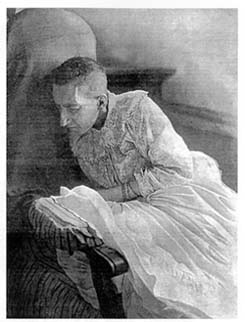
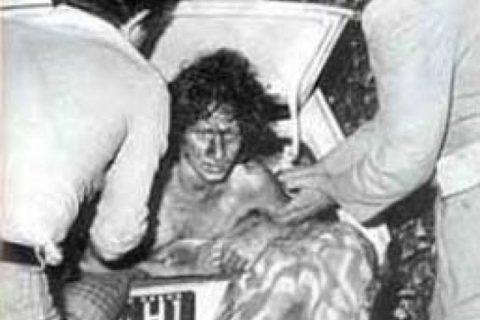
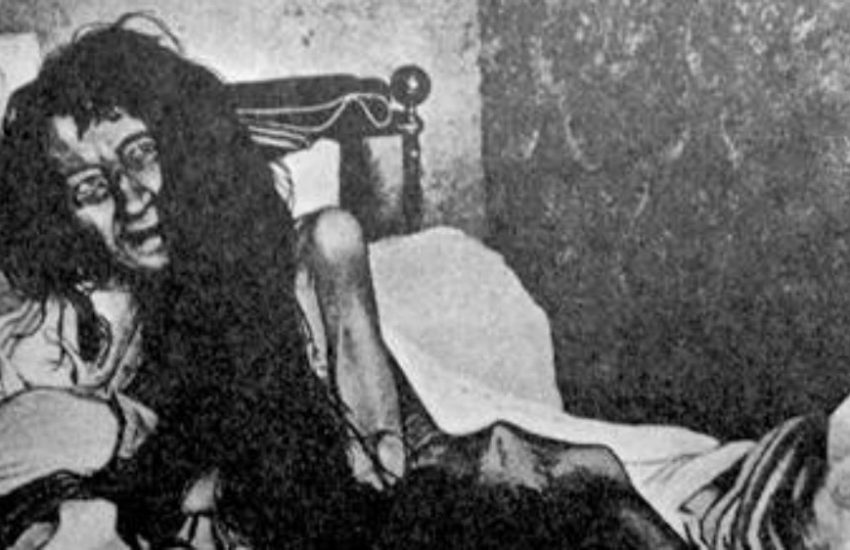
On 23 May 1901 the Attorney General in Paris receives an anonymous letter (whose author is still unknown to this day) and, after a search of the house by the police, Blanche is found on the second floor.
The room where she is found is dirty, full of excrement and food leftovers. The windows are barred and she can get neither sun nor a bit of fresh air.
Blanche has very long hair, which had not been cut for nearly three decades, and is severely malnourished.
She is brought immediately to the hospital while her mother, 79, and her brother are arrested.
After her release, it emerges that Blanche suffered from mental disorders such as hysteria, coprophagia (eating faeces), and exhibitionism.
The brother said that he tried to get her hospitalized in a mental hospital, but the family opposed it to avoid a scandal and in order to avoid bringing shame to the family.
Her mother, however, never even makes it to trial: she falls ill right after her arrest and dies 15 days later, while an angry mob gathers in front of her house.
Blanche’s brother is initially sentenced to 15 months in prison for being an accomplice of the kidnapping, but he is acquitted on appeal: the judges, while criticising him, rule that at the time the penal code did not contain a real “duty to rescue” under which he could be convicted.
Poor Blanche manages to regain a few kilos in hospital but, shaken by the whole ordeal, she dies on 13 October 1913 in a psychiatric hospital in Blois, where she had been admitted.
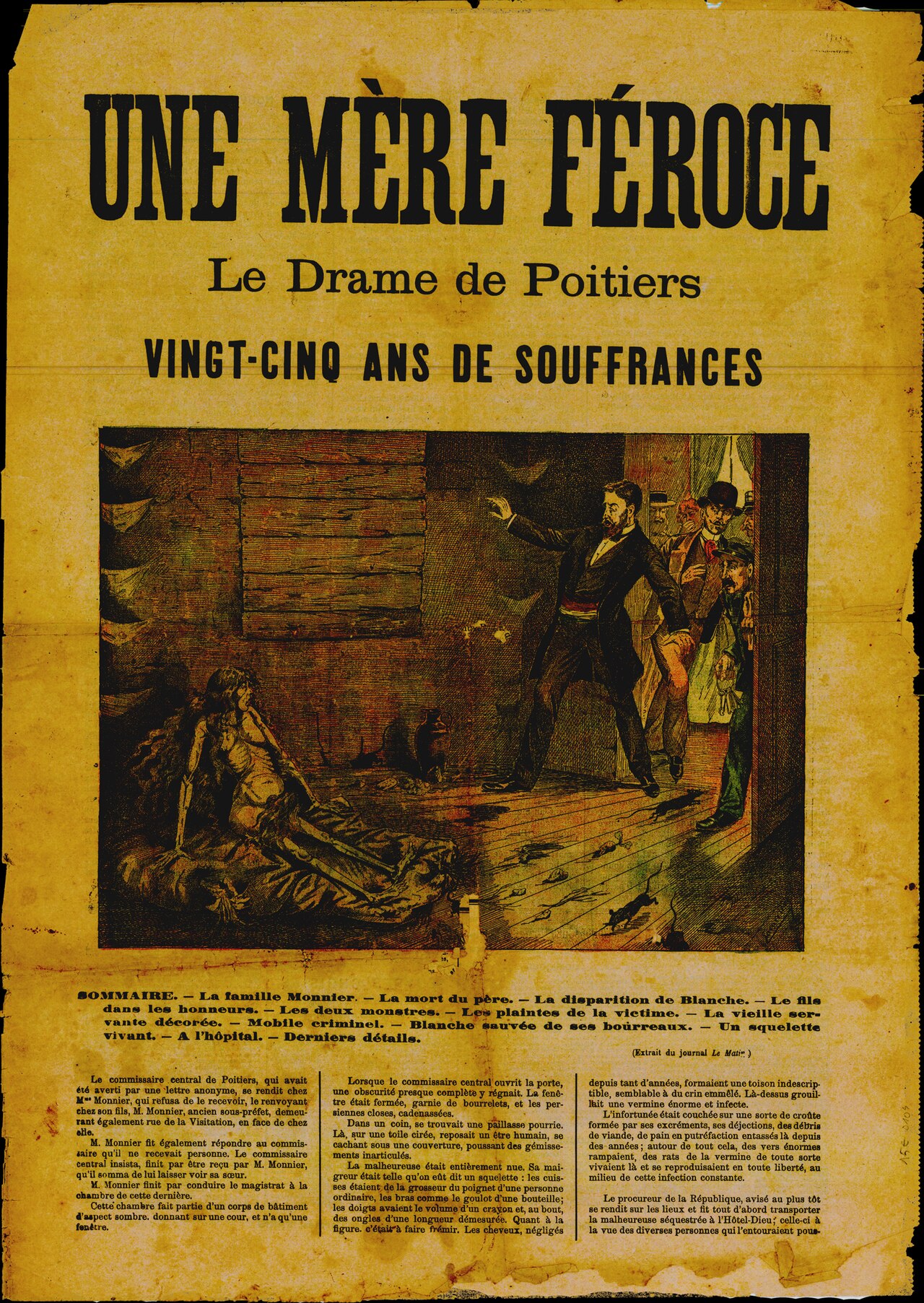
At the time the case caused a huge sensation throughout France, and in 1930 the writer André Gide, a future Nobel laureate, dedicated a book to it, La Séquestrée de Poitiers, changing little more than the names of the people involved.
🦋 Emadion lives through its readers. If this story kept you up at night, buy me a coffee: it helps me bring you the next nightmare.
☕ Support Emadion on Ko-fiSources
- Blanche Monnier, Wikipedia
- André Gide, La Séquestrée de Poitiers, Gallimard, 1930