 Posted by
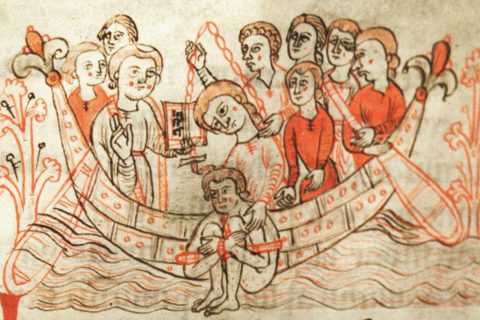
The poena cullei, the “penalty of the sack”, was the Roman punishment for parricides: the condemned, flogged and hooded, was sewn into a leather sack with a rooster, a dog, a monkey and a viper and thrown into the sea or the Tiber. The first documented case dates from 101 BC. The penalty was revived by Constantine and Justinian and survived in Germany until the 18th century.
Poena cullei comes from Latin and means “penalty of the sack.” It was used in ancient Rome to punish parricides, people who had killed their father or mother and was a rather peculiar sentence. The condemned man was locked in a waterproof bag with several live animals and thrown into the sea or into the Tiber River.
The Poena Cullei
The first well-documented case of this type of torture dates back to 100 B.C., although historians tend to agree that this technique was already in use before that time.
The man at the centre of that first documented case was Publicius Malleolus: in 101 BC he killed his mother and, according to the sources, was the first to be sewn into the sack and thrown into the sea. A few years later, in 80 BC, a young Cicero defended Sextus Roscius in court, a man accused of killing his father and therefore facing the same fate. In his speech Cicero explains the meaning of the punishment: the parricide was shut in the sack so that he would no longer touch anything in nature, neither sky, nor earth, nor water, and so that his body would not even pollute the sea.
But what exactly was the penalty of the sack?
The technique of the penalty of the sack underwent changes throughout history, but the most common technique was the one that I’ll describe below.
Animals could vary, there could be different ones or less, given the limited availability of the monkey for instance. For the rest, the procedure was almost identical.
Following his conviction, the parricide was taken to prison wearing wooden clogs and a cap made of wolf skin. He was then whipped with the rods and sewn into a leather sack with live animals.
Not any type of animals, but specifically a rooster, a dog, a monkey and a viper. Then the bag was thrown into the sea or into the Tiber river. However, the animals were so furious that the person rarely reached the water alive, having been torn apart in agony long before.
The ritual
Before reaching the sack, the condemned had to go through a real ritual. According to the reconstruction by the historian Theodor Mommsen, based on ancient sources, the parricide was flogged with “blood-coloured” rods, his head was covered with a wolfskin hood because he was considered unworthy to breathe the common air, and wooden clogs were put on his feet so that he would not touch the earth. Then he was loaded onto a cart drawn by black oxen and taken to the river or the sea.
Why were these animals used?
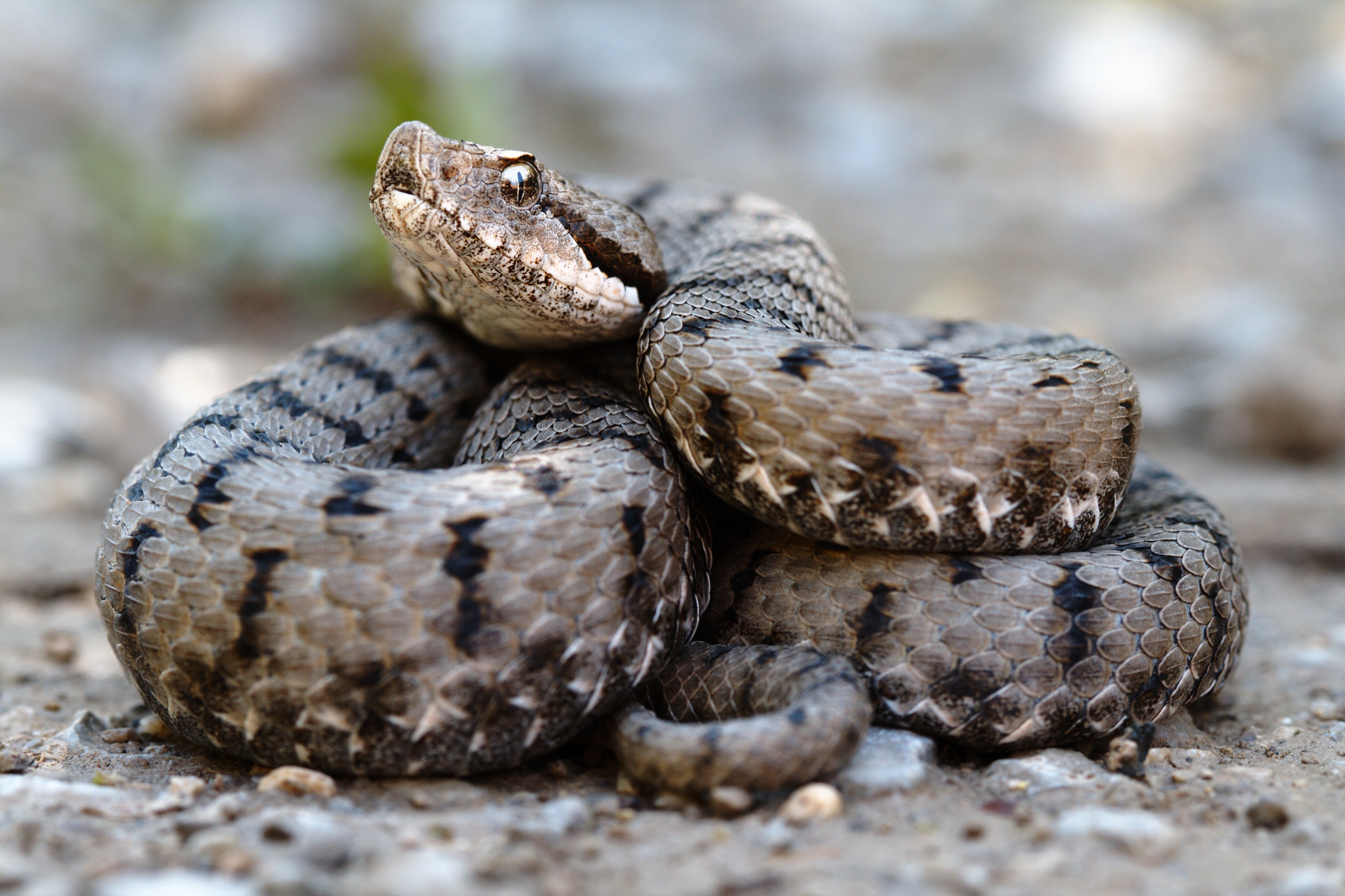
The animals to be put in the bag along with the parricide were chosen for their meaning: they had a symbolic meaning that I’m about to explain now.
- The rooster: the rooster was considered a very fierce animal, so much so that it was said to scare even lions: therefore one of the reasons for which it was put in the bag was for its ferocity. Secondly, it was chosen for its symbolic role, linked to that of the viper which I’ll explain below. Moreover it was thought that the rooster kills vipers and the presence of both animals in the bag could create a chain of killings.
- The Viper: the viper was chosen because, according to Pliny, this animal gives birth to a viper per day, for a total of 23. Not all small vipers, though, want to wait and therefore they tear the interior of the mother while coming out of her stomach, killing her. Here the symbol of the parricide is clear.
- The dog: the dog was considered an impure animal, filthy and vile: characteristics that could easily be attributed to the parricide.
- The monkey: the monkey was considered a caricature of man. Also Pliny claimed that the monkeys loved their young so much that they smothered them in their embrace.
The history of poena cullei
The poena cullei was born long before the Roman legislation; it is thought that the first to use it was an Etruscan king.
Early versions included only snakes and other animals were described only from the second century A.D., under Emperor Hadrian’s reign.
Hadrian provided two penalties for parricides: the poena cullei or being thrown to the beasts in the arena.
In the third century the practice fell into disuse, but in the early fourth century Emperor Constantine brought it back, this time with only serpents in the sack. More than 200 years later Emperor Justinian reinstated it with all four animals. The penalty remained in use for about 400 years: it was then replaced by burning at the stake.
The sack after Rome
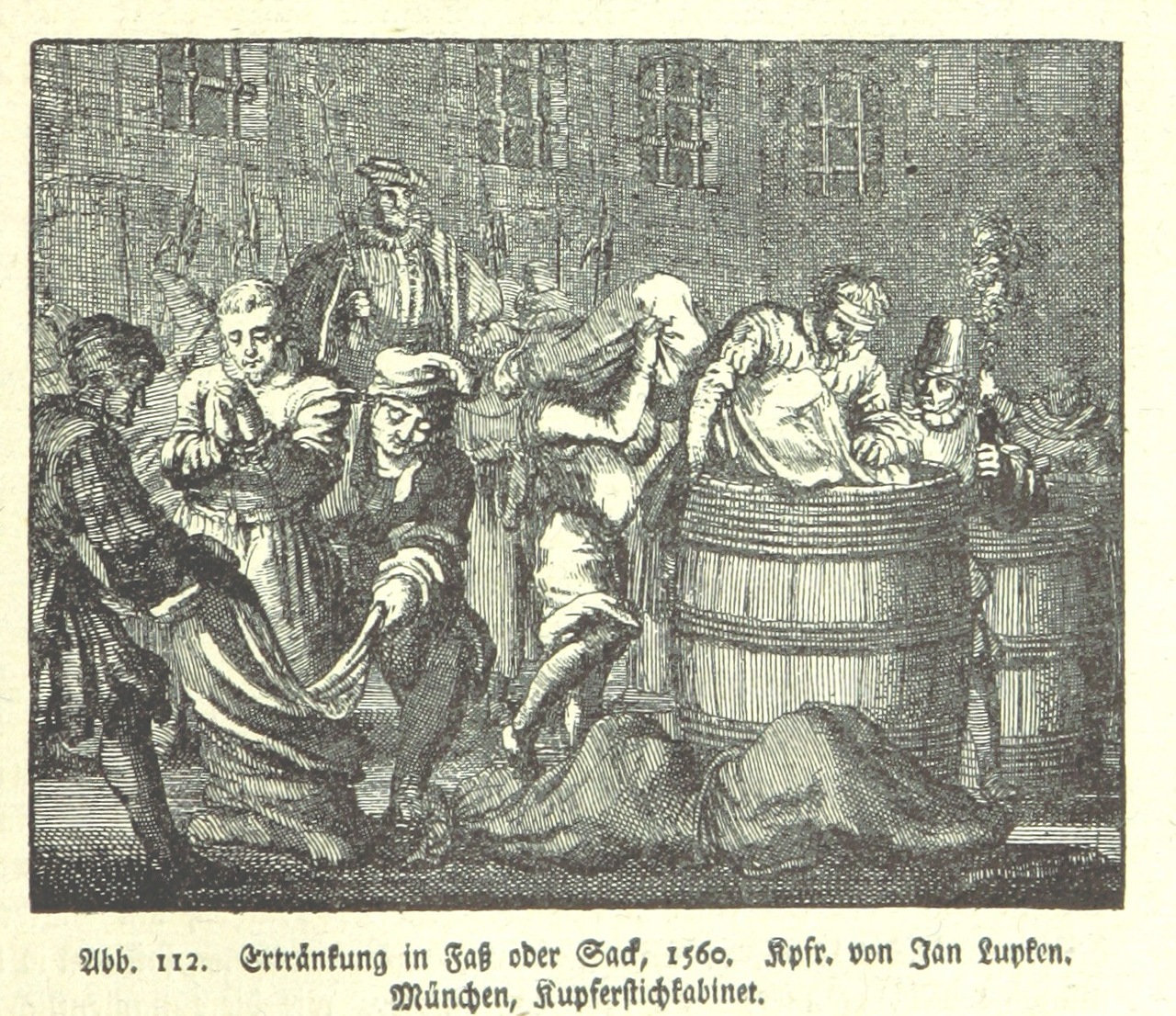
The idea of drowning a condemned person sewn into a sack did not disappear with the Empire. In medieval and early modern Germany, drowning in a sack, known as Säcken, was used above all for women guilty of infanticide. In some cases, just as in ancient Rome, live animals were put in the sack too: in Saxony the practice is documented as late as the first half of the 18th century.
🦋 Emadion lives through its readers. If this story kept you up at night, buy me a coffee: it helps me bring you the next nightmare.
☕ Support Emadion on Ko-fiSources
- Poena cullei, Wikipedia
- Cicero, Pro Sexto Roscio Amerino