 Posted by
The guillotine was a method of carrying out the death penalty used in several countries, including France, Italy, Belgium, Germany and Sweden. In France it stayed in use for almost two centuries, from 1792 to 1977.
History
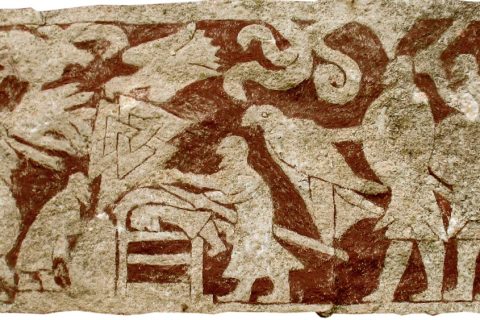
Beheading as a method of execution goes back long before the guillotine was invented, and was carried out with swords or axes. For centuries it was seen as the “noble” death: high-ranking prisoners were beheaded, while the poor were hanged or worse.
The guillotine became famous from 1792 in France, thanks to the French Revolution, but other countries were already using very similar machines. That’s because in an ordinary execution with a sword or axe, the prisoner had to stay perfectly still on the block and cooperate so the executioner could make a clean cut. Otherwise the executioner might miss and strike the shoulders or face, causing pointless suffering. The records are full of botched executions, with inexperienced or drunk executioners who needed several blows.
Staying calm on a scaffold must be incredibly hard, though: many prisoners shook violently, and some even tried to run.
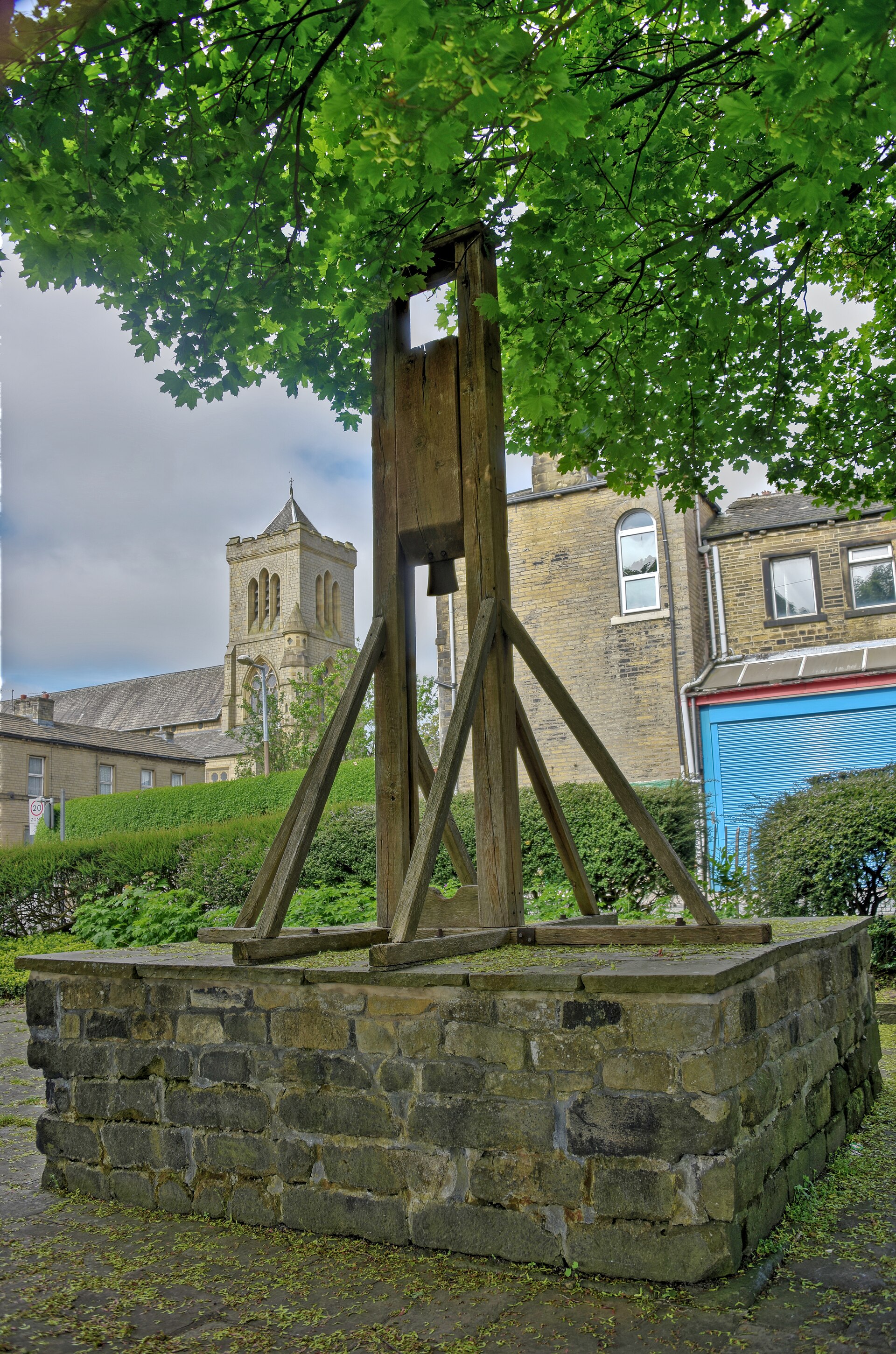
So across Europe, machines that held the prisoner’s neck in place started to spread. Examples include the Halifax Gibbet in England and the mannaia in Italy, both forerunners of the modern guillotine that differed mainly in the shape of the blade.
The Halifax Gibbet, in Yorkshire, was used until 1650, and in Scotland a similar machine called the Maiden stayed in service until 1710. In Rome, the most famous executioner of the Papal States, Giovanni Battista Bugatti, known as Mastro Titta, carried out more than five hundred sentences between 1796 and 1864, many of them with the mannaia and later the guillotine.
Invention
The guillotine was invented by a Frenchman, but not, as many believe, by Joseph-Ignace Guillotin. The design came from surgeon Antoine Louis, secretary of the Academy of Surgery. The first prototype was built by a German harpsichord maker, Tobias Schmidt, and at first the machine was nicknamed “Louisette” or “Louison”, after Louis.
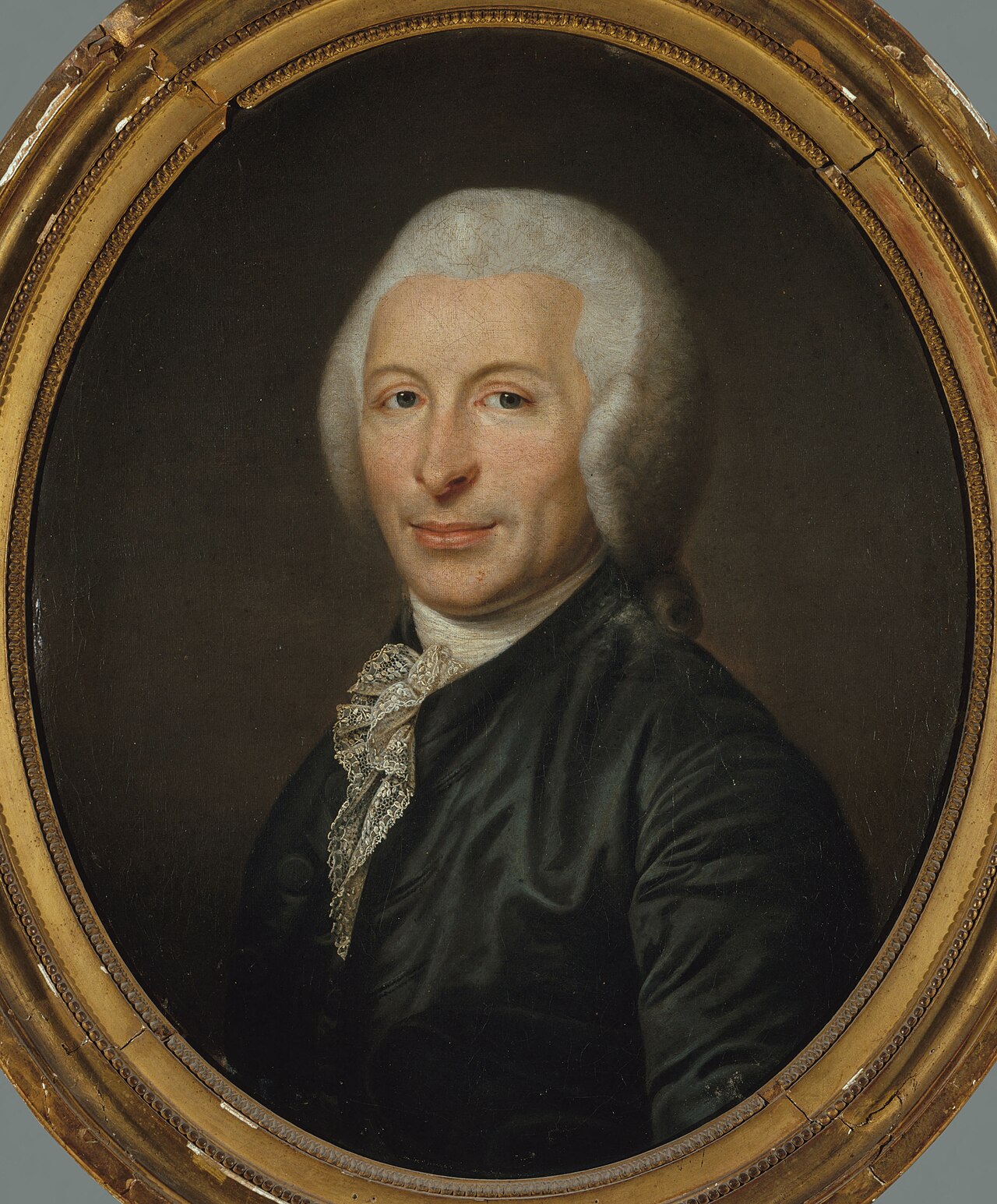
It got its lasting name from Guillotin, a doctor and member of the National Constituent Assembly. He opposed the death penalty, and in 1789 he proposed that, as long as it existed, it should at least be as painless as possible and the same for every crime and every person, whatever their social class. It was a revolutionary idea: for the first time, a nobleman and a thief would die in exactly the same way.
The angled blade, more effective than the curved one used in the first trials, was tested on sheep and on corpses at Bicêtre hospital in Paris in April 1792. A few days later the machine was ready.
Guillotin’s fate
A popular legend says Guillotin was executed by the very machine that bears his name. It isn’t true: he died in his bed in Paris on March 26, 1814, aged 75. But all his life he hated being linked to that killing machine. After his death his children asked the government to rename it; when the request was turned down, they changed their own surname instead.
The Terror
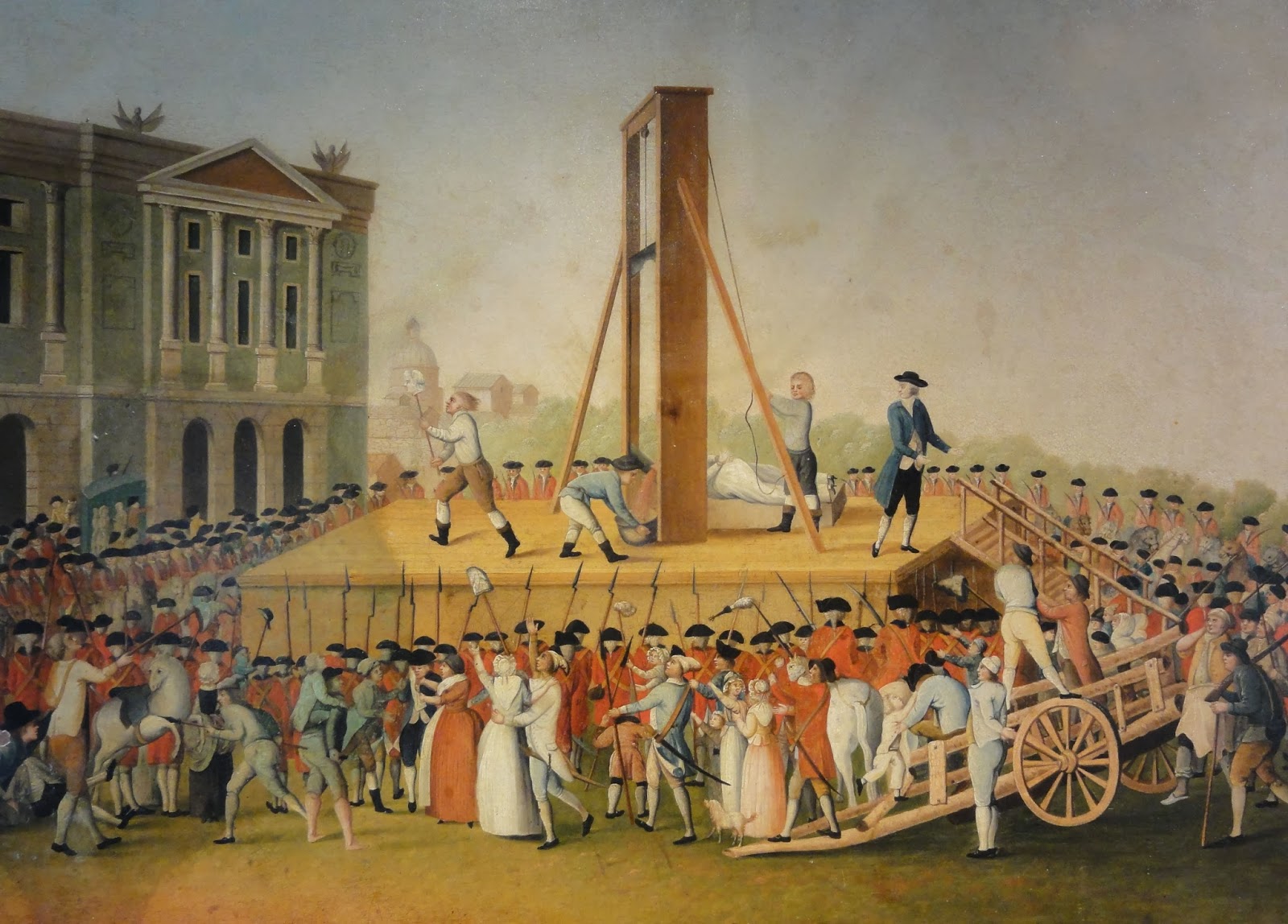
The first person executed by guillotine was a thief, Nicolas Jacques Pelletier, on April 25, 1792, on the Place de Grève in Paris. According to contemporary accounts, the crowd was disappointed: it was all over too quickly. The first political prisoner to die by guillotine was Collenot d’Angremont, in August of the same year.
From 1793 to 1794, during the Reign of Terror, the Revolutionary Tribunal sent thousands of real or suspected political opponents to the guillotine. There were about seventeen thousand official death sentences across France, and many more people died in prison or without trial. People gave the machine grim nicknames: “Madame Guillotine”, or “the national razor”.
King Louis XVI went to the guillotine on January 21, 1793, and Queen Marie Antoinette on October 16 of the same year. The story goes that as she climbed the scaffold, the queen accidentally stepped on the executioner’s foot and apologized: those were said to be her last words. Charlotte Corday, who had killed Marat, died the same way, as did the scientist Antoine Lavoisier, the father of modern chemistry. In the end so did many of the revolutionaries who had used it, from Danton to Robespierre, executed on July 28, 1794.
Executions were carried out by the Sanson family, a dynasty of executioners who passed the job from father to son. Charles-Henri Sanson, who executed Louis XVI, put nearly three thousand people to death.
In Italy and Germany
In Italy the guillotine arrived with Napoleon’s troops and stayed in use in several states even after his fall, especially in the Papal States, where it was simply called “the machine”. The last execution in the Papal States took place in Palestrina on July 9, 1870, a few months before Rome became part of Italy.
The guillotine wasn’t just French. In Germany, where it was called the Fallbeil, it was used above all under the Nazis: between 1933 and 1945 the regime’s courts had about sixteen thousand people beheaded, many of them political opponents. Among them were Sophie Scholl and her brother Hans, young students of the White Rose group, guillotined in Munich on February 22, 1943, for handing out leaflets against Hitler. Sophie was 21. Witnesses said she faced her death with great calm.
The last executions
The last public guillotine execution was that of Eugen Weidmann, on June 17, 1939, in Versailles. The crowd behaved so badly, and the photos taken from nearby windows caused such a scandal, that a few days later the French government banned public executions. From then on the guillotine was used only inside prisons.
The last guillotine execution in France was that of Hamida Djandoubi, on September 10, 1977, at Baumettes prison in Marseille. It was also the last execution in all of Western Europe. France abolished the death penalty in 1981, on the proposal of Justice Minister Robert Badinter.
The head after decapitation
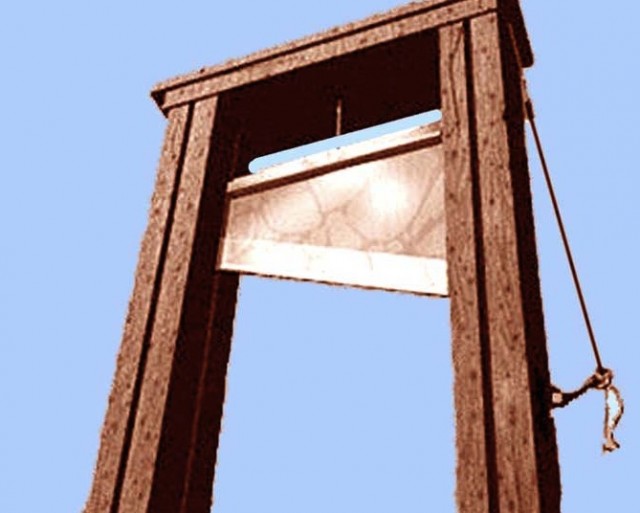 As mentioned, the guillotine was invented so that condemned prisoners would not suffer.
But what happens to the severed head?
With the guillotine, the head is separated from the body instantly. Many onlookers swore they saw heads move their eyes and eyelids, and some even claimed to hear them make sounds.
In this regard I would like to mention the experience of Dr. Beaurieux who in 1905 carefully studied this phenomenon.
“This is what I observed immediately after the decapitation: the eyelids and lips of the beheaded keep moving for about five or six seconds due to rhythmic contractions. This phenomenon has been noticed by all those who have found themselves in my position of observing this phenomenon…
I waited several seconds. The spasmodic movements are over. […] It was then that I called, loud and clear, “Languille!” I saw his eyelids open, without any spasm – detail on which I insist – but with only one motion, quite normal, as it happens every day when someone wakes up.
Subsequently Languille’s eyes are fixed permanently in my eyes and the pupils are focusing on things. I was in the presence of the vague and devoid expression that is observed in people while they are dying. I was dealing with bright eyes that were watching me. After a few seconds the eyelids shut again.
At that point, I called him again and again, without any spasm, slowly, the eyelids lifted and no doubt a pair of bright eyes stared into mine […]. Then his eyelids closed again. I tried to call a third time but there was no more movement. “
The experiment was taken up and debated by other doctors for decades: in 1956 two French forensic doctors, Piedelièvre and Fournier, argued that death by beheading is not instantaneous. But the evidence is only anecdotal and isolated observations, and it has never been verified scientifically. According to today’s doctors, the sudden drop in blood pressure to the brain causes loss of consciousness within seconds, and then death.
🦋 Emadion lives through its readers. If this story kept you up at night, buy me a coffee: it helps me bring you the next nightmare.
☕ Support Emadion on Ko-fiSources
- Guillotine, Wikipedia
- Guillotine, Encyclopaedia Britannica
- Joseph-Ignace Guillotin, Wikipedia
- Mastro Titta, Wikipedia
- Sophie Scholl, Wikipedia
- Eugen Weidmann, Wikipedia
- Hamida Djandoubi, Wikipedia
- Gabriel Beaurieux, report published in Archives d’anthropologie criminelle, 1905
- Daniel Arasse, The Guillotine and the Terror, 1989