Posted by
After the article about the mellified man, I could not help but talk about scaphism: an ancient Persian method of death sentence by torture.
We know it only through Greek authors, who describe it as a punishment the Persian kings reserved for those guilty of the worst crimes. The name comes from the Greek skáphē, “boat” or “trough”, from the shape in which the victim was enclosed.
How was scaphism done?
The victim was stripped, placed inside a canoe or a simple hollowed-out tree trunk, and tied tightly. However, arms, legs and head protruded from the boat. Then another canoe, or other dugout, was put on the victim’s body, leaving arms, legs and head in the open.
After that the victim was fed only with milk and honey until it caused severe diarrhoea. More honey was then poured over his body, especially on face and genitals, to attract insects.
The victim was then left in a swamp where mosquitoes, flies, bees, wasps and other insects, attracted by the honey and the accumulated excrements, would begin to lay larvae in his body.
The insectswould bite and sting their victim, disrupting the normal blood circulation. This caused gangrene and excruciating pain to the victim.
In fact, this meant that the body would rot while the person was still alive.
The victim was fed, always with milk and honey, for several days to avoid dehydration. In this way death was delayed, making him suffer for longer.
When at last death would come, it was due to starvation, dehydration, or infections.
Some versions say that the bugs did not eat the victim’s flesh, just stung and bit them, nonetheless causing much pain.
In another version of this torture, rather than in a boat,
the person was placed inside the belly of a horse, leaving out the limbs and the head: so that they would have to endure the pains of a double decomposition.
Sentenced to Scaphism

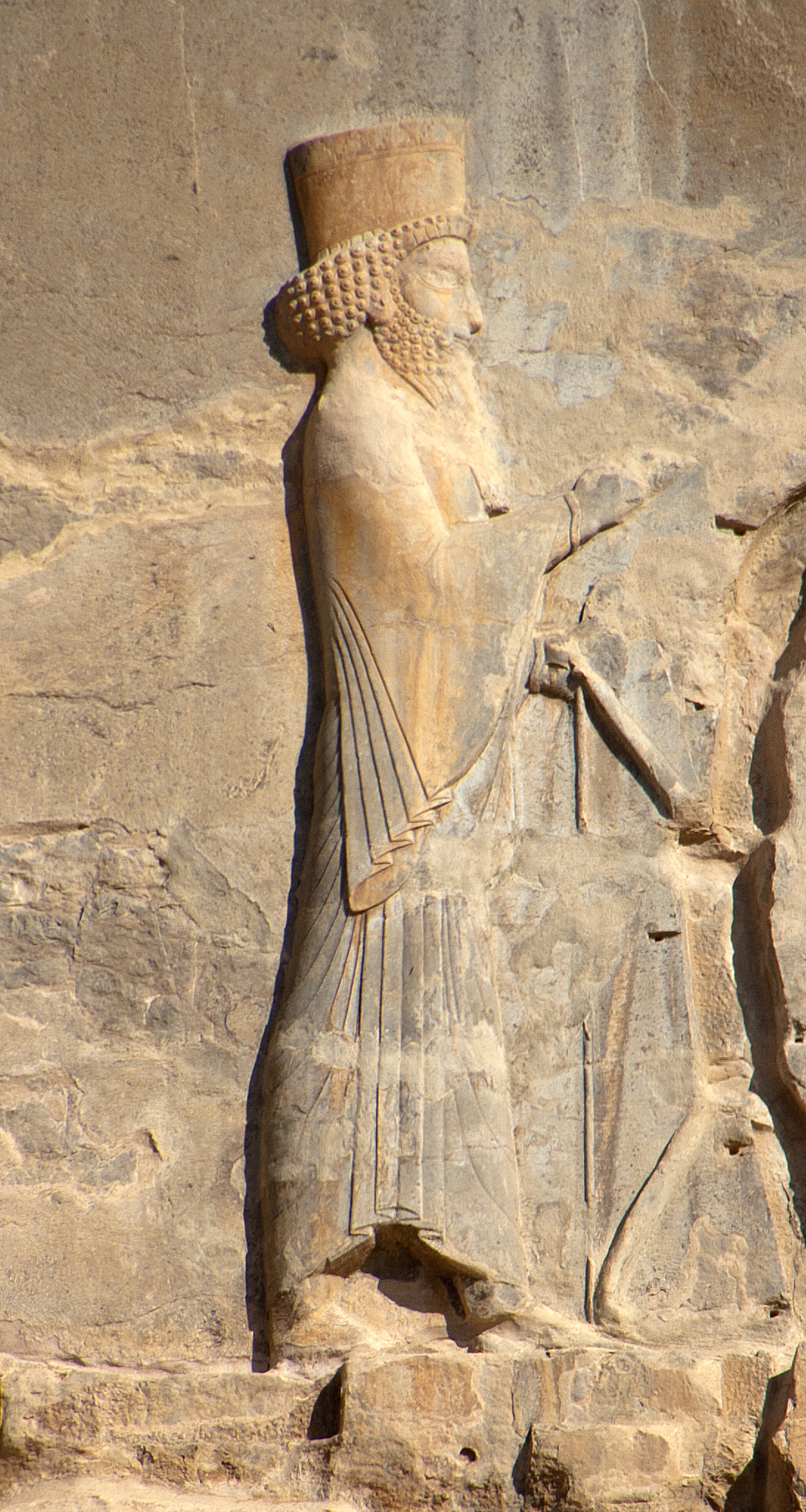
One of those who died by scaphism was Mithridates, a soldier of the Persian king Artaxerxes II. Artaxerxes’ brother Cyrus decided to challenge him for the throne of Persia, which escalated into a civil war that ended in 401 BC with the battle of Cunaxa, near Babylon.
The army of Cyrus seemed to have victory at hand, but a soldier of Artaxerxes called Mithridates shot an arrow that struck Cyrus right in the head. Artaxerxes was delighted and gave Mithridates gifts and wealth, on condition that he never revealed he had killed Cyrus. Artaxerxes wanted everyone to believe that it was him who killed his brother and won the battle. But one day, after being invited to a banquet by his sovereign,
Mithridates got drunk and told everyone the truth: how he was the one who killed Cyrus and not Artaxerxes. The king was angry, and condemned Mithridates to death by scaphism.
Plutarch described the torture in his Life of Artaxerxes, written about five centuries after the events, and says that Mithridates died after seventeen days of agony.
Did scaphism ever really exist?
One detail raises some doubts. Plutarch was not an eyewitness: he took the story from Ctesias of Cnidus, a Greek physician who lived at the court of Artaxerxes II and wrote a history of Persia. But Ctesias was already notorious in antiquity for his love of sensational tales and exaggeration, so much so that other Greek authors openly accused him of making things up. Many modern historians therefore think that scaphism, at least in the form described, may be more legend than a real Persian punishment.
That hasn’t stopped the story from surviving. In the 12th century the Byzantine chronicler John Zonaras retold it from Plutarch, adding new gruesome details, and since then scaphism has appeared in almost every list of history’s cruellest tortures.
If you are reading this article I’m sure you will find these interesting too:
- Ancient Tortures
- Medieval Inquisition Torture
- ancient Chinese Torture
- Modern Chinese Torture
🦋 Emadion lives through its readers. If this story kept you up at night, buy me a coffee: it helps me bring you the next nightmare.
☕ Support Emadion on Ko-fiSources
- Scaphism, Wikipedia
- Plutarch, Life of Artaxerxes