 Posted by
- Who: Oksana Oleksandrivna Malaya, born 4 November 1983 in Nova Blahovishchenka, Kherson region, Ukraine.
- When she was found: in 1991, at about seven and a half.
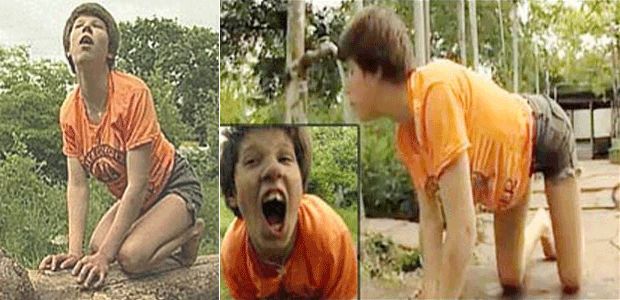
- How she behaved: she couldn’t talk, ran on all fours, barked and ate like a dog.
- Today: she lives in an institution in the Odesa region and works on a farm with the animals.
Some time ago I came across a video of a girl behaving like a dog. I was deeply struck because she had the same movements as a dog and even barked. Unfortunately the video showed nothing else and didn’t give the girl’s name so, after a lot of searching, I finally found her: Oxana Malaya, a Ukrainian girl.
I looked for information on various websites and always found the same story: Oxana grew up in a poor family, with parents who drank heavily and neglected her, and was sometimes even left tied up in the yard for days with the dogs, ending up sleeping in their kennel.
She would thus have grown up behaving like a dog rather than a human being. Social workers later took her to an institution where, with great effort, she was taught and educated.
What the records say
According to doctors and medical records, Oxana was born a normal child. Around the age of three, however, her parents stopped looking after her and she grew up surrounded by the household dogs. When the authorities found her in 1991 she was about seven and a half, but she couldn’t talk, lacked many basic skills and physically behaved like a dog: she ran on all fours, barked, slept on the floor, ate and cleaned herself like a dog.
Social services removed her from her parents and she was moved to an institution for children with intellectual disabilities in Barabol, in the Odesa region, where for years she followed specific therapies to recover language, behaviour and relationships with others.
Now, this is roughly the story you find online. But then I came across a documentary in which a journalist starts from the few known facts to trace the young woman’s identity.
The story told in the documentary
In this documentary we learn that Oxana lived in southern Ukraine. After tracing her name and old address, the journalists interview the neighbours who say they never saw Oxana tied up in the yard and actually remember her as a normal girl.
According to the documentary she starts going to kindergarten, and there too the teachers don’t remember any strange behaviour. Later she starts primary school, a school where there are many dogs.
Oxana, a shy child, often looks after them and brings them food. She starts to isolate herself and spends more and more time with them, until one day she starts behaving like them: she walks on all fours, barks, growls and tries to bite when she feels threatened.
This goes on until she is taken to a facility to be re-educated. After much patience and loving care, Oxana goes back to living like a human being.
It must be said that this version doesn’t match the medical records, which speak of neglect at home from the age of three and of a child who couldn’t talk at seven. I don’t know which of the two is closer to the truth, but in both Oxana grew up alone, with dogs as her only company.
The video online
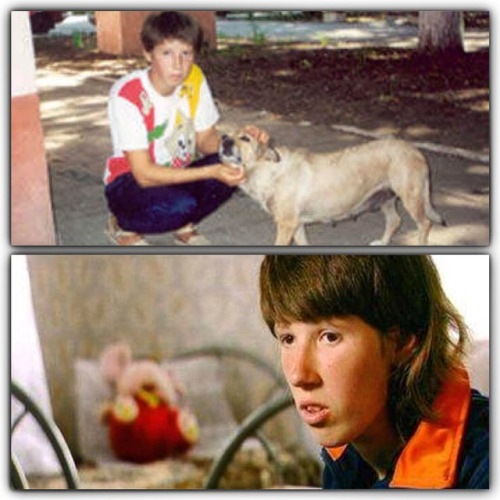
So why does the video I saw online show not a child but a teenager of about 16?
The documentary I watched explains why. Oxana’s story had become famous and a TV crew had visited the recovery facility to interview the “dog girl”. In 2001, when she was 17, Russian TV channel NTV made a documentary about her, and many others followed, including those by Channel 4 and Portuguese TV channel SIC.
The journalist asked her if she could act like a dog, as she did as a child, to show it on television, and Oxana agreed. One of the teachers, however, says that episode affected Oxana badly and from that day she started behaving like a dog again.
It took more time to re-educate her and now she lives in this facility with other people, doing small jobs on the farm, where she milks the cows and looks after the animals. She has learned to speak fluently, although according to doctors she will hardly ever be fully independent.
When interviewed, she says she now behaves like a human, but when she is nervous or angry she prefers to walk on all fours to calm down.
In 2013 Oxana was a guest on the Ukrainian talk show Hovoryt Ukraina, where she said she wants to be treated like a normal person and is offended when people call her a “dog girl”. She talked about her boyfriend, her work with the animals and her biggest dream: to find her biological mother.
Unfortunately I saw this documentary on TV purely by chance and can’t find it online. For now I’m adding the short clips showing Oxana behaving like a dog, but I hope to post the full documentary soon.
🦋 Emadion lives through its readers. If this story kept you up at night, buy me a coffee: it helps me bring you the next nightmare.
☕ Support Emadion on Ko-fi