 Posted by
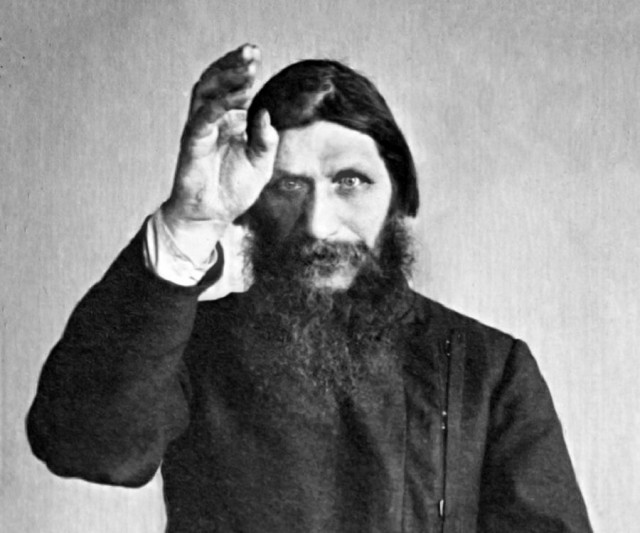
- Who: Grigori Yefimovich Rasputin (Pokrovskoye, 21 January 1869 – Saint Petersburg, 30 December 1916).
- Why he is famous: a mystic and healer, he became the confidant of Tsar Nicholas II and Tsarina Alexandra.
- Death: killed at the Yusupov Palace by a group of nobles led by Prince Felix Yusupov.
- The myth: the story of poison that didn’t work and of drowning is contradicted by the autopsy: he died from a gunshot to the head.
Grigori Yefimovich Rasputin was born on 21 January 1869 in Pokrovskoye, a village in western Siberia. He was a mystic and is famous for being the advisor to Tsar Nicholas II.
Like all charismatic people he made enemies, and his story is often changed to make him look like an evil sorcerer. So, a sorcerer in love with the occult or simply a misunderstood charismatic man?
Childhood
Rasputin was born into a peasant family. He did not attend any school, as was customary among peasants at the time, and helped with the work. He is said to have always had a strong personality, even as a child, but little is known about his childhood.
At 18, in February 1887, he married a local girl, Praskovya Dubrovina, and had 7 children, but only three reached adulthood: Dmitry, Maria and Varvara. His wife always stayed in Pokrovskoye and remained devoted to him until his death.
In 1897, at 28, Rasputin left his native village and his family to go on a pilgrimage, and spent a period at the Verkhoturye monastery. The reasons are unclear: according to some it was a spiritual crisis, perhaps linked to the death of a child, according to others a vision of the Virgin Mary or of Saint Simeon of Verkhoturye, and according to others still he wanted to escape a charge of horse theft.
Near the monastery lived the hermit Makary, who had a great influence on Rasputin, so much so that when he returned home he had become very religious, no longer drinking alcohol or eating meat.
Religion
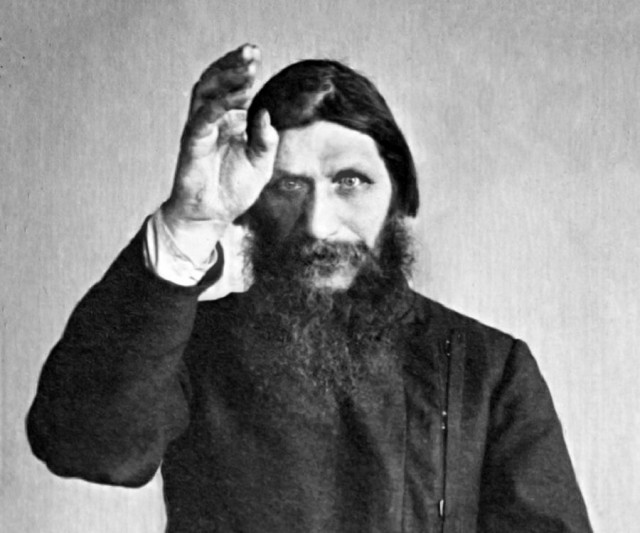
Later, the vision he claimed to have had of Our Lady of Kazan pushed him further towards a religious and mystical life.
In this period he was often identified as a strannik, a religious wanderer, and his fame as a mystic and healer began to grow. His abilities became so famous that even high-ranking and influential people turned to him, until in 1905 he was introduced to the Tsar.
The little Tsarevich, Alexei, suffered from haemophilia, then an incurable disease that could make even a small wound bleed for days. After the court doctors failed to cure him, the Tsarina decided to turn to this famous healer.
After Rasputin visited Alexei, the boy began to get better and better.
Some historians, including the French tutor of the Tsar’s children, Pierre Gilliard, have suggested that the improvement was due to stopping aspirin, a drug widely used at the time for pain, which however thins the blood: an effect not discovered until the 1950s. Rasputin ordered the doctors’ treatments to be stopped, and this probably helped the little Tsarevich. Others think his calm manner soothed the child, which in itself can help stop bleeding.
The Tsar’s court
After this episode he was often invited to court, where he soon became an advisor to the royal family and to many Russian nobles.
His influence, however, was not welcomed by everyone, and strange rumours soon began to circulate about him, such as that he was the Tsarina’s lover and took part in orgies.
Once the police even sent a letter to the Tsar describing Rasputin’s nocturnal escapades, but on some of the dates given the Russian mystic was at court, and the Tsar dismissed them.
In the summer of 1914, on the eve of the First World War, Rasputin was stabbed in the stomach by a peasant woman, Khioniya Guseva, outside his home in Pokrovskoye, and spent a long time in hospital in Tyumen, between life and death. Unable to use his charisma on the Tsar, he sent him telegrams begging him not to go to war, but his advice was ignored and Russia sided with the Kingdom of Serbia.
The Tsar thought the war would not last long, but he was wrong. In September 1915 he decided to lead the army personally, effectively leaving the government in the hands of the Tsarina, who constantly consulted Rasputin.
Many thought this was a move by Rasputin to influence the Tsarina and thus become the indirect ruler of Russia. The Tsarina, born a German princess, was already unpopular in the middle of a war against Germany, and Rasputin became the symbol of everything that was wrong at court.
What you are reading, the article I prepared for you, is only a summary of Rasputin’s life.
The death
Given his power, some well-known figures decided to kill him: Prince Felix Yusupov, husband of the Tsar’s niece, the deputy Vladimir Purishkevich and Grand Duke Dmitri Pavlovich. On the night of 30 December 1916 (17 December in the Russian calendar of the time) they invited him to the Yusupov Palace on the Moika, on the pretext of meeting the prince’s wife, and according to Yusupov’s account offered him cakes and wine poisoned with cyanide.
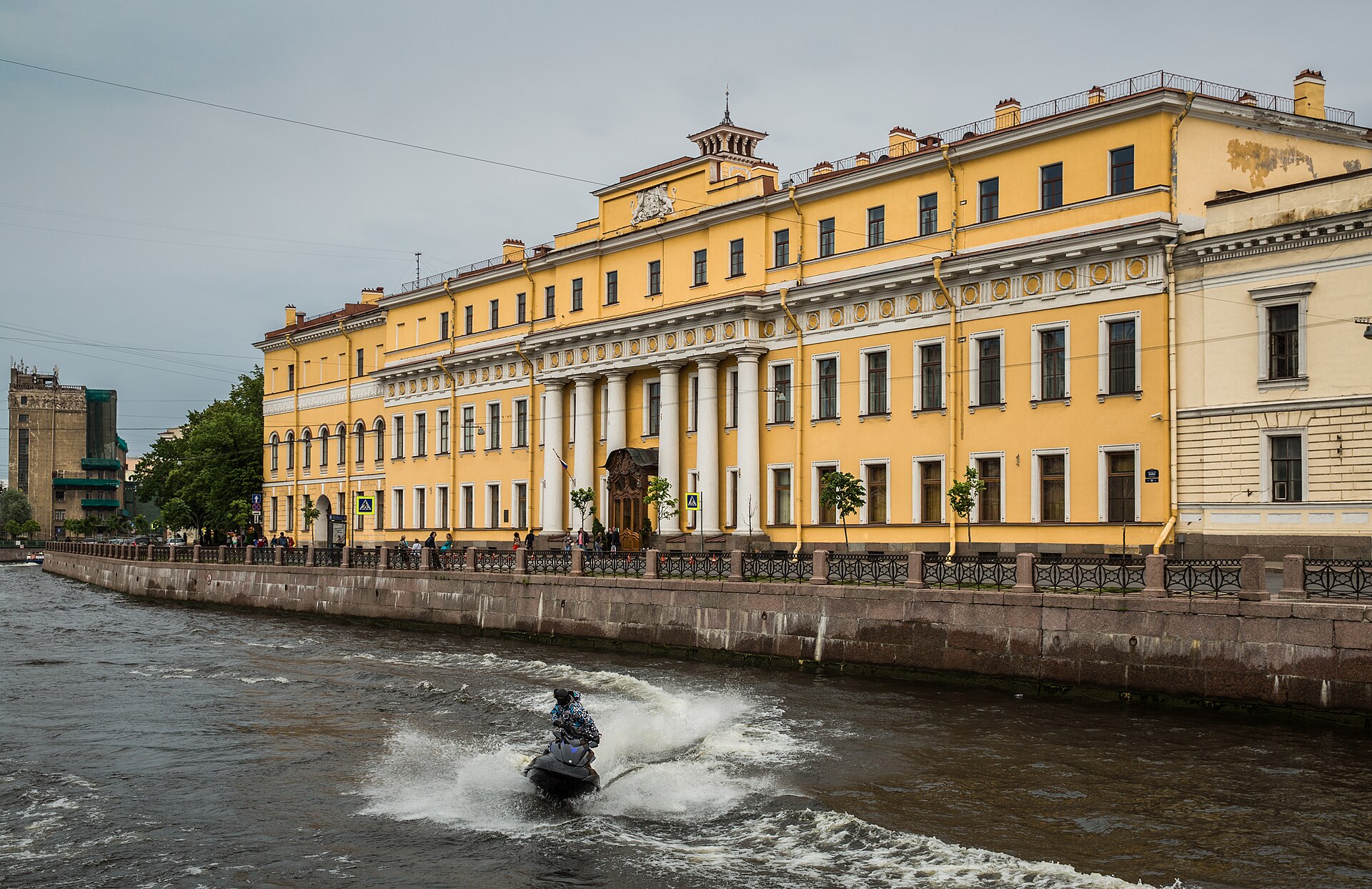
According to this version Rasputin ate and drank a lot, but the poison had no effect. Yusupov then shot him in the chest. Rasputin fell to the floor, but soon came round, attacked the prince and managed to get out into the courtyard, where Purishkevich shot him again. The conspirators wrapped the body in cloth, drove it to the Petrovsky Bridge and threw it into the river, the Little Nevka.
The body was found under the ice on 1 January, about 200 metres from the bridge. According to legend the autopsy revealed something extraordinary: Rasputin had drowned, so after being poisoned, shot several times and beaten, he was still alive.
But the medical examiner Dmitry Kosorotov told a different story: the body had three gunshot wounds, one fired at close range into the forehead, a cut on the side and other injuries, many inflicted after death. He found no trace of poison and no water in the lungs. Rasputin had died from the shot to the head, before ending up in the river. His daughter, moreover, said her father did not eat sweets and would hardly have touched those cakes. The tale of the indestructible monk, in short, is largely the work of Yusupov himself, who published it years later.
Rasputin was buried at Tsarskoye Selo, but a few months later, with the revolution, his body was exhumed and burned by soldiers on the orders of the new government.
Rasputin’s penis
It is said that during the autopsy his member was removed, and according to legend it measured about 30 centimetres.
It is then said to have been kept, dried, by a noblewoman. When this macabre detail came to light, Rasputin’s daughter claimed her father’s relic, which she kept until her death.
After that its trail goes cold, but now a museum claims to have Rasputin’s member preserved in formaldehyde. But how is that possible, if it had always been kept dried? In fact, during the autopsy Kosorotov found Rasputin’s genitals intact. The rumour about his “endowment” and the member in formaldehyde were probably spread to support the theories that he was the Tsarina’s lover and a libertine who loved orgies.
I think, instead, that he was simply a religious and very charismatic man who believed in the power of prayer and meditation.
🦋 Emadion lives through its readers. If this story kept you up at night, buy me a coffee: it helps me bring you the next nightmare.
☕ Support Emadion on Ko-fi