 Posted by
I decided to start this blog with one of the stories that fascinated me so much as a child: the green children of Woolpit.
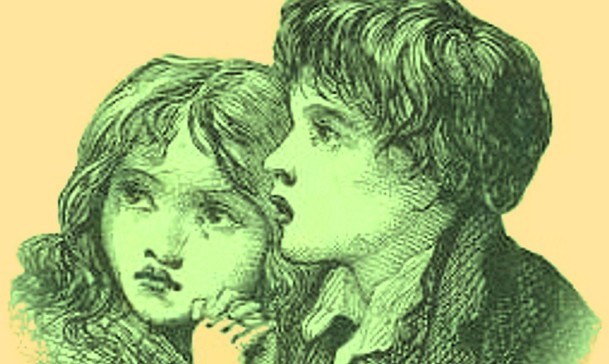
It is harvest time in the English countryside of the mid-12th century. On the edge of a small Suffolk village, some farmworkers approach the pits dug to trap wolves. But there is no wolf inside: there are two children, a boy and a girl. They wear clothes no one has ever seen, speak a language no one understands, and their skin is green.
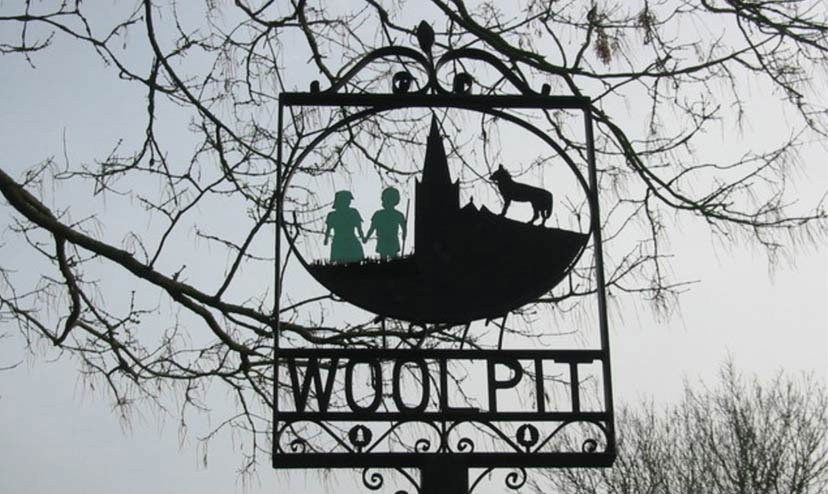
Woolpit, the village of the wolf pits
Woolpit is a village in Suffolk, in the east of England, not far from Bury St Edmunds. In the Middle Ages it belonged to that town’s powerful abbey. The name itself tells the beginning of the story: it comes from the Old English wulf-pytt, “wolf pit”.
The discovery of the green children
This is not a fairy tale collected centuries later. It was told by two chroniclers of the time: William of Newburgh, in his Historia rerum Anglicarum, written in the last years of the 12th century, and Ralph, abbot of Coggeshall, in his Chronicon Anglicanum, a few decades later. Neither saw the children, but both took the story very seriously. Ralph writes that he heard it several times from the very man who had taken them in. William admits he hesitated for a long time before believing it, but in the end gave in to the number and authority of the witnesses.
According to William, the events date to the reign of King Stephen, between 1135 and 1154. The two children are taken to a knight, Sir Richard de Calne, who tries to learn more about them, but it is impossible: they speak an unknown language and do not understand English.
For days they refuse all food. Then someone brings into the house some freshly harvested beans, still attached to their stalks, and the children want them desperately. But they do not know how to eat them: they open the stalks instead of the pods, and when they find nothing inside they burst into tears. Only when someone opens a pod and shows them the beans do they devour them, and for a long time they will eat nothing else.
Little by little they start trying other foods and their skin loses its green colour. They are baptised, but sadly the boy, the younger and weaker of the two, dies soon afterwards. The girl survives, learns English and can finally tell her story.
The green children’s story
What she tells is even stranger than her appearance. She and her brother came from the “land of Saint Martin”, a place where the sun never rose: there was only a faint light, like the one that precedes dawn or follows sunset for us, and that eternal twilight had turned the inhabitants’ skin green. In the distance they could see a bright land, separated from theirs by a great river.
There are two versions of how they reached Woolpit. In the first, they were tending their father’s flock when they heard a very loud sound, like the bells of Bury St Edmunds: they stood as if enchanted and suddenly found themselves among the reapers. In the second, they followed the animals into a cave, got lost and found the way out by following the sound of the bells. But when they came out the sunlight dazzled them, and the cave was never found again.
The girl grew up in Woolpit, working for years in the household of the knight who had taken her in. The chronicles of the time do not record her name and are not kind to her: they describe her as a rather loose and impudent young woman. William of Newburgh writes that she eventually married a man from King’s Lynn. The astronomer and writer Duncan Lunan, studying the family history of Richard de Calne, reached a different conclusion: according to him the girl was given the name Agnes and married Richard Barre, a royal official.
Who were the green children really?
Although the mystery has never been solved, we can make a few hypotheses.
Flemish children
The unknown language might have been Flemish: in the 12th century eastern England took in many Flemish immigrants, and one of their settlements was at Fornham St Martin, a few miles from Woolpit, across a river. “Land of Saint Martin” and Fornham St Martin: the resemblance is curious. In 1173, at Fornham itself, a battle was fought in which thousands of Flemish mercenaries died. Two orphaned children could have wandered for days in the woods before reaching Woolpit. There is, however, a problem with dates: William places the story under King Stephen, almost twenty years before that battle.
The “green sickness”
The children had a greenish complexion because of a very poor diet, a common problem at the time. A poor, insufficiently nourishing diet can cause hypochromic anaemia, once called the “green sickness” or chlorosis. Tellingly, as soon as they began to eat normally, the green disappeared.
Arsenic
Another hypothesis points to arsenic poisoning, which can give the skin a greenish tinge, take away the appetite and weaken the body. It would also explain the little brother’s fragile health.
The flint mines
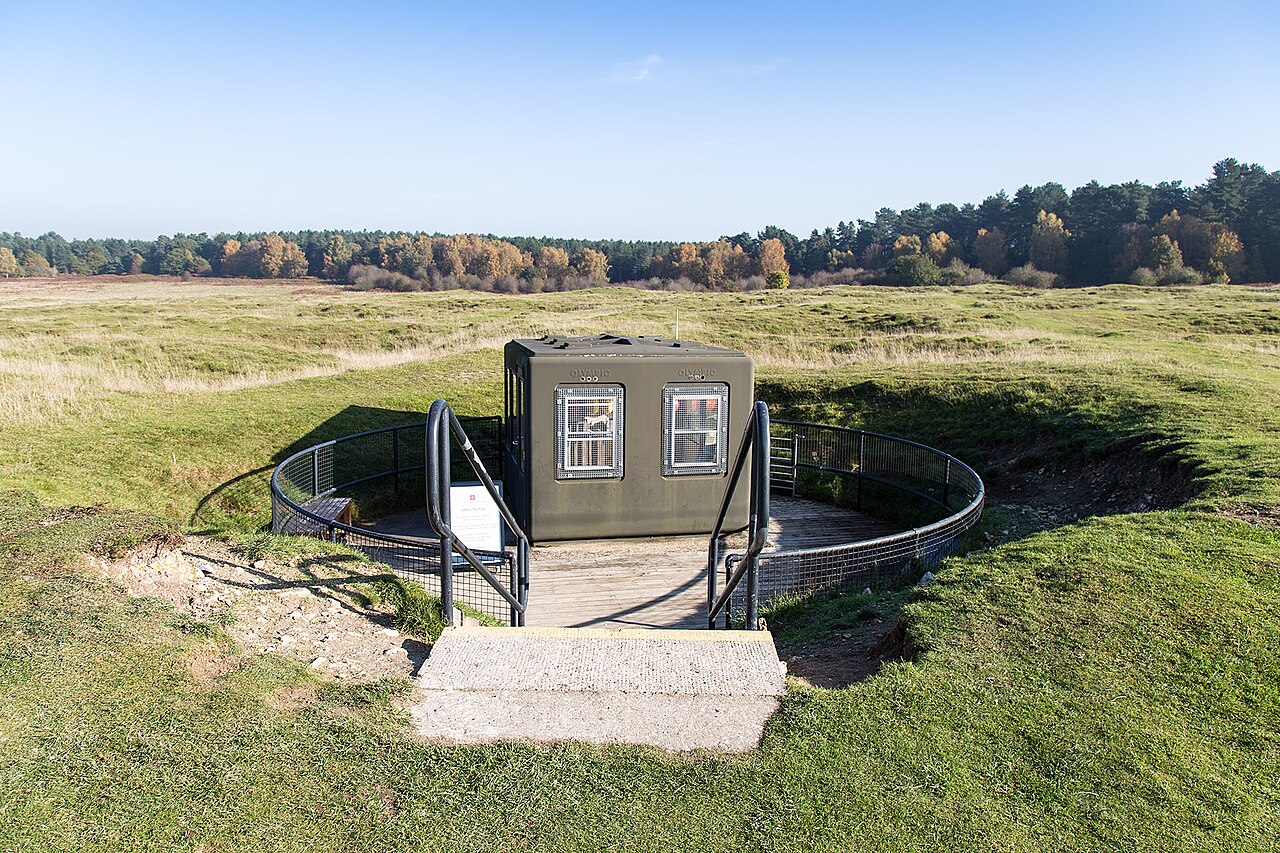
The tunnel the children described might have been a mine. In Thetford Forest, north-west of the village, lie the ancient flint mines of Grime’s Graves: hundreds of shafts dug in the Neolithic, more than four thousand years ago. Two children lost underground would have seen exactly that: a world without sun, steeped in dim light.
A legend
Or it is simply a legend: in northern cultures green is often associated with fairies and elves, and beans were said to be the favourite food of these fairy creatures. Two green children coming from an underground land bathed in twilight are, in effect, two little inhabitants of fairyland.
The green children of Banjos
I am sure you have also heard of the green children of Banjos, a village in Spain. The story, told by John Macklin in his 1965 book Strange Destinies, supposedly took place in 1887 and is almost identical to the Woolpit one, so much so that the mayor who takes the children in is called Ricardo de Calno, practically the same name as Richard de Calne.
So were there four green children, in two different countries, or is one of the two stories false? Based on the written evidence, we know that the Woolpit story, true or not, is described in 12th-century chronicles, while there is no solid evidence for the Spanish one. It is therefore likely that the green children of Banjos are nothing more than a legend inspired by the Woolpit tale.
Woolpit has not forgotten
After the Middle Ages the story was almost forgotten, then came back into fashion in the 19th century. In the 20th century it even inspired the writer Herbert Read, who in 1935 drew from it his only novel, The Green Child.
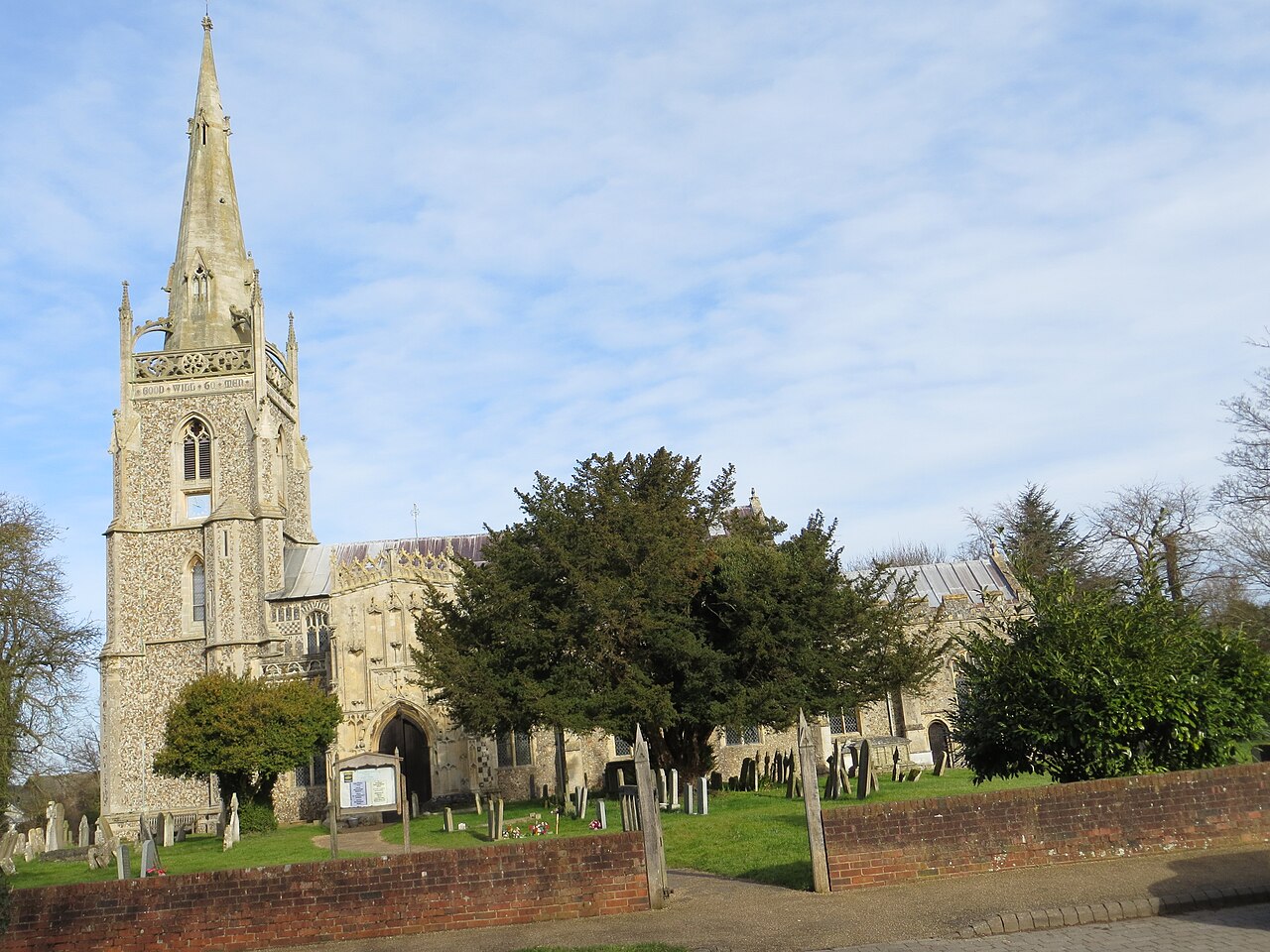
And Woolpit has never forgotten it. Since 1977 the village has had a wrought-iron sign bearing three symbols: the wolf it is named after, St Mary’s Church and the two green children.
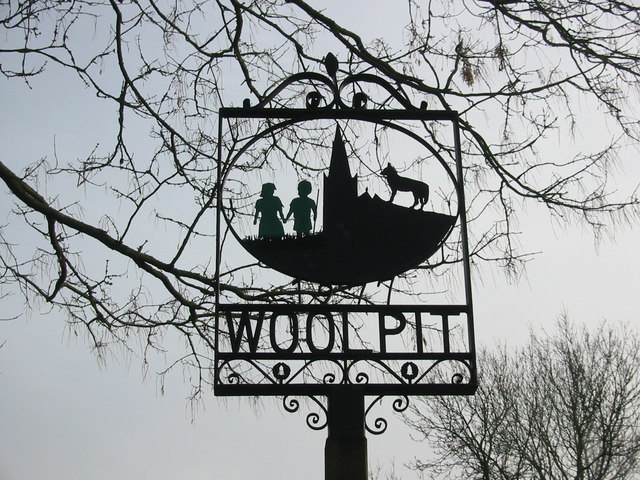
Reality or legend? The green children remain one of the great unsolved mysteries. Were they victims of a strange illness, travellers from another dimension, or simply the origin of a fascinating myth? Their story, halfway between historical chronicle and folklore, still captures our imagination centuries later.
🦋 Emadion lives through its readers. If this story kept you up at night, buy me a coffee: it helps me bring you the next nightmare.
☕ Support Emadion on Ko-fiSources
- William of Newburgh, Historia rerum Anglicarum; Ralph of Coggeshall, Chronicon Anglicanum.
- Edwin Sidney Hartland, English Fairy and Other Folk Tales, 1890.
- Skeptoid, The Green Children of Woolpit.
- Mental Floss, The Mystery of the Green Children of Woolpit.
- English Heritage, Grime’s Graves.
- Wikipedia – Green children of Woolpit