 Posted by
The torture of the brazen bull was invented by Perillos of Athens, and presented to Phalaris, the Tyrant of Akragas, as a new method of execution.
How did the brazen bull work?
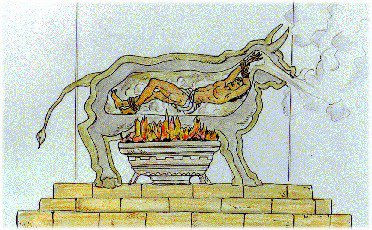
The instrument was a bronze statue depicting a bull, life-sized. The inside, however, was hollow and on one side was a door through which a condemned man entered. He was forced to lie down and, given the size of the statue, did not have much space to move. Once in position, the door was closed, and a fire was started just under the belly of the bronze bull. It was fanned until the belly was glowing.
In this way the victim inside was slowly roasted to death in the most atrocious, painful way.
Even if death occurred from inhaling the fumes released during the first few minutes, the condemned man suffered from severe burns, and emitted harrowing screams.
But the Bull had not only been designed as an instrument of torture, but also as an item of enjoyment for the tyrant, so the screams would not have been very pleasurable.
Perillos, therefore, had thought well in advance to provide the head of the bull with a system of internal tubes that transformed the cries of the poor wretches inside into sounds of a bellowing bull.
Furthermore, spices and perfumed oils were placed inside the bull to mask the smell of burning human flesh. It is said that the victims’ charred bones shone like jewels, and bracelets were made with them.
The death of the inventor of the brazen bull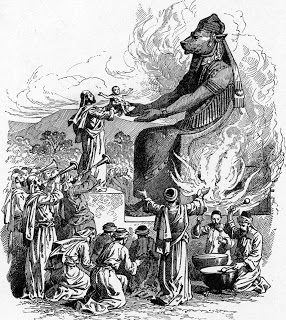
The Tyrant of Akragas was very pleased with this new method of execution, and wanted to test it immediately. He wanted to hear if the screams really would be similar to a bull’s bellows, and
ordered the very same Perillos to enter his creation for testing. The bronze founder entered, confident of his invention. But as soon as he’d settled inside, Phalaris ordered the door closed, and set the fire under the bull.
Perillos screamed in despair, and Phalaris was pleased to hear that his screaming sounded like bellowing.
Perillos was allowed to exit before he died, but it is then said that Phalaris had him thrown from a cliff.
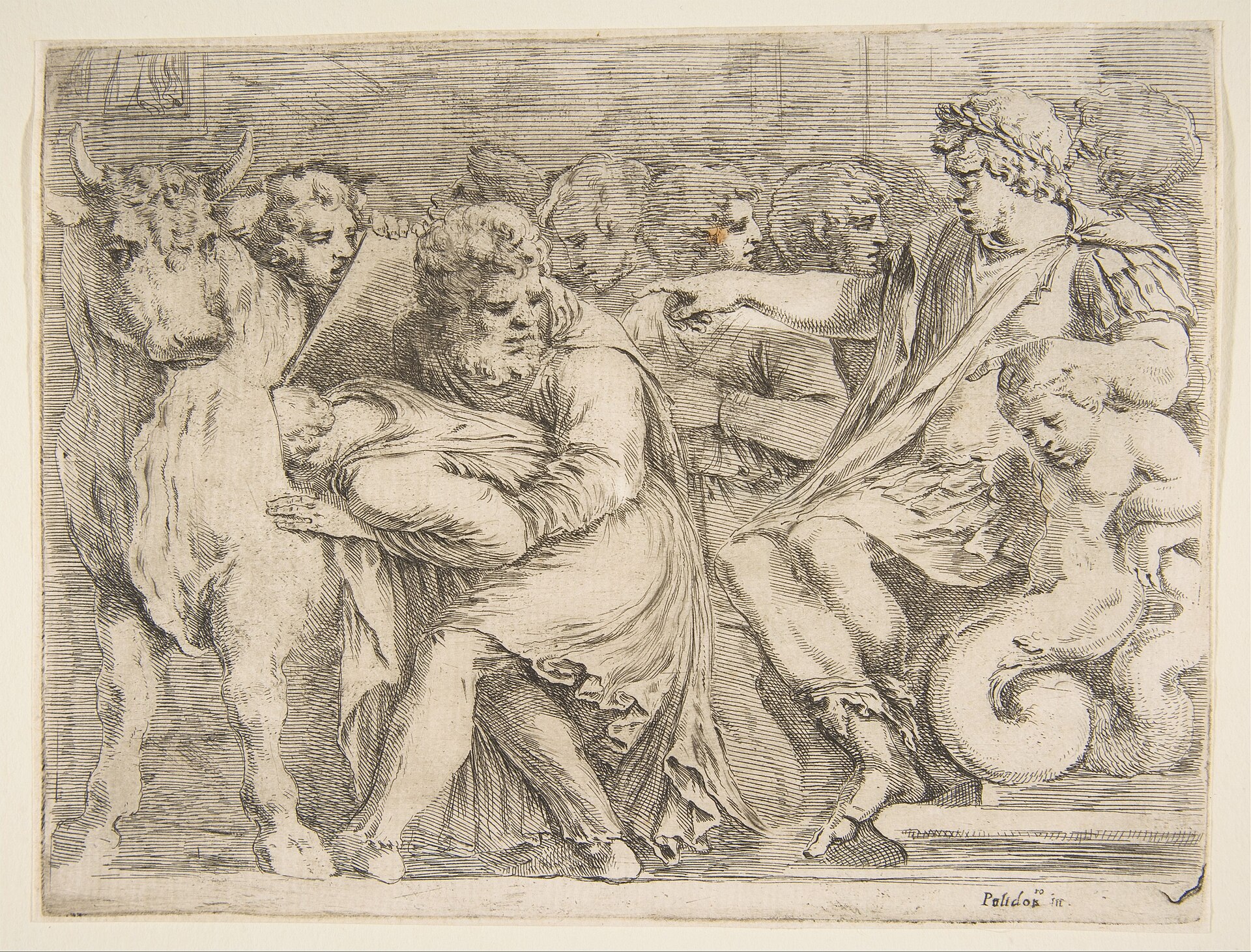
Fate eventually caught up with Phalaris too. Around 554 BC the tyrant was overthrown in a revolt led by a man called Telemachus and, according to tradition, ended up inside his own bronze bull.
The story was so famous in antiquity that it was told by the poet Pindar, the historian Diodorus Siculus and the writer Lucian of Samosata. According to Cicero, when the Carthaginians captured Akragas in 406 BC they took the bull to Carthage as booty; more than two and a half centuries later, in 146 BC, the Roman general Scipio Aemilianus, after destroying Carthage, returned it to the people of Akragas. Even Dante mentions it in Canto XXVII of the Inferno, comparing words struggling out of a flame to the bellowing of the “Sicilian bull” that first resounded with the cries of its maker.
This method of torture was used not only in Ancient Greece, but also by the Romans as a method of execution for Jews and Christians.
According to Christian tradition, the most famous victim of the brazen bull was Saint Eustace, a Roman general converted to Christianity who, under Emperor Hadrian, was supposedly shut inside the red-hot bull with his wife and two sons for refusing to sacrifice to the pagan gods. It is a legend rather than history, but it spread widely in the Middle Ages and the Renaissance, when the brazen bull became a popular subject for prints and paintings.
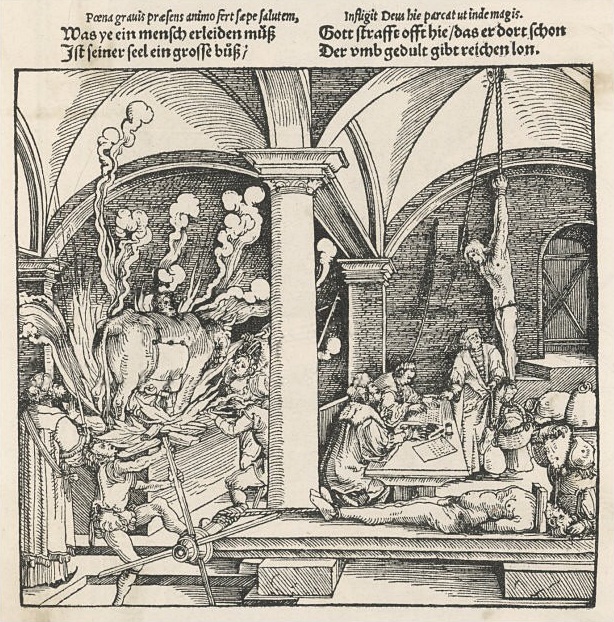
It is believed that the inspiration for this bronze bull could be found in a Carthaginian statue of the god Moloch. It was represented with the head of a calf, in which children were sacrificed by putting them into the hands of the statue, from where they slid into a furnace below. It should be said, though, that the tale of children sacrificed to Moloch in bronze statues comes from Greek, Roman and biblical writers hostile to Carthage, and archaeologists still debate how true it is.
🦋 Emadion lives through its readers. If this story kept you up at night, buy me a coffee: it helps me bring you the next nightmare.
☕ Support Emadion on Ko-fiSources
- Brazen bull, Wikipedia
- Dante Alighieri, Inferno, Canto XXVII
- Cicero, Against Verres, II, 4