 Posted by
The garrote was a device used to carry out the death penalty, used mainly in Spain. It basically consisted of tightening a steel ring around the neck of the condemned person, in order to break the neck vertebrae. But death usually came from strangulation.
This method was used to convict people belonging to lower classes, as the nobles were reserved the beheading by sword as way of punishment.
Execution method
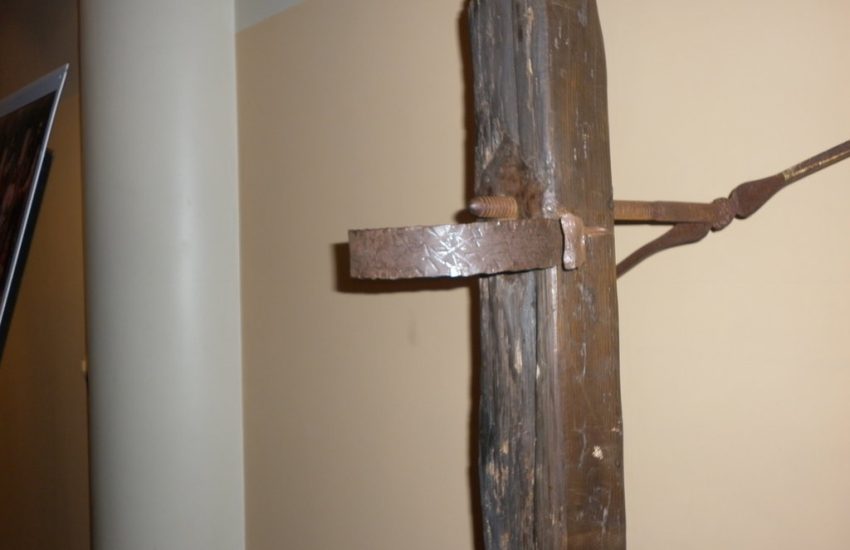
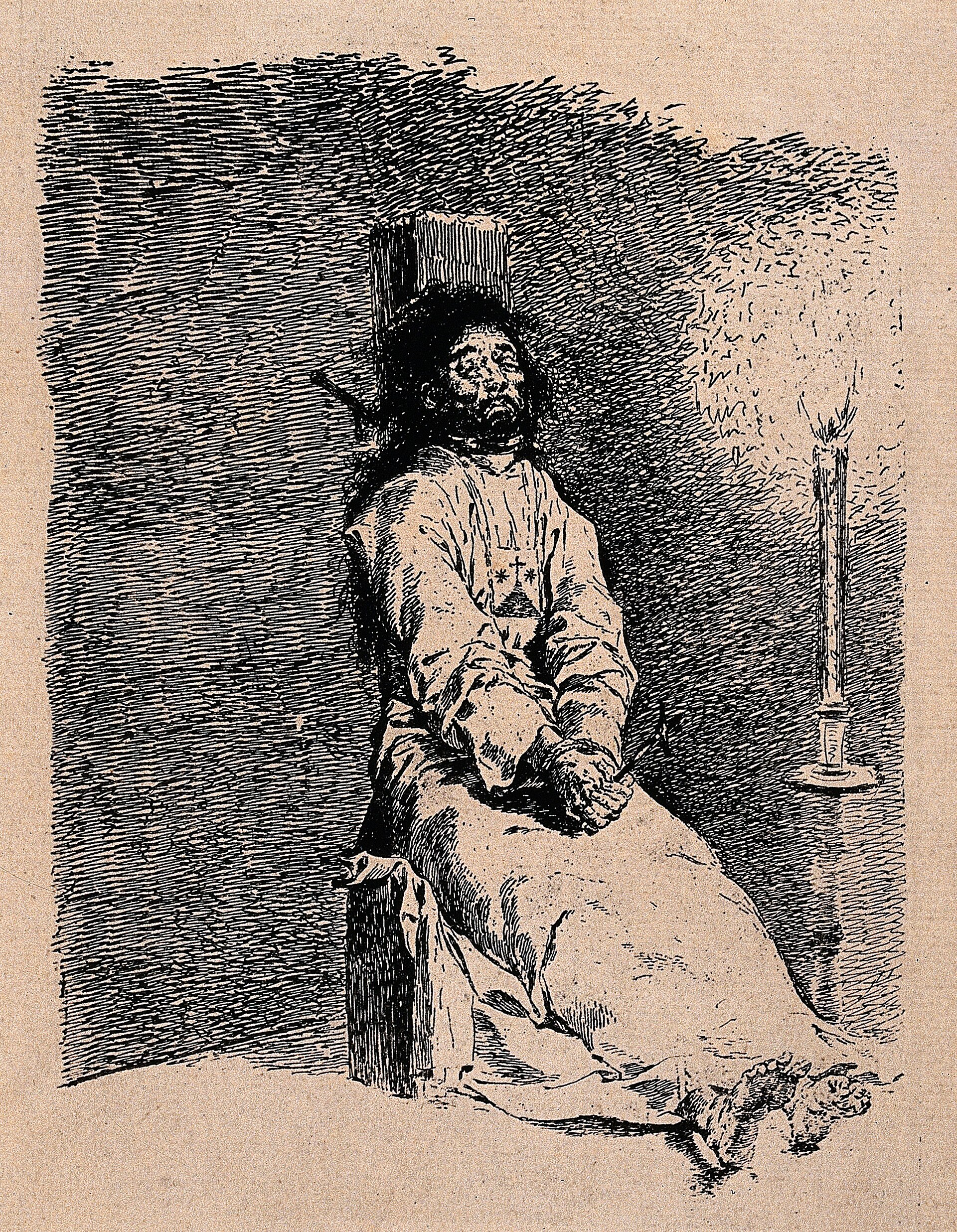
Initially this death penalty was executed by strangling the condemned, but over the years the technique was refined. The victim would sit on a chair with a very high back, made of a single wooden post on which a metal ring was fixed.
The ring was placed around the neck of the condemned and closed in the back with a screw.
By turning the screw, the ring tightened around the prisoner’s neck and, if the offender was lucky, it would break his or her vertebrae and lead to immediate death, that otherwise occurred by strangulation.
Later a metal spike was added on the inside of the ring, on the side of the post, which under pressure pierced the neck, breaking the vertebrae and causing death.
History
The garrote had been used since the days of the Roman Empire and was widely applied during the Middle Ages, especially in Spain and Portugal.
It was also used by the conquistadors in America and the last Inca emperor Atahualpa was sentenced to die by garrote, in 1533.
The use of this machine became widespread in the nineteenth century because any blacksmith could make one. It was also considered a more lenient punishment than hanging. Spain’s king Fernando VII abolished hanging with a decree in 1832 and replaced it with the garrote.
However, even in this death penalty distinctions were made between the nobles and ordinary citizens: while the former were brought to the gallows on a horse’s back, the latter were brought on a donkey.
The last execution by garrote took place in 1974, while a man sentenced to the same fate in 1977 was pardoned.
The last two people executed by garrote were killed on the same day, 2 March 1974, in the final months of Francisco Franco’s dictatorship. One was Salvador Puig Antich, a 25-year-old Catalan anarchist convicted of killing a police officer during his arrest. His execution in Barcelona’s Modelo prison sparked protests across Europe and became a symbol of Francoist repression; in 2006 his story was told in the film Salvador. The same day, in Tarragona, a German prisoner, Georg Michael Welzel, known as Heinz Chez, was also garrotted.
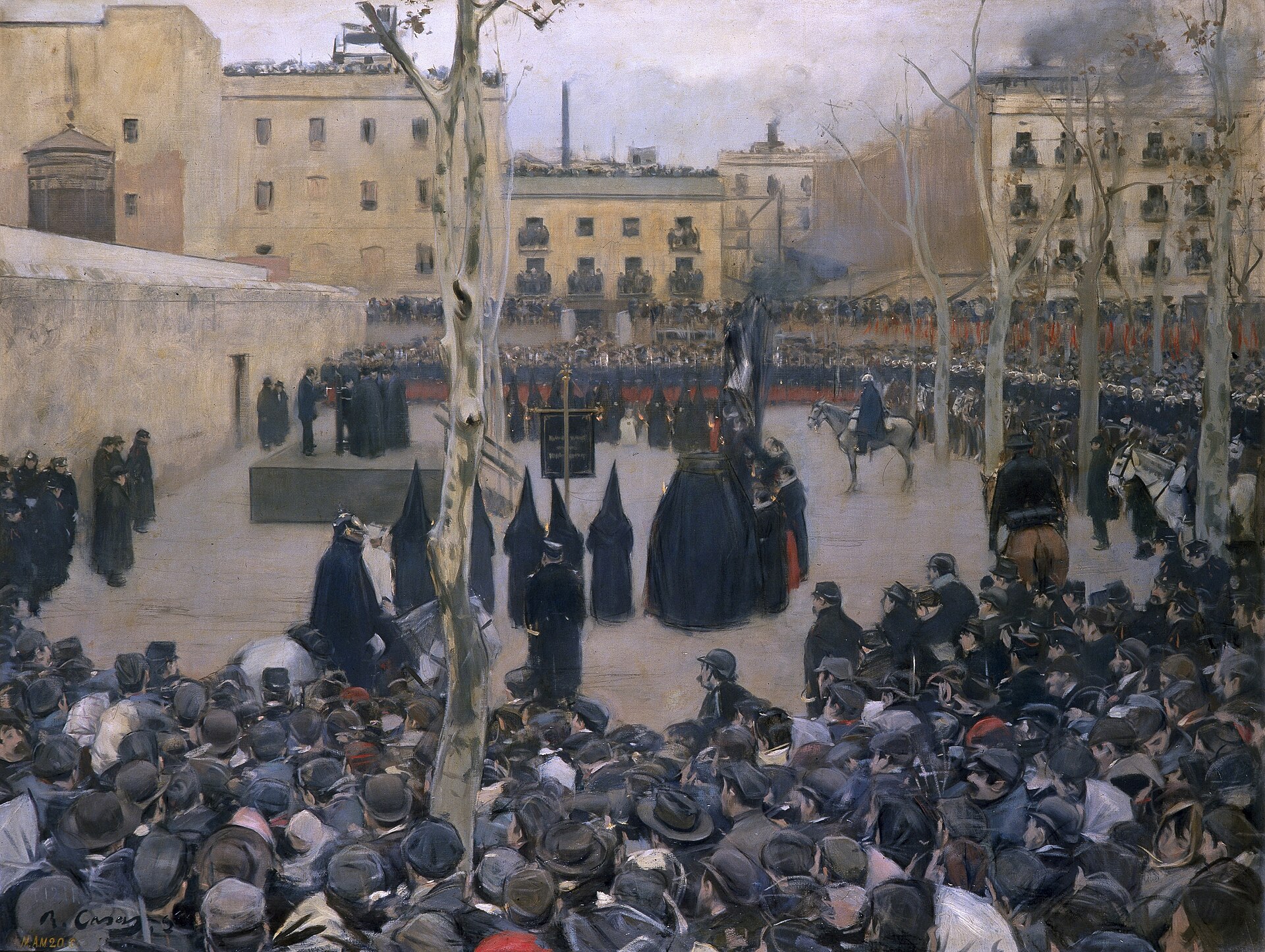
A few decades earlier, in 1894, the painter Ramon Casas captured a public execution in Barcelona in a large canvas: the crowd, the soldiers, the scaffold with the garrote, the condemned man accompanied by clergy. The painting now hangs in the Museo Reina Sofía in Madrid.
This death penalty was also used in the Philippines when it was a Spanish colony and remained in force in the country even after passing under US rule, even though the United States itself never used it. Spain’s 1978 Constitution abolished the death penalty, keeping it only for certain military crimes in wartime; in 1995 it was removed from there too, and today Spain does not allow it under any circumstances.
🦋 Emadion lives through its readers. If this story kept you up at night, buy me a coffee: it helps me bring you the next nightmare.
☕ Support Emadion on Ko-fi