 Posted by
Necklacing is a form of torture executed in modern times, born in the mid-80s in South Africa.
Execution of the necklacing torture
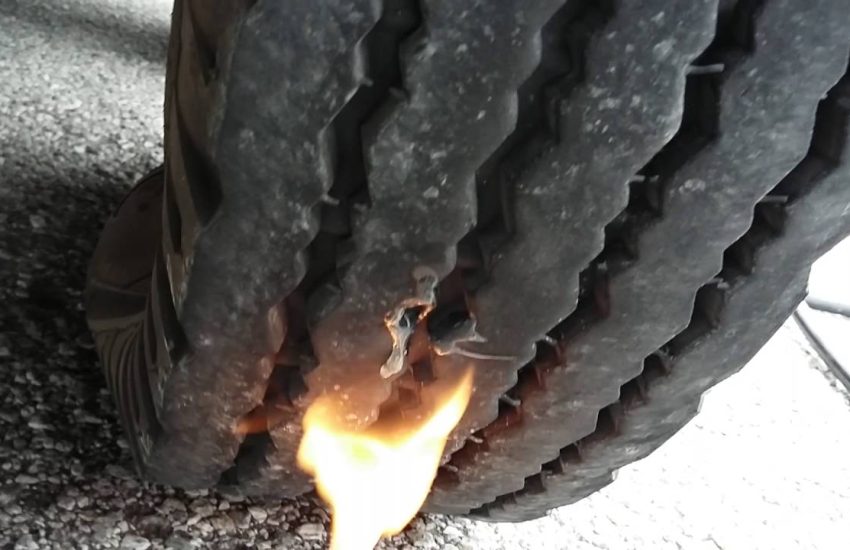
The execution of this torture is quite simple: bind the hands and feet of the victims and then put a rubber tire around the neck, sometimes forcing it on the shoulders to immobilize the victim, just like a necklace.
Then the tyre is doused with petrol and set on fire. Death is slow and terrible, as the victim is burned alive.
The first episode of this torture is traced back to March 23, 1985 when a group of people killed Benjamin Kinikini, a local councillor accused of corruption, and his family.
They were dragged out of their house, stabbed and then lit on fire. In this case the cause of death were the cuts done with knives, but it is this episode that started the long trail of violence that followed.
In the townships, necklacing became the weapon some anti-apartheid militants used to punish anyone accused of collaborating with the white government: black police officers, local councillors, suspected informers. Often a suspicion was enough. On 13 April 1986, in a speech in Munsieville, Winnie Madikizela-Mandela, Nelson Mandela’s wife, while he was still in prison, uttered a now-infamous line: “With our boxes of matches and our necklaces we shall liberate this country”. Her words caused an enormous outcry, and the African National Congress publicly distanced itself from the practice.
Cases of necklacing
In July 1985, a young South African girl, Moloko, declared that his sister had been burnt alive after she had been put a tire around her neck and that pieces of glass were inserted into her vagina. Once dead she was then hit with a big stone in the face.
The first images of this torture were immortalized by reporter Kevin Carter (the author of the picture with the child and the vulture) in the mid-80s.
He said that what he had seen and photographed had horrified him, but he was also shocked by what he was doing: taking pictures of torture.
Thanks to that reportage the media became interested in the phenomenon and Kevin thought maybe his photographs could have done something good.
However, when cases of torture of the series began to increase after being covered in the press, the reporter wondered if all those episodes would have happened if the media had not spoken of the torture. And this is a question that has followed him for his whole life.
The torture of the rubber tire in the world
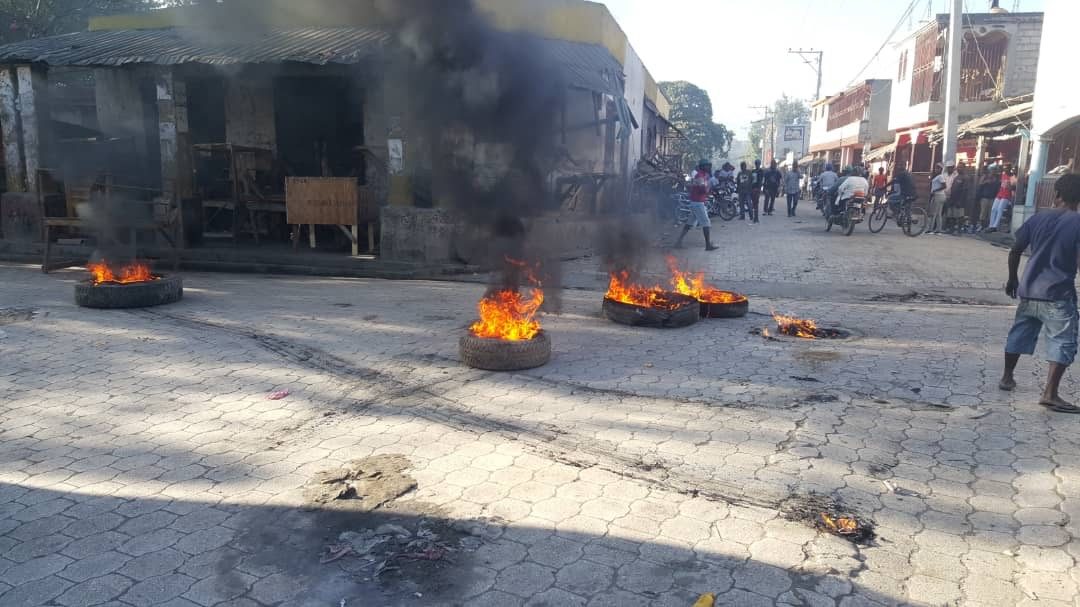
Despite the torture of the necklacing was born in South Africa and is connected to this African country, it is also found in other parts of the world. Cases of torture using a tire have been found in Haiti, in the Caribbean, against the supporters of the dictatorship of Jean-Claude Duvalier from 1986 to 1990. There it was called “Père Lebrun”, after a tyre dealer who appeared in a TV advert. In Haiti the practice has never completely disappeared: in April 2023, in Port-au-Prince, a crowd killed more than a dozen suspected gang members and burned them with tyres, sparking a vigilante movement known as “Bwa Kale”. In 2010, there were 45 cases reported.
In the nineties this type of torture was also used in the Ivory Coast by some students to punish thieves who stole on university campuses.
One of the more recent deaths caused by this torture was in 2006, in Nigeria.
It is particularly used in Brazil by drug dealers who call it micro-ondas, a clear reference to the microwave.
The best-known case is that of Tim Lopes, an investigative journalist for TV Globo, murdered this way in 2002 by drug traffickers in a Rio de Janeiro favela he had infiltrated with a hidden camera.
🦋 Emadion lives through its readers. If this story kept you up at night, buy me a coffee: it helps me bring you the next nightmare.
☕ Support Emadion on Ko-fi