 Posted by
In short
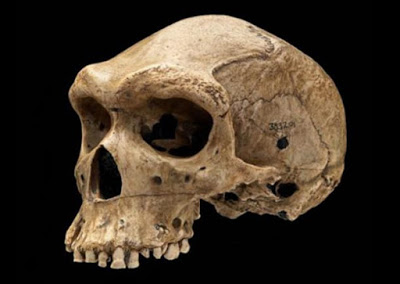
- What it is: the Kabwe 1 skull, also known as “Broken Hill Man” or “Rhodesian Man”.
- Discovery: 17 June 1921, in the Broken Hill mine, then Northern Rhodesia (today Kabwe, Zambia).
- Age: about 299,000 years, according to 2020 dating.
- Where it is: at the Natural History Museum in London; Zambia is asking for its return.
- The “bullet hole”: for science, a lesion caused by an infection or a bone disease.
On 17 June 1921 a Swiss miner, Tom Zwiglaar, found an almost complete skull at the back of a cavern in the Broken Hill lead and zinc mine, in what was then Northern Rhodesia, now Zambia. It was the first archaic human fossil ever discovered in Africa. At first it was even thought to be a previously unknown type of hominin, and English palaeontologist Arthur Smith Woodward coined the name “Homo rhodesiensis”. Later, however, it turned out to have much in common with Homo erectus, Homo sapiens and Neanderthals, and today it is generally classified as Homo heidelbergensis.

For decades its age remained uncertain, because the find site was destroyed by mining. Estimates ranged from 125,000 to 500,000 years ago, until in 2020 a team of researchers directly dated the teeth and a fragment of the skull, arriving at about 299,000 years. Kabwe man was thus perhaps a contemporary of the first Homo sapiens.
So what is strange about this skull?
The prehistoric skull with a bullet hole
Well, there seems to be a perfectly round hole in the bone, on the left side, very similar to one left by a bullet. According to the version circulating online, the hole would enter from the left side and exit on the right.

Maybe it’s just the result of a wound from a spear or an arrow, you’ll ask. According to supporters of the bullet theory, that would be impossible. This is because an arrow or a spear, even when thrown at high speed, causes micro-fractures around the entry and exit holes, which are absent on this skull.
According to this version it would therefore be a hole caused by a bullet fired from a firearm, and the hypothesis that the skull is more recent than thought would also be refuted by the dating. The same goes for the idea that the skull belonged to a hominin but was damaged recently by someone with a firearm: the skull lay deep in the mine, encased in a mineral deposit, which rules this out as well.
So what could the answer be? Some ancient civilisation with advanced technology, or a time traveller?
What science says
Unfortunately, or fortunately, the story is somewhat different from how it is told. The skull has no exit hole: the right side is simply partly missing, probably damaged when it was found or before. And palaeontologists have never talked about bullets.
Kabwe man had terrible teeth, with some of the worst decay ever observed in a fossil hominin, with several abscesses. As early as 1928, doctor M. Yearsly, examining the skull, found signs of an infection starting in the mouth that would have caused mastoiditis, an infection of the middle ear, and an abscess on the left temporal bone, exactly where the “hole” is. According to Yearsly, the infection then spread down the neck into the chest, causing death.
This diagnosis is still the most widely accepted, although other scholars have explained the lesion with other bone diseases, such as cholesteatoma, a cyst or an eosinophilic granuloma. In any case, it would have been a slow process, from the inside outwards, which also explains the absence of fractures around the hole.
The tooth decay may also have been worsened by lead poisoning: after all, Kabwe man lived right on top of a large lead and zinc deposit.

Other similar finds
To complicate matters, at least according to supporters of the bullet theory, this would not be the first prehistoric skull with such a hole.
In Russia, near the Lena River, the skull of an ancestor of the bison was reportedly found with the same hole, without micro-fractures. Even more surprising, the hole had supposedly calcified, suggesting the animal survived the shot. This skull, however, is mentioned only in mystery books and websites, and I haven’t found any scientific studies describing it.
The hominin skull is at the Natural History Museum in London, which received it in 1921 from the mining company. Zambia is negotiating with the United Kingdom to get it back. You can see its description on the Smithsonian’s dedicated page.
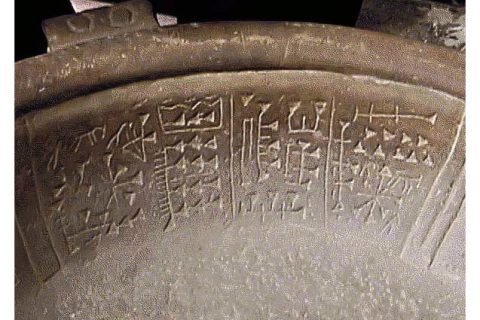
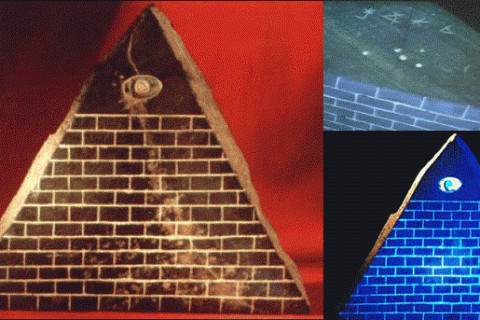
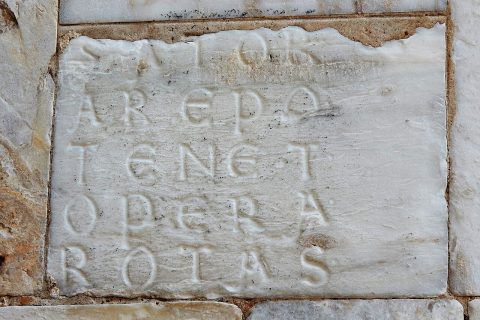
This skull is often cited as an OOPArt (Out Of Place Artifact), one of those archaeological finds that, according to common beliefs about the past, supposedly could not have existed at the time they are dated to.
🦋 Emadion lives through its readers. If this story kept you up at night, buy me a coffee: it helps me bring you the next nightmare.
☕ Support Emadion on Ko-fi