 Posted by
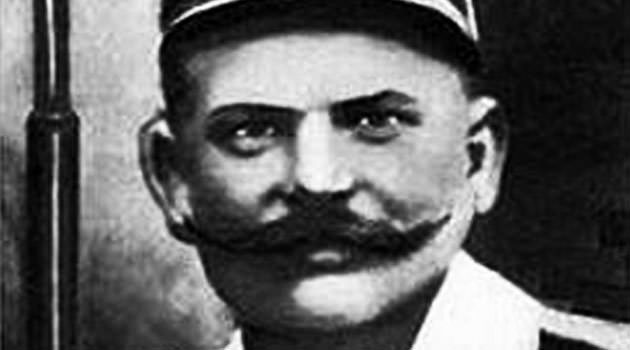
Béla Kiss (c. 1877 – disappeared 1916) was a tinsmith from Cinkota, near Budapest. In 1916, while he was at war, 24 bodies were found at his house, almost all of women lured through marriage ads, strangled and preserved in alcohol in metal drums. Kiss escaped from a Serbian military hospital and was never caught.
Béla Kiss was a Hungarian serial killer active in the early 20th century. His victims were mostly women who, after being strangled, were preserved in alcohol in large metal drums.
The story of this serial killer has been told many times, and each version has different details. I think some were made up out of thin air to embellish the story, so let’s start from the most solid facts.
Béla Kiss
Béla Kiss was born around 1877 in Izsák, in what was then Austria-Hungary. In 1900 he moved to Cinkota (or Czinkota), then a village on the outskirts of Budapest and now part of the city, where he worked as a tinsmith. A 1907 newspaper described him as an unmarried, honest man with no debts and reliable in business. He was also interested in the occult and astrology.
In 1912 he hired a housekeeper, Mrs Jakubec, who noticed that Kiss wrote to a great many women. In fact he placed ads in the newspapers presenting himself as a matrimonial agent or a fortune teller, and every now and then brought one of these women home, though none of them ever stayed long.
Kind but reserved with his neighbours, Kiss had another quirk: he collected large metal drums. When the local police asked what they were for, he said he was filling them with fuel ahead of rationing in the coming war. A perfectly plausible answer, and nobody worried about it any more.
The discovery of the bodies
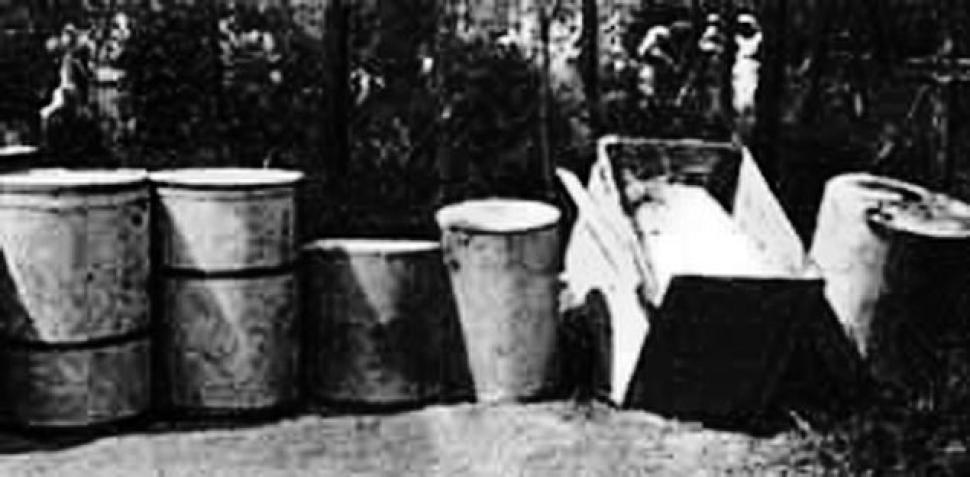
When the First World War broke out in 1914, Béla was called up and left for the Serbian front, leaving the house to Mrs Jakubec. Word spread in the village that he had died in the war.
In spring 1916 the owner of the house, Márton Kresinszky, decided to renovate it. Together with a neighbour, the pharmacist Béla Takács, he went into the room next to Kiss’s workshop looking for materials and found seven tin drums sealed with lead. They opened the first with an axe and were hit by a terrible stench: inside was a sack, and in the sack the body of a woman. Out of the second came a lock of blonde hair.
The authorities were called and found a woman’s body in each of the seven drums. Searching the whole property, police reached 24 bodies: believed to be 23 women and one man. They had been strangled with a cord and preserved in alcohol in airtight drums. Their necks had small puncture marks and the bodies seemed drained of blood, so much so that people even spoke of vampirism.
The writer Frigyes Karinthy, who was present when the drums were emptied at Cinkota cemetery, described with horror the “collector’s” precision with which each body had been tied and arranged.
The head of the Budapest detective police, Károly Nagy, immediately asked the military to arrest Kiss, if he was still alive. But Béla Kiss is a very common name in Hungary and the search was difficult.
Mrs Jakubec was suspected of being an accomplice, partly because Kiss had left her money in his will, but under questioning she denied everything. She did, however, show police a secret room, kept locked, that her employer had always forbidden her to enter.
Inside were bookcases full of books, many on poisons and strangulation, a photo album and letters from 74 women, the oldest dating from 1903, who had answered his marriage ads. The letters revealed his method: Béla chose middle-aged women looking for a husband, preferably with no relatives nearby, courted them and got them to send him money. Two of them had even taken him to court for robbing them, but then disappeared and the cases were dropped.
The search and Béla Kiss’s escape
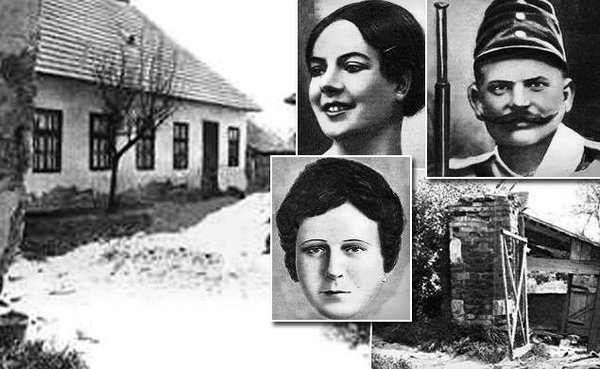
On 4 October 1916 Nagy received a letter saying that Béla Kiss was in a military hospital in Serbia. When police arrived, however, he had already escaped, leaving the body of another soldier in his bed.
In the following years the reports about Béla Kiss were wildly varied: some said he had died in Turkey, others that he was in prison in Romania, and others still that he had taken on the identity of a younger soldier.
In 1920 a soldier in the French Foreign Legion said he had heard a comrade named “Hoffman” boasting that he knew how to strangle a woman. The description matched Kiss, but the man deserted before police could reach him.
In 1932 detective Henry Oswald claimed he had seen him coming out of the New York subway, but lost him in the crowd. From then on nothing more was ever heard of Béla Kiss.
Unconfirmed details
Some versions of the story say that Béla Kiss was married to a much younger woman who cheated on him. Furious, he supposedly killed her and her lover, telling people the two had run off together, and then went on killing women out of revenge.
Many details have surely been lost over time and many made up. What is certain is that Béla Kiss was a serial killer who strangled women and preserved them in alcohol, and that he never paid for his crimes.
🦋 Emadion lives through its readers. If this story kept you up at night, buy me a coffee: it helps me bring you the next nightmare.
☕ Support Emadion on Ko-fi