 Posted by
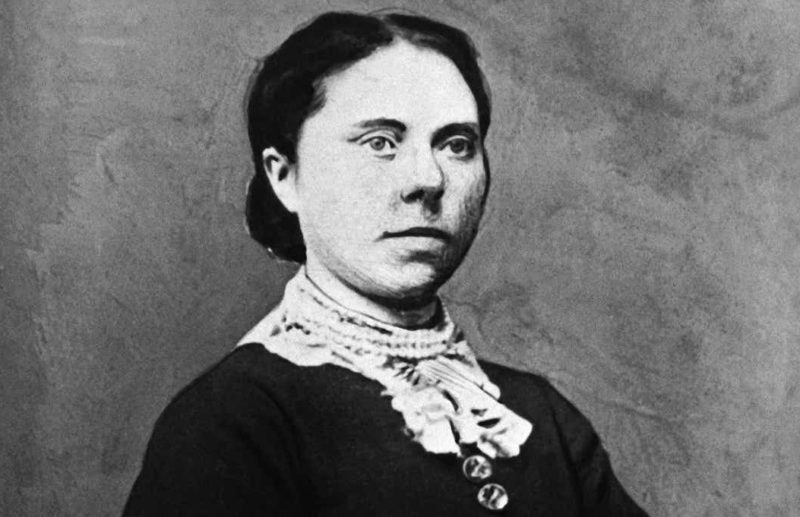
Belle Gunness, born in Norway in 1859 as Brynhild Størseth, is one of the most prolific serial killers in American history. Between 1884 and 1908, in Illinois and Indiana, she is thought to have killed at least fourteen people, mostly men lured to her La Porte farm through marriage ads, though some believe there may have been as many as forty victims. In 1908 her house burned down and a headless woman’s body was found. Whether it was really her has never been established.
Belle Gunness, also known as “the black widow of La Porte” or “Hell’s Belle”, was one of the most ruthless serial killers in United States history. Born in Norway and emigrating to America in the 19th century, she is held responsible for the deaths of many people, including at least one husband, several suitors and probably some children too. In this article we trace her life, from Norway to her crimes in America, the murders, the way she lured her victims and the mystery of her end.
The origins of Belle Gunness
Belle was born on 11 November 1859 in Selbu, Norway, as Brynhild Paulsdatter Størseth. She was the youngest of eight children of Paul and Berit Størseth, a poor family. In 1874 she was confirmed in the Church of Norway and at 14 she began working on neighbouring farms, milking and herding cattle, to save the money for the journey. In 1881 she left for the United States. When she arrived at Castle Garden, New York’s immigration centre, her name was written on the passenger list as “Belle”.
She joined her sister Nellie, who had emigrated a few years earlier, in Chicago, and worked first as a domestic servant, then in a butcher’s shop cutting up animal carcasses. She was an imposing woman, at least 1.70 metres tall, weighing between 95 and 113 kilos, and very strong-looking.
Mads Sørensen and the children
In 1884 Belle married Mads Ditlev Anton Sørensen. The couple opened a candy store, which was destroyed by fire. Their home burned down too, and both times they collected the insurance. Two babies also died in the house, officially from inflammation of the large intestine. Belle had insured both and collected a large cheque after each death. The neighbours gossiped, not least because nobody had ever seen her pregnant.
Sørensen had two life insurance policies, and on 30 July 1900 both were active, because one expired that day and the other came into force. That very day Sørensen died, officially of a cerebral haemorrhage. Belle said he had come home with a headache, that she had given him some quinine and that when she went back to check on him he was dead. She collected both policies, $5,000 in all, and with that money moved to La Porte, Indiana, where she bought a pig farm.
Peter Gunness
On 1 April 1902 Belle married Peter Gunness, another Norwegian immigrant, who had children from a previous marriage. Just a week later, while Peter was out, his infant daughter died of unknown causes in Belle’s care. Eight months later Peter died too, of a skull injury. According to Belle, he was reaching for something on a high shelf when a meat grinder fell on his head, smashing his skull. The coroner suspected murder and convened a jury, but nothing came of it. Belle collected another $3,000 in insurance.
How she lured her victims
From 1905 Belle began placing marriage ads in Chicago newspapers, presenting herself as a well-off widow looking for a husband. The men who answered were invited to the La Porte farm, often with the advice to bring their savings and tell no one where they were going. Many of them were never seen again.
Among them was Henry Gurholt, a farmhand from Wisconsin, who after arriving in La Porte wrote to his family that he liked it there and was in good health, asking them to send him seed potatoes. Then nothing. When his relatives contacted Belle, she said he had gone to Chicago with some horse traders, but she kept his trunk and fur coat. In 1906 John Moe of Minnesota answered the ad. After months of letters he arrived in La Porte and withdrew a large sum in cash. Nobody ever saw him again, but a carpenter who occasionally worked for Belle noticed that Moe’s trunk was still in the house, along with more than a dozen others.
Andrew Helgelien and the fire
One of the last victims was Andrew Helgelien, a farmer of Norwegian origin from South Dakota. After a long correspondence, in which Belle asked him to move to La Porte, bring his money and keep the trip secret, in January 1908 Andrew joined her. Shortly afterwards he vanished. His brother, Asle Helgelien, would not give up. He wrote to Belle, who replied that she didn’t know where he had gone, and let her know he would soon come to La Porte in person to look for him.
On 28 April 1908 Belle’s farmhouse caught fire and burned to the ground. In the ruins they found the bodies of her three children and that of a headless adult woman, initially identified as Belle. The newspapers described her as a mother who had died desperately trying to save her children.
The graves on the farm
Soon afterwards Asle Helgelien arrived in La Porte with the letters between his brother and Belle. With a former farmhand he noticed strange depressions in the ground of the hog pen. Digging in one of them, they found a gunny sack containing two hands, two feet and a head: they were Andrew’s.
There were dozens of depressions in the yard, and they were all graves. The digging brought up sacks full of human remains, all dismembered the same way: the body decapitated, the arms removed at the shoulders, the legs severed at the knees. The skulls showed blunt trauma and gashes. On the first day they found the remains of five people, on the second another six, some in shallow graves under the hog pen, others near an outhouse or a lake, and then the police “stopped counting”. Among the first victims identified was Jennie Olson, who, Belle had told the neighbours, had moved to Los Angeles. Most of the remains, however, would never be identified.
After the graves were discovered, the farm even became a tourist attraction: sightseers came from all over the country to see the graves, and souvenirs were sold.
Ray Lamphere
Ray Lamphere was the farm’s hired hand and, on and off, Belle’s lover. In November 1908 he was convicted of setting fire to the house, but not of murder. When he was arrested he was wearing John Moe’s overcoat and Henry Gurholt’s watch.
Lamphere later confessed that Belle placed the ads to rob and murder the men who came to see her, and that she had asked him to set fire to the house with the children inside. He also claimed that the body found in the ruins was not hers but another victim’s, chosen and planted to mislead investigators, and that the visit announced by Helgelien’s brother had driven Belle to burn the house, fake her own death and flee. A second, different confession, taken in prison by Reverend Edwin Schell, was published by journalist Edward Bechly and led to the arrest of an accomplice, Elisabeth Smith.
Did she really die?
Three rings were found on the charred hand of the body, including a diamond ring Mads Sørensen had given her on their wedding day. But they could have been placed on a corpse on purpose. Dr Harry Long, who knew Belle personally, declared on 9 May that the body was not hers: it weighed about 72 kilos against Belle’s more than 147, was almost 13 centimetres shorter, had well-formed arms and, above all, carefully manicured nails, something Belle never had. Her dentist recognised a gold crown found in the ruins as one he had fitted, and for some investigators that was conclusive proof of her death. Of the head, however, no trace was ever found.
For years there were reports of women resembling Belle in the Chicago area and elsewhere. In 2008 a DNA test was attempted, comparing the headless body with a letter Belle had sent to one of her victims, but the sample was too old to give a result.
Conclusion
The story of Belle Gunness is a disturbing tale of deceit, greed and violence. Historians attribute at least fourteen victims to her, but some suggest there may have been as many as forty, which would make her one of the most prolific serial killers ever. Ballads, books and novels have been written about her, such as Harold Schechter’s Hell’s Princess, and in 2021 the film The Farm, inspired by her story, was released. Her final fate, though, remains a mystery to this day, and reminds us that evil can hide behind an appearance of normality.
🦋 Emadion lives through its readers. If this story kept you up at night, buy me a coffee: it helps me bring you the next nightmare.
☕ Support Emadion on Ko-fiSources
- Belle Gunness, Wikipedia
- Harold Schechter, Hell’s Princess. The Mystery of Belle Gunness, Butcher of Men, 2018
- Lillian de la Torre, The Truth about Belle Gunness, 1955