 Posted by
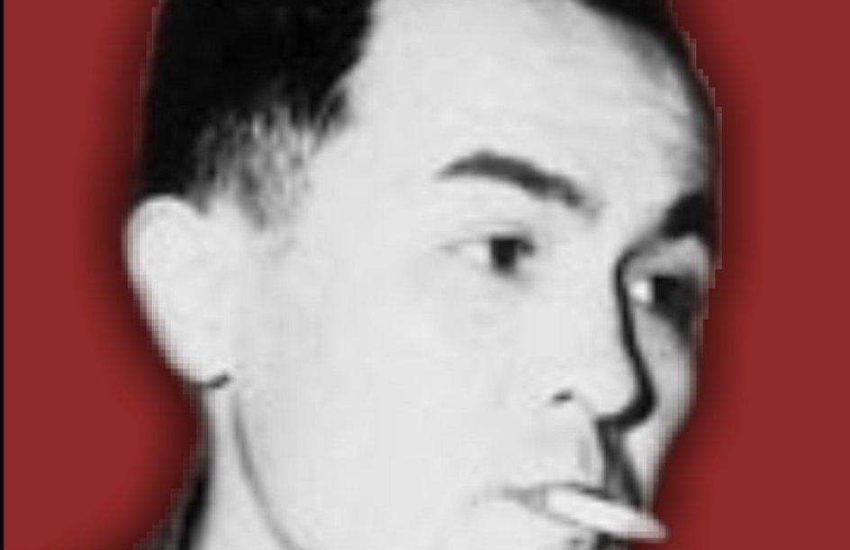
Yoshio Kodaira (1905-1949) was a Japanese serial killer and war criminal. In 1932 he killed his father-in-law and, between 1945 and 1946, in the chaos after the war, he raped and murdered at least seven women lured with fake offers of work or food. Arrested in August 1946, he was sentenced to death and hanged on 5 October 1949.
Yoshio Kodaira was a Japanese serial killer active from 1932 to 1946. His crimes included rape, murder and necrophilia, as well as war crimes committed in China.
Yoshio Kodaira
Yoshio Kodaira was born on 28 January 1905 in Tochigi, the sixth of eight children. The family ran an inn, but his father was addicted to drink, gambling and spending, and the business went bankrupt, leaving them in poverty. There were several cases of mental illness in his father’s family.
Yoshio was never a model student: in primary school he was near the bottom of his class and teachers described him as lazy, rude and violent. He also had a stutter and got angry easily when he could not make himself understood.
In 1923, aged 18, he joined the Imperial Japanese Navy. In 1928 he was sent to China, where he took part in the Jinan incident and killed six Chinese soldiers with a bayonet, earning a medal. During that period, as he later confessed, he broke into civilians’ homes with his comrades, robbed them and raped the women. In at least one case he ripped open a pregnant woman’s belly.
The first murder
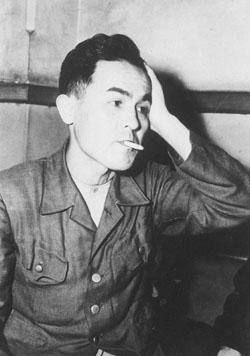
In 1932 he left the Navy with the rank of sergeant and married. His wife, however, left him when she found out he had had a child by another woman. On 2 July 1932, in a rage, Yoshio attacked her family with an iron bar: he killed his father-in-law and injured six other people.
He was sentenced to 15 years but paroled in 1940. In 1943 he found work as a boiler operator in a factory, where he often spied on female workers while they bathed. In 1944 he remarried.
The post-war murders
Between 25 May 1945 and 6 August 1946 Kodaira raped and murdered at least ten women in Tokyo and Tochigi Prefecture. He exploited the hunger and poverty of the post-war period: he approached young women at Tokyo stations such as Shibuya, Ikebukuro, Asakusa or Tokyo Station, and promised them work with a farmer or food. Then he took them into the woods, raped and strangled them, and stole their money and clothes.
The confirmed victims are:
- Mitsuko Miyazaki, 21, killed on 25 May 1945 in the dormitory of the Navy clothing factory where she worked
- Yori Ishii, 30, on 22 June 1945
- Mitsuko Nakamura, 22, on 12 July 1945
- Kazuko Kondo, 22, on 15 July 1945
- Yoshie Matsushita, 21, on 28 September 1945
- Hiroko Baba, 19, on 30 December 1945
- Ryuko Midorikawa, 17, on 6 August 1946
He is also suspected of the deaths of three other girls aged 15 to 18, one of whom was never identified.
The last murder
With his last victim Kodaira made a fatal mistake. He met 17-year-old Ryuko Midorikawa and, from mid-June 1946, often visited her at home on the pretext of offering her a job, introducing himself to her mother under his real name.
On 6 August 1946 the girl disappeared. When her body was found on 17 August, her parents immediately gave Kodaira’s name to the police, and he was arrested on 20 August.
Trial and execution
In court Kodaira denied three of the murders. On 18 June 1947 he was tried for seven of the ten murders he was suspected of, and after one of them he had also abused the corpse. The Supreme Court upheld his death sentence on 16 November 1948.
Yoshio Kodaira was hanged on 5 October 1949 at Miyagi Prison in Sendai. On his last day he said:
I am fortunate to be able to die on such a calm and peaceful day
His story inspired a segment of Teruo Ishii’s film Love and Crime (1969) and David Peace’s novel Tokyo Year Zero (2007).
🦋 Emadion lives through its readers. If this story kept you up at night, buy me a coffee: it helps me bring you the next nightmare.
☕ Support Emadion on Ko-fi