 Posted by
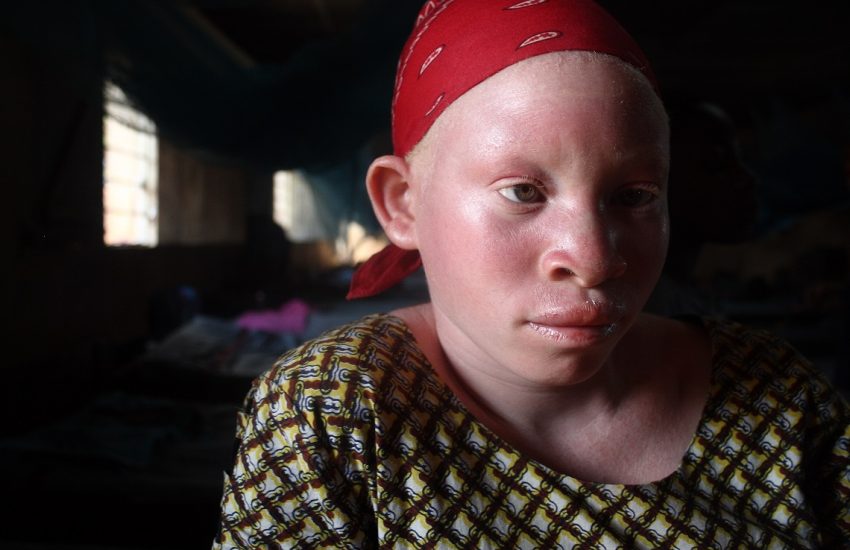
In parts of sub-Saharan Africa, especially Tanzania and Malawi, people with albinism are persecuted: according to some superstitions they bring bad luck, according to others their bodies can be used to make good-luck potions. For this reason they are attacked, mutilated and killed, and even their graves are desecrated. Organizations like Under the Same Sun and the UN are fighting to stop this violence.
In some parts of Africa albinos are not considered human. They are seen as ghosts or demons and they are often killed because they are considered bearers of misfortune. In some places, instead, they are considered magical beings and are hunted like animals and slaughtered. Their limbs are used by shamans to make potions that will bring wealth to those who buy them.
Origin of the persecution of albinos in Africa
Why are albinos persecuted? First, it is worth specifying that they are mainly persecuted in some areas of sub-Saharan Africa, particularly in Tanzania.
The main reason for the persecution is the lack of education and lack of information regarding albinism. The people who are affected suffer from a total or partial depigmentation of the skin, hair and eyes.
In parts of Africa, however, these people are totally marginalized and are seen as a harbinger of doom. Because of this belief many albino children are killed at birth.
If a woman gives birth to an albino child, her husband may suspect that she has been unfaithful with a white man, or that the child may host the spirit of a European settler.
In other parts of the continent, however, albinos are considered magical beings and some shamans have spread the rumor that potions made with their limbs bring wealth and success.
This has led to a real hunt for albinos who are mutilated and often killed for money.
A limb can be worth about $4,000, while a whole body can be worth about $75,000.
Why in Africa, especially in Tanzania?
Worldwide, albinism affects about one in 20,000 people, while in Tanzania it affects one in 1,400. The reason for this increased incidence is unknown, but it is probably related to marriages between relatives.
Another hypothesis is that the albinism gene originated in East Africa about 2,000 years ago, due to a genetic mutation. When a genetic mutation begins, it has been shown that it remains very common in the area where it originated.
Tanzania is the state with the most cases of albino killings, but this practice is also widespread in other countries such as Malawi and Burundi.
Testimonials
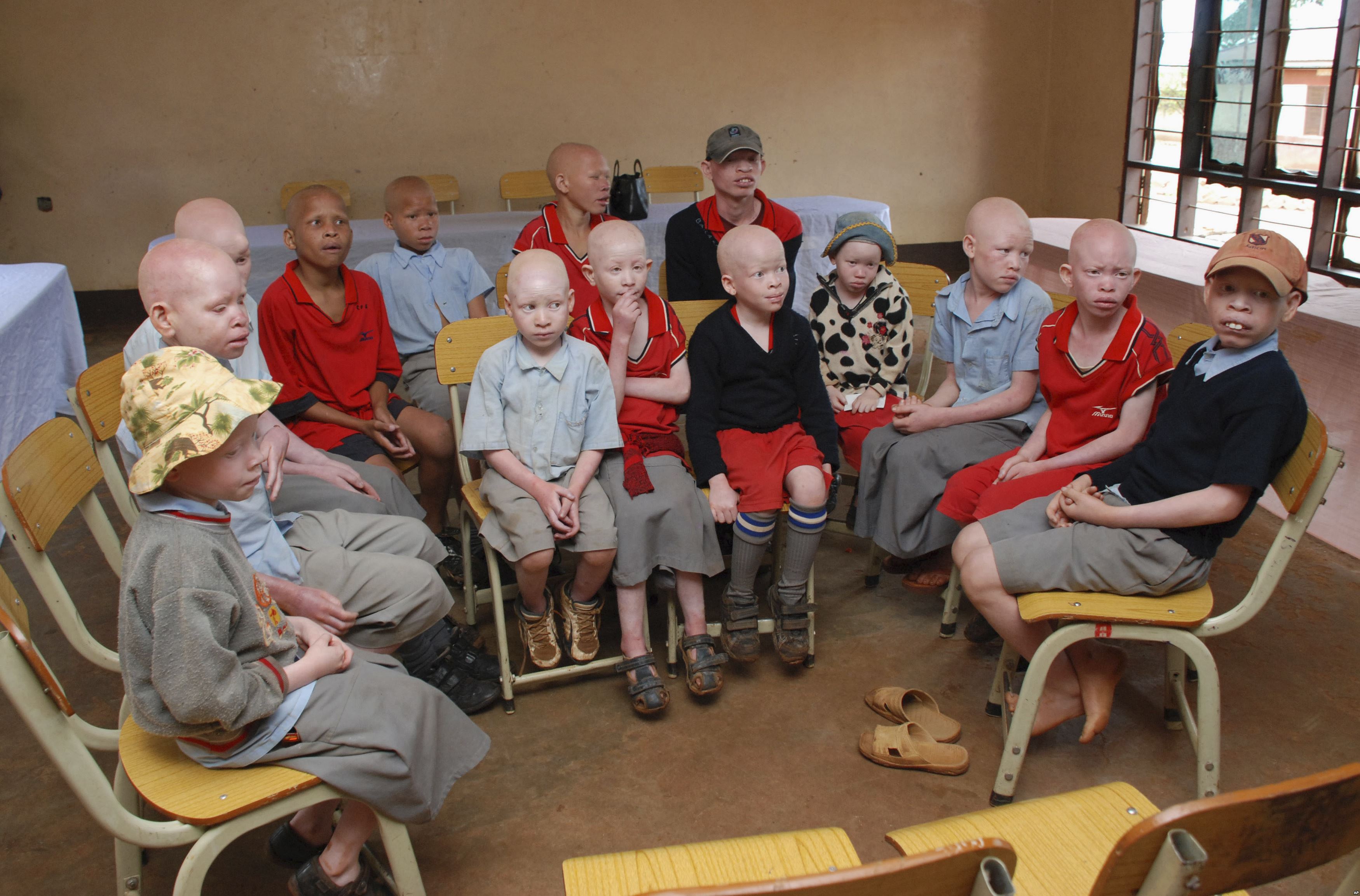
Many associations have taken action and in recent years many documentaries have been filmed that also report the testimonies of some attack survivors.
Maryam is a 28-year-old woman who was attacked when she was only a few months pregnant. Two men assaulted her on her way home and cut both her arms with a machete and then left her there to die.
After being rescued she had to wait 10 hours before arriving at a hospital, where she was treated. Miraculously she managed to survive, but the child in her womb, unfortunately, didn’t make it.
Now it is her mother who takes care of her: she feeds her, cleans her and changes her. She cannot do anything on her own, she is totally dependent on others and cannot take care of her three-year-old son.
A little girl, Shida Mathias, recounts the experience of her sister Eunice’s death.
One night two men entered the house. They put a machete to her father’s throat warning him not to look at them, or he’d die, and the same was repeated to her mother. The two men then went into the nursery.
Here they found Samania, Shida and Eunice, all albinos. The two men went to Eunice, threatening the sisters with machetes and telling them not to look at them.
Then the girls heard machete blows and the screams of their sister:
God help me, I’m dying
When the two men left, Shida’s parents rushed to their daughters, only to find the mutilated body of Eunice.
Little Eunice had been killed and mutilated.
Associations
Many associations are mobilizing to put an end to these horrors. The most famous is “Under the same sun”, founded in 2008 by the Canadian Peter Ash, who also has albinism.
Their main purpose is to explain albinism so that those who are affected by it are seen as human beings and not as demons or ghosts.
Nevertheless, the road is still long and the slaughter of albinos in Africa continues
What has changed in recent years
In January 2015 Tanzania banned witch doctors and unlicensed “healers”, and in the following weeks the police arrested more than 200 of them. In part, however, this simply moved the problem elsewhere: from 2014 neighbouring Malawi went through an unprecedented wave of killings. In 2016 Amnesty International published the report “We are not animals to be hunted or sold”, counting at least 18 people with albinism killed in Malawi in a year and a half, five missing and dozens of graves desecrated to steal the bones, which some believe even contain gold.
The UN has taken action too: since 2015, 13 June has been International Albinism Awareness Day, and that same year a UN Independent Expert on the rights of persons with albinism was appointed.
🦋 Emadion lives through its readers. If this story kept you up at night, buy me a coffee: it helps me bring you the next nightmare.
☕ Support Emadion on Ko-fiSources
- Persecution of people with albinism, Wikipedia
- Under the Same Sun, Wikipedia
- International Albinism Awareness Day, Wikipedia
- Amnesty International, “We are not animals to be hunted or sold”: Violence and discrimination against people with albinism in Malawi, June 2016