 Posted by
- Where: Villisca, a small town in Iowa, United States.
- When: the night of 9-10 June 1912, probably between midnight and 2 a.m.
- Victims: eight people, the six members of the Moore family and two of the children’s friends, six of them children.
- Culprit: never identified; several suspects, no conviction.
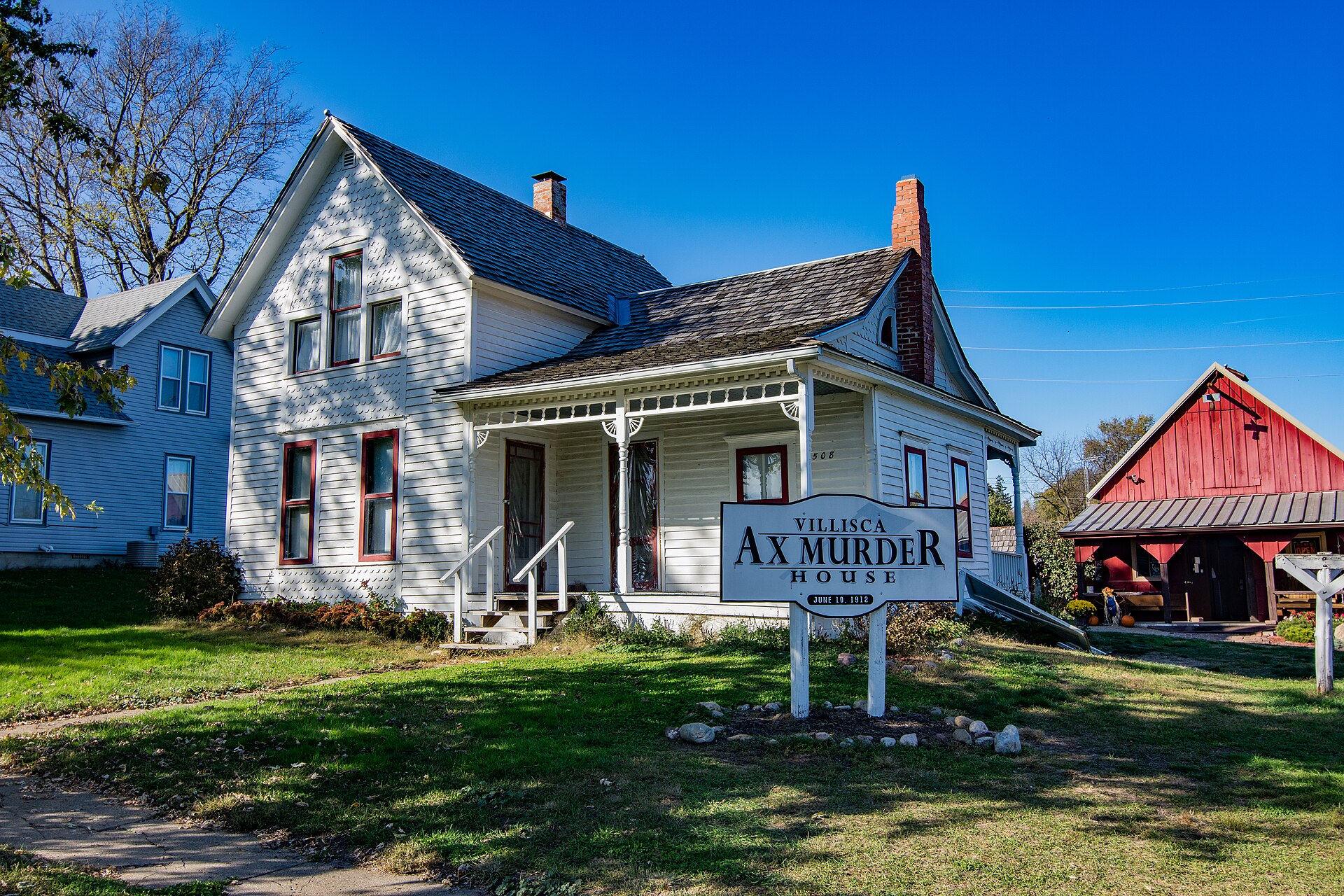
- Today: the house, restored in the 1990s, can be visited and you can even spend the night there.
Villisca is a quiet little town in Iowa, United States. In 1912 life goes on peacefully, everyone knows each other and nobody is prepared for what will happen on the night of 9-10 June that year: an entire family, together with two young guests, will be brutally slaughtered with an axe while they sleep.
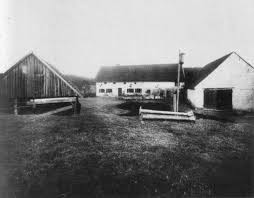
The house where it happened still exists, was restored in the 1990s, and tours can be booked, including at night.
The story
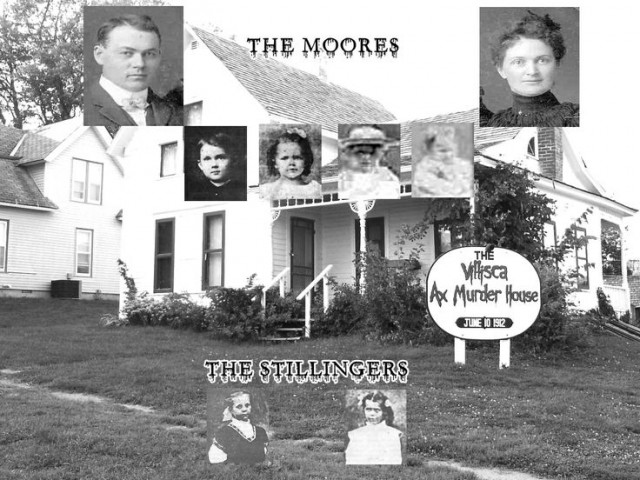
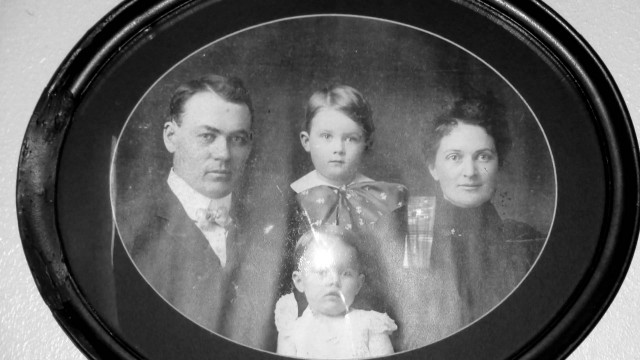
The Moore family consisted of the father, Josiah, 43, a well-off and respected farm equipment dealer, the mother Sarah, 39, and 4 children: Herman, 11, Mary Katherine, 10, Arthur, 7, and Paul, 5.
On 9 June 1912 Mary Katherine invited two friends to stay the night, sisters Ina and Lena Stillinger, aged 8 and 11. That evening they all went together to the Presbyterian church for Children’s Day, a celebration held every second Sunday of June to bring children closer to the church, which Sarah herself had organised.
The programme ended at 9:30 p.m., and they are thought to have got home between 9:45 and 10 p.m. and gone straight to bed.
The next morning, at about 7, the neighbour, Mary Peckham, noticed that nobody had come out to do the chores or feed the animals, and that the house was strangely quiet. She went to check and knocked on the door without getting an answer. When she tried to open it she found it locked; she let the chickens out and phoned Josiah’s brother, Ross Moore.
The discovery
Ross Moore went to his brother’s house to check. He knocked on the windows calling his brother loudly and, getting no answer, let himself in with a spare key.
When he opened the door of the guest bedroom he saw the bodies of the two little Stillinger sisters on the bed; he went out and immediately told the neighbour to call the town’s peace officer, Hank Horton.
Horton searched all the bedrooms and found a body in every bed. All had been killed with blows to the head and then covered with the sheets. The weapon was an axe belonging to Josiah himself, found covered in blood in the girls’ room.
All the curtains were drawn and every mirror in the house was covered with blankets or clothes. Upstairs there was an oil lamp with its glass chimney removed and the wick turned down to give very little light. In the kitchen, on the table, there was a plate of untouched food and a bowl of bloody water, while next to the axe lay a slab of bacon weighing almost two kilos, taken from the icebox.
According to the reconstruction, the killer started in the parents’ bedroom: Josiah received more blows than anyone, and the ceiling bore the mark of the raised axe. Then he moved on to the four children, went back to the parents and finally went downstairs to the sisters’ room. All of them, except perhaps Lena, were asleep. Doctors estimated the murders took place between midnight and 2 a.m.
Two cigarette butts were found in the attic, and in the barn an imprint in the hay next to a knothole: the killer had probably watched the family and then hidden in the house, waiting for them to return from church and fall asleep.
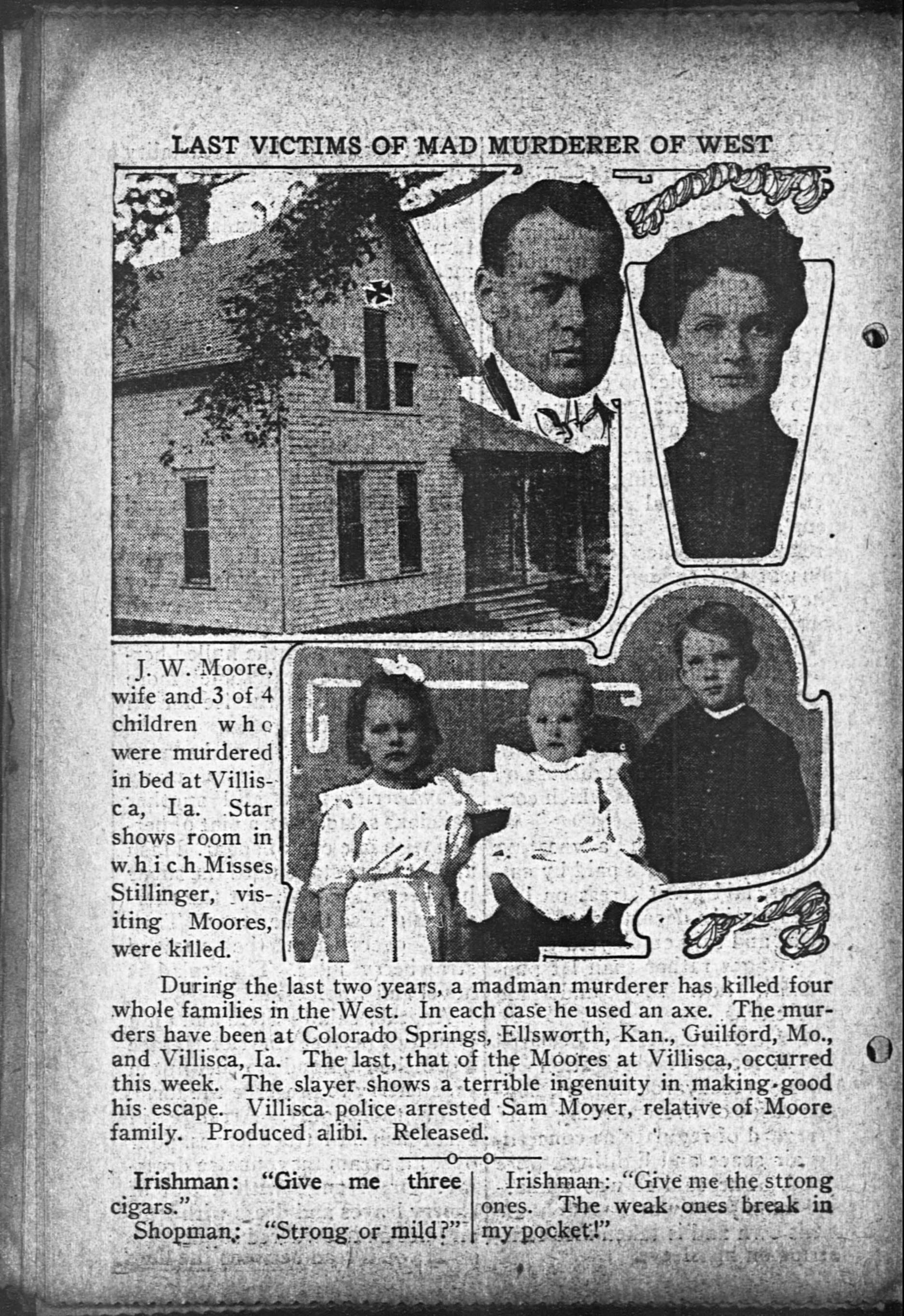
Unfortunately the crime scene was compromised at once. At about 8:40 a.m. the telephone exchange alerted the whole town, and within minutes hundreds of people poured into the house: they handled the axe, walked everywhere and some even took fragments of Josiah’s skull as souvenirs. It took the National Guard, at 10:30, to secure the house. Police at the time had few tools, and the culprit was never found.
Suspects
Although nobody was ever convicted, there were several theories. One suspect was Reverend George Kelly, an English-born minister with mental health problems, who was in Villisca for Children’s Day and left town on the 5:19 a.m. train the next morning, a few hours before the bodies were found.
In the following weeks Kelly showed a morbid interest in the case, writing many letters to the police and to the victims’ relatives and describing details he claimed to have heard or seen. In 1917 he was arrested and, after hours of questioning, signed a confession that he later retracted. The first trial ended in a hung jury, with eleven of twelve jurors favouring acquittal; at the second, in November 1917, he was acquitted.
Another suspect was Frank F. Jones, a Villisca businessman and future Iowa state senator, for whom Josiah had worked for seven years before going into business for himself and taking the important John Deere account with him. It was also rumoured that Josiah had an affair with Jones’s daughter-in-law, but there is no evidence.
Various drifters and itinerant workers were also questioned, such as Andrew Sawyer, a railway labourer who slept in his clothes with an axe beside him and talked constantly about the murders, but no evidence was ever found against them.
It was also thought that the savage crime could be the work of a serial killer. Indeed, similar murders happened in those years in several states, and private detective James Wilkerson had an idea who it might be: William “Blackie” Mansfield.
According to Wilkerson, Mansfield had been paid by Frank Jones to kill Josiah, and had also committed other axe massacres, such as the one in Colorado Springs, where two families were killed in the same way: victims struck with an axe and covered, windows covered with sheets, the weapon wiped clean. In every case the killer wore gloves, and Mansfield, who had been in prison before, knew all about fingerprints.
Thanks to Wilkerson’s accusations, Mansfield was arrested in 1916, but payroll records showed he was in Illinois at the time of the Moore massacre, and the grand jury declined to indict him. Mansfield later sued the detective agency and won damages.
Another suspect is Henry Lee Moore, no relation to the victims, convicted a few months later of killing his mother and grandmother with an axe, and believed by some investigators to be behind a series of similar murders.
The Moore massacre thus remains a mystery, and their killer remained free to roam the country undisturbed, perhaps killing again.
🦋 Emadion lives through its readers. If this story kept you up at night, buy me a coffee: it helps me bring you the next nightmare.
☕ Support Emadion on Ko-fi