Posted by
The Mary Celeste is perhaps the most famous of all ghost ships, and its mystery has intrigued everyone since the day it was found. With no one on board and no signs of a struggle, what secret does it hide?
A timeless riddle
In the vast ocean of unsolved mysteries, few have captured the imagination like that of the Mary Celeste, the ghost ship par excellence. Its name has become a byword for inexplicable disappearances, halfway between fact and legend.
On 4 December 1872 the ship was found drifting in the Atlantic, between the Azores and the coast of Portugal, by the crew of the brigantine Dei Gratia. There was nobody on board: ten people, including Captain Benjamin Briggs, his wife Sarah and their two-year-old daughter Sophia, had vanished. Yet the ship was afloat, the cargo almost intact, and only the lifeboat was missing. None of those ten people was ever seen again.
The Mary Celeste, an American brigantine that left New York for Genoa on 7 November 1872 with a cargo of alcohol, was found deserted on 4 December 1872 off the Azores. The ten people on board were never found. The most widely accepted hypothesis today is a hurried abandonment in the lifeboat, perhaps out of fear that the alcohol fumes would explode.
The ship’s origins, from Amazon to Mary Celeste
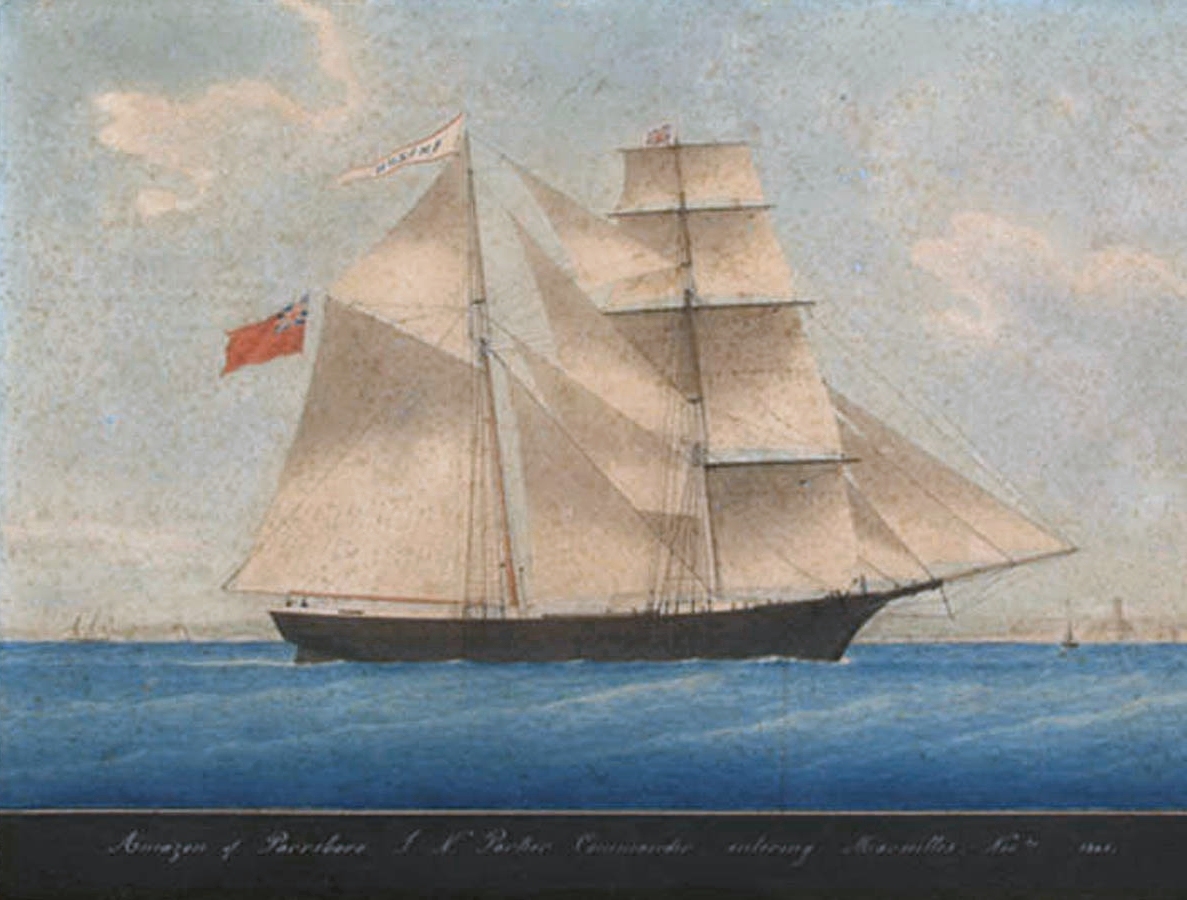
The story begins on the coast of Nova Scotia, in Canada, at Joshua Dewis’s shipyard in the village of Spencers Island. There, on 18 May 1861, a brigantine of about 30 metres was launched, built of local timber and named Amazon.
The ship seemed born under an unlucky star. During her maiden voyage, in June 1861, her first captain and part-owner Robert McLellan fell ill and died a few days later. His successor, John Nutting Parker, ran into fishing equipment off Maine and, in the English Channel, rammed and sank another brig. A few quiet years followed in the West Indies, England and the Mediterranean, until in October 1867 a storm drove her ashore on Cape Breton Island, so badly damaged that her owners abandoned her as a wreck.
The wreck changed hands several times, until in November 1868 the American Richard W. Haines bought it for 1,750 dollars and spent another 8,825 restoring it. Haines registered her in New York as an American vessel and gave her a new name: Mary Celeste. The following year his creditors seized her and sold her to a consortium headed by James H. Winchester.
Early in 1872 the ship underwent a major refit costing 10,000 dollars: she was lengthened to 103 feet and given a second deck. In October her owners were Winchester, two minor investors and her new captain, Benjamin Spooner Briggs, who held four shares out of twelve.
Captain Briggs and his crew
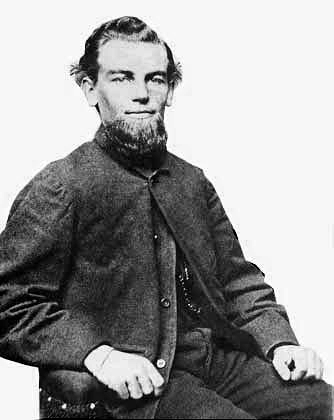
Benjamin Briggs was born in Wareham, Massachusetts, in 1835, the son of a sea captain. He was a deeply religious man who read the Bible regularly, and a highly respected seaman. In 1862 he had married his cousin Sarah Elizabeth Cobb, with whom he had two children: Arthur, born in 1865, and Sophia Matilda, born in 1870. For the voyage to Genoa he decided to take his wife and little Sophia with him, while Arthur, who was at school, stayed home with his grandmother. A decision that, in all likelihood, saved his life.
Briggs chose his crew carefully. First mate Albert G. Richardson had sailed with him before and was married to a niece of Winchester’s. The second mate was Andrew Gilling, a New Yorker of Danish descent, aged about 25. The steward and cook was Edward William Head, newly married. The four seamen were Germans from the Frisian Islands: the brothers Volkert and Boz Lorenzen, Arian Martens and Gottlieb Goudschaal. A later testimonial described them as “peaceable and first-class sailors”. In a letter to his mother shortly before departure, Briggs said he was very satisfied with both ship and crew.
The last voyage
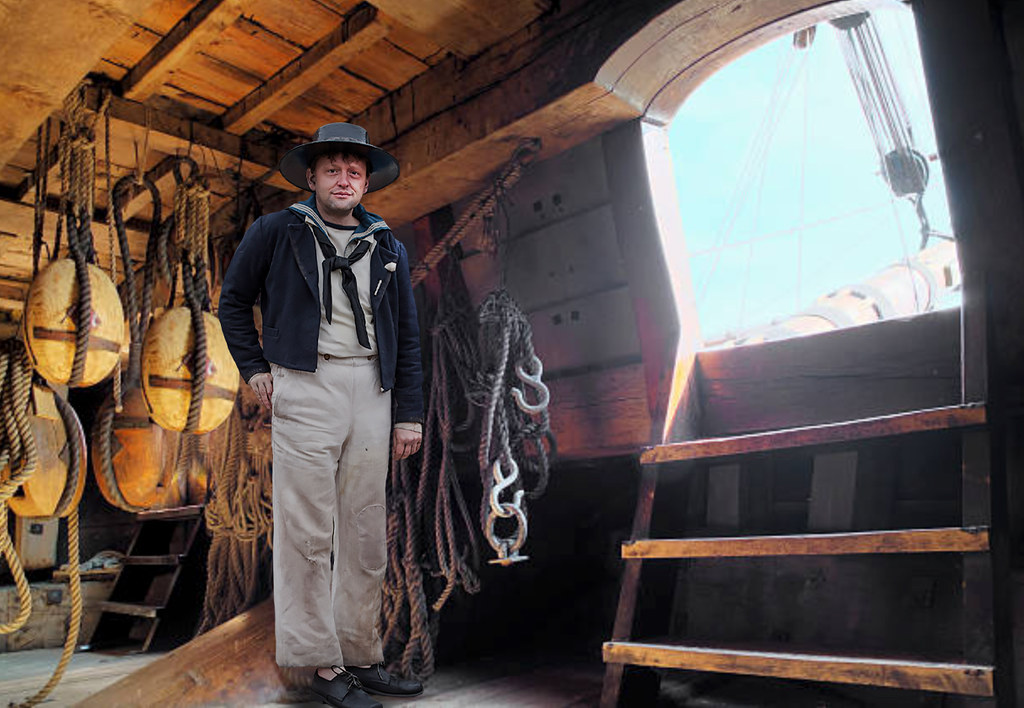
The cargo consisted of 1,701 barrels of alcohol, loaded at Pier 50 on New York’s East River. On 3 November Briggs wrote to his mother: “our vessel is in beautiful trim and I hope we shall have a fine passage.”
On the morning of 5 November 1872 the Mary Celeste left the pier, but the weather was uncertain and Briggs chose to anchor off Staten Island. Sarah used the delay to write a last letter to her mother-in-law: “Tell Arthur I make great dependence on the letters I shall get from him, and will try to remember anything that happens on the voyage which he would be pleased to hear.” Two days later, on 7 November, the weather improved and the ship put to sea.
Meanwhile, in Hoboken, New Jersey, lay the Canadian brigantine Dei Gratia, waiting for a cargo of petroleum for Genoa. Captain David Morehouse and first mate Oliver Deveau were both experienced, respected seamen. It is often said that Morehouse and Briggs were friends who dined together the night before departure, but the only evidence is a recollection by Morehouse’s widow fifty years later. Dei Gratia sailed on 15 November, eight days after the Mary Celeste, on roughly the same route.
The discovery: a ship without a soul
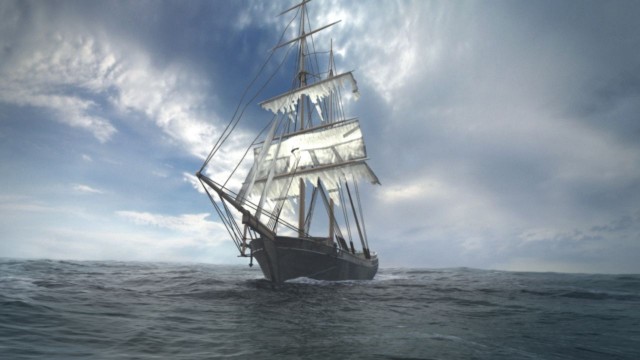
On 4 December 1872, at about one in the afternoon, Dei Gratia was at 38°20′N 17°15′W, midway between the Azores and Portugal. The helmsman reported a vessel about six miles away moving erratically, its sails set oddly. There was no one on deck and no reply to signals. Morehouse sent Deveau and second mate John Wright over in a boat. On the stern they read the name: Mary Celeste.
The ship was deserted. This is what they found:
- sails partly set and in poor condition, some missing, and much of the rigging damaged, with ropes hanging over the side;
- the main hatch secure, while the fore and lazarette hatches were open, their covers lying on deck;
- the only lifeboat, a small yawl usually stowed across the main hatch, gone;
- the binnacle housing the compass shifted and its glass broken;
- about three and a half feet of water in the hold, significant but not dangerous for a ship of that size, and a makeshift sounding rod abandoned on deck;
- the daily log in the mate’s cabin, its last entry at 8 am on 25 November, nine days earlier, off Santa Maria Island in the Azores, nearly 400 miles from where she was found;
- cabins wet and untidy from water that had come in through doors and skylights, but otherwise in reasonable order, with personal belongings still in place, including a sheathed sword under the captain’s bed;
- most of the ship’s papers and the captain’s navigational instruments missing;
- food and water for six months.
There were no signs of fire or violence. Everything pointed to an orderly departure from the ship, in the missing lifeboat. Contrary to legend, however, there were no tables laid with food still warm, nor steaming cups of tea: those details came years later, from writers’ imaginations.
Morehouse decided to bring the ship to Gibraltar, 600 miles away. Under maritime law, whoever salvaged an abandoned ship was entitled to a substantial share of the value of ship and cargo. He divided his eight men between the two vessels: Deveau and two experienced seamen on the Mary Celeste, himself and the other four on Dei Gratia. With so few hands the voyage was slow and exhausting. Dei Gratia reached Gibraltar on 12 December, the Mary Celeste, delayed by fog, the next morning.
The Gibraltar inquiry
Hearings began on 17 December 1872 before the chief justice of Gibraltar, Sir James Cochrane. They were conducted by the Attorney General, Frederick Solly-Flood, a man one historian of the case described as the sort who, once he had made up his mind, could not be shifted. And Flood had immediately convinced himself that a crime had been committed.
He had the ship examined by a surveyor and a diver. Cuts were found on both sides of the bow, made, according to the surveyor, with a sharp instrument, along with possible traces of blood on the captain’s sword and on a rail. On 22 January 1873 Flood sent his theory to London: the crew had got drunk on the alcohol in the cargo, murdered the Briggs family and the officers, cut the bow to fake a collision and fled in the yawl. He also suspected Morehouse and his men, and even Winchester, who he thought might have deliberately hired a crew of killers.
His theories collapsed one after another. Analysis showed that the stains on the sword and elsewhere were not blood. Captain Robert W. Shufeldt of the US Navy, engaged by the American consul, concluded that the marks on the bow were caused by the sea, not by human hands. And Flood overlooked an important detail: the alcohol on board was denatured, undrinkable.
On 25 February Flood had to release the ship, which sailed on to Genoa with a new crew. The salvage award was announced on 8 April: 1,700 pounds, about one-fifth of the value of ship and cargo. Far less than expected, and accompanied by harsh words from the judge about Morehouse. According to writer Brian Hicks, that tone left Morehouse and his men under a cloud of suspicion that never lifted.
What really happened aboard the Mary Celeste?
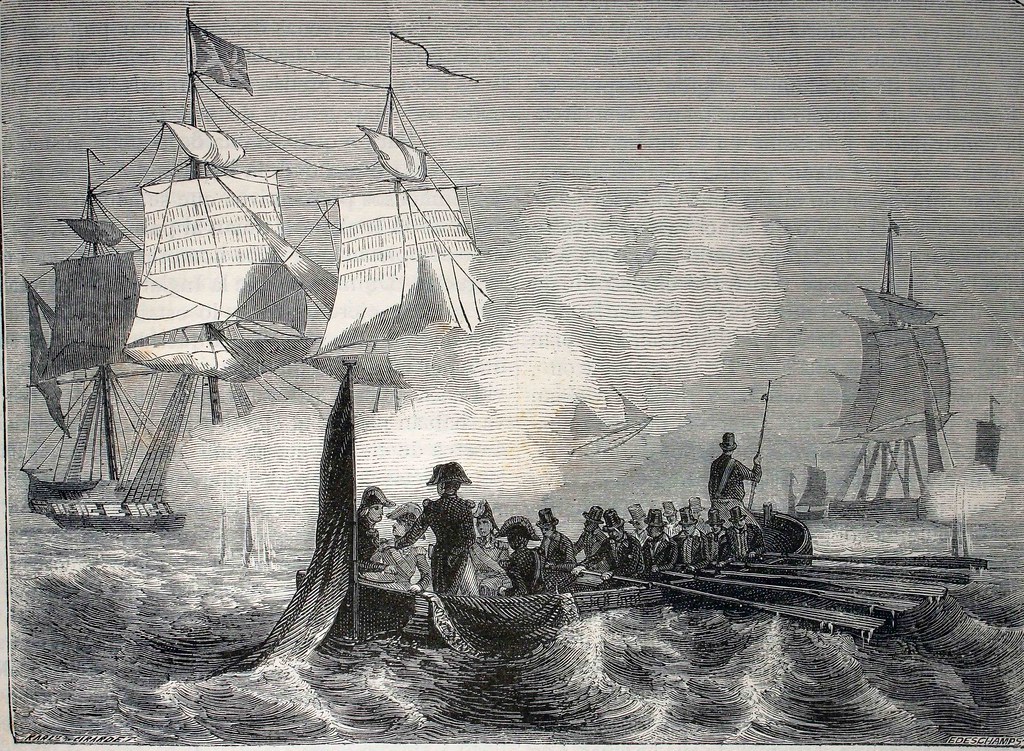
Almost all scholars agree on one point: something extraordinary and frightening must have happened to make an experienced captain abandon a sound ship with months of provisions, and climb with his wife and two-year-old daughter into a small boat in the middle of the ocean.
A crime?
The murder theories never found any evidence. Pirates would have looted the ship, yet valuables were still on board. The idea that Morehouse had ambushed the Mary Celeste does not hold up, because Dei Gratia was slower and had left eight days later. A deal between the two captains to share the salvage money is also hard to believe: as Hicks notes, no one would plan such an attention-grabbing scam, and Briggs would never have abandoned his son Arthur for good. In 1925 historian John Gilbert Lockhart suggested Briggs had killed everyone in a fit of religious mania, but after speaking to his descendants he withdrew the theory and apologised.
A false alarm
Deveau started from the sounding rod found on deck. In his view Briggs abandoned ship after a mistaken reading, perhaps because of a pump malfunction, convinced that water was pouring in. The documentary The True Story of the Mary Celeste, aired on the Smithsonian Channel in 2007, developed this idea: before the alcohol the ship had carried coal, whose dust could have clogged the pumps, and one pump was found dismantled on deck, as if someone were trying to fix it. With the hold full, the captain had no way of judging how much water he was taking on. And if the chronometer was faulty, Briggs might have thought he was close to Santa Maria when he was actually 120 miles further west.
A waterspout or a reef
A waterspout would explain the water on board and the state of the sails and rigging, and the low pressure could have forced water up into the pumps, making the crew think the ship was sinking. Historian Paul Begg also considered another hypothesis: becalmed, the ship might have drifted towards the Dollabarat reef near Santa Maria, and Briggs launched the yawl to reach land. But a becalmed ship would have every sail set, while the Mary Celeste was found with many sails furled.
The alcohol fumes
This is the most famous hypothesis. When the ship reached Genoa, nine of the 1,701 barrels turned out to be empty: they were made of red oak, a more porous wood than the others. The alcohol could have seeped out, filling the hold with fumes. As early as 1910 Arthur N. Putman, a New York insurance appraiser, suggested an explosion, and Briggs’s cousin Oliver Cobb was a firm supporter: rumblings from the hold, the smell of fumes, perhaps a small blast, would have been enough for the captain to order everyone into the lifeboat, perhaps tied to the ship with a line so they could return once the danger had passed. If the line parted, the ship would have sailed away on her own, leaving the ten people adrift.
The weak point has always been the lack of any sign of fire. In 2006, however, chemist Andrea Sella of University College London built a model of the hold for a Channel 5 documentary: the gas explosion produced a spectacular wave of flame, but behind it was relatively cool air, with no soot or scorching. In 2026 a new documentary on the same channel repeated the experiment with two chemists from the University of Manchester, this time using wood and ethanol, closer to the real situation. Their conclusion was that a rapid explosion of ethanol vapour, leaving no trace, could indeed have frightened the crew into fleeing.
Perhaps the truth lies in a combination of factors: fumes perceived as a threat, faulty instruments, the fear of sinking, a hasty decision that proved fatal. But with no witnesses and no lifeboat, the mystery remains.
Legends and false accounts
Much of the Mary Celeste legend comes from a work of fiction. In 1884 a young Arthur Conan Doyle, not yet the creator of Sherlock Holmes, anonymously published J. Habakuk Jephson’s Statement, the fake testimony of a survivor. He invented details that later became very famous, and spread the wrong name Marie Celeste. Many readers took it as true.
In 1913 The Strand magazine published the alleged testimony of Abel Fosdyk, another “survivor”, full of glaring errors about the ship and crew. That too was a hoax.
The fate of the Mary Celeste
After Genoa the ship returned to New York, but her reputation was ruined. No one wanted her, and in 1874 she was sold at a loss. She sailed mainly in the West Indies and the Indian Ocean, regularly losing money. In 1879 Captain Edgar Tuthill fell ill and died on the island of St Helena: he was the third captain to die prematurely, and the idea of a curse grew stronger.
At the end of 1884 her new captain, Gilman C. Parker, and a group of Boston shippers filled her with almost worthless goods, declared as valuable, and insured her for 30,000 dollars. On 3 January 1885 Parker deliberately ran her onto the Rochelois reef in Haiti, wrecking her. The insurers uncovered the fraud and in July 1885 Parker and his accomplices went on trial in Boston. The jury could not agree and the judge arranged a compromise: the defendants withdrew their claims and repaid what they had received. Parker, his reputation destroyed, died in poverty three months later; of his co-defendants, one went mad and another took his own life. As if the curse had followed them beyond the ship’s watery grave.
In August 2001 an expedition led by writer and marine archaeologist Clive Cussler announced it had found the ship’s remains on the Rochelois reef. Early tests seemed to confirm it, but tree-ring analysis by Scott St George of the Geological Survey of Canada showed the wood came from trees still alive in 1894, almost ten years after the wreck. The wreck of the Mary Celeste, then, has never been found with certainty.
The Mary Celeste in popular culture
The Mary Celeste was not the first ship found mysteriously deserted, but it is the one everyone remembers. It has inspired radio plays, novels and films, such as Hammer’s The Mystery of the Mary Celeste (1935), with Bela Lugosi as a deranged sailor. It appears in a 1965 episode of Doctor Who and even in a video game, Limbo of the Lost.
In the village of Spencers Island, where she was built, a monument remembers the ship and her lost crew, along with an outdoor cinema built in the shape of a hull. Gibraltar and the Maldives have issued stamps in her honour.
The mystery that never dies
After a century and a half, the Mary Celeste remains the archetype of the perfect maritime mystery. The real power of this story lies in its incompleteness: the absence of bodies and definitive answers has turned it into a blank canvas onto which everyone projects their own fears and theories.
I can’t help thinking of Sarah and little Sophia, in that boat in the middle of the ocean, as the ship drifted away. We may never know what drove them to leave her, but their story keeps sailing through time.
🦋 Emadion lives through its readers. If this story kept you up at night, buy me a coffee: it helps me bring you the next nightmare.
☕ Support Emadion on Ko-fi