 Posted by
- Where: Hinterkaifeck, an isolated farmstead in Bavaria, about 70 km north of Munich.
- When: the evening of 31 March 1922.
- Victims: six people, Andreas Gruber (63), his wife Cäzilia (72), their daughter Viktoria Gabriel (35), her children Cäzilia (7) and Josef (2) and the maid Maria Baumgartner (44).
- Weapon: a mattock belonging to the family.
- Culprit: never found; the case was closed in 1955.
Hinterkaifeck is the name of a farm in Germany, in Bavaria, where the Gruber family lived until 1922. The family was made up of Andreas Gruber and his wife Cäzilia, their widowed daughter Viktoria and her little children, Cäzilia and Josef.
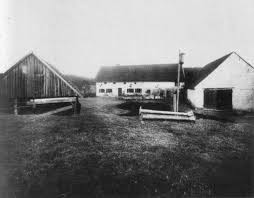
The Gruber family farm
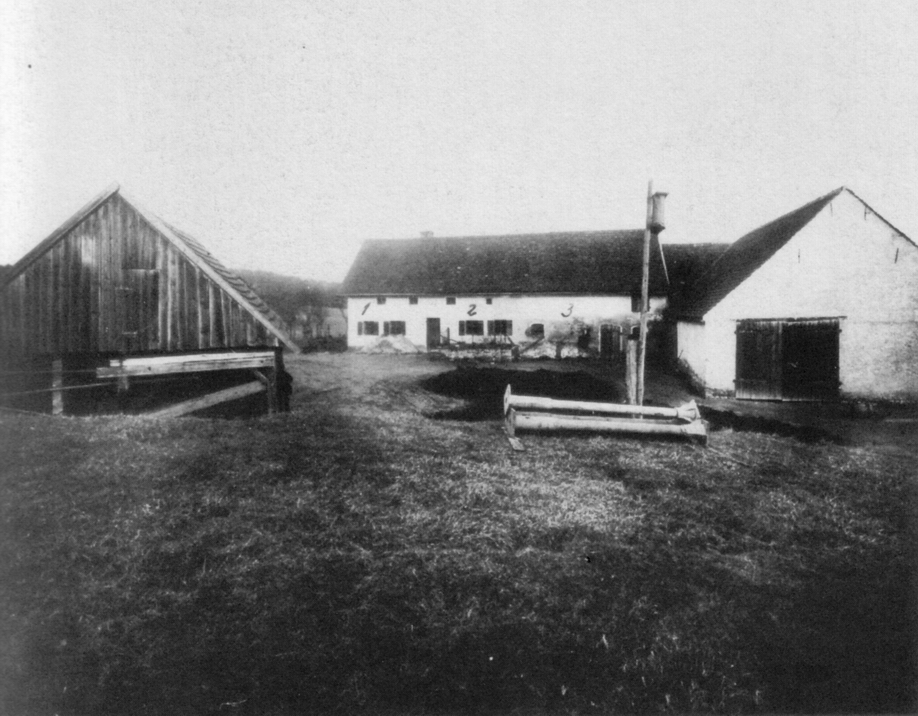
The farm was large but quite isolated: the name means “behind Kaifeck”, because it stood about a kilometre north of the small hamlet of Kaifeck, bordering a dense forest.
In 1914 Viktoria had married Karl Gabriel, who a few months later left for the First World War and was declared dead in France in December of that year. With him she had little Cäzilia. The family did not have a good reputation in the area: in 1915 Andreas and Viktoria had been convicted of incest, and it was said that little Josef was also her father’s child. Their neighbour Lorenz Schlittenbauer, with whom Viktoria was in a relationship, had nonetheless agreed to recognise him as his own.
In March 1922 some strange things began to happen and Andreas talked about them with friends in the village.
To begin with, one day he saw footprints in the snow leading from the forest to the house, but no footprints going back.
He also found a Munich newspaper that nobody in the family had bought and that nobody in the area received. A few days later a set of house keys disappeared and footsteps were heard coming from the attic, but when Andreas went up to check he found nobody. Even so, he turned down his neighbours’ help and nobody informed the police.
On top of that, about six months earlier the maid had suddenly quit, claiming the house was haunted.
So Andreas looked for a new maid, Maria Baumgartner, who started work on 31 March 1922, the same day she met her death.
The murders
That evening Andreas, his wife, Viktoria and little Cäzilia were lured one at a time into the barn, through the stable, and killed there with blows to the head from a mattock that belonged to the family. Then the killer went into the house and with the same weapon killed Maria in her room and little Josef, who was asleep in his cot.
For four days nobody noticed. On 1 April two coffee sellers knocked in vain, Cäzilia did not turn up at school and on Sunday the family did not go to church. On 4 April a mechanic spent hours at the farm repairing an engine without seeing anyone.
That same afternoon Lorenz Schlittenbauer went to check with two neighbours, Michael Pöll and Jakob Sigl, and the police were alerted.
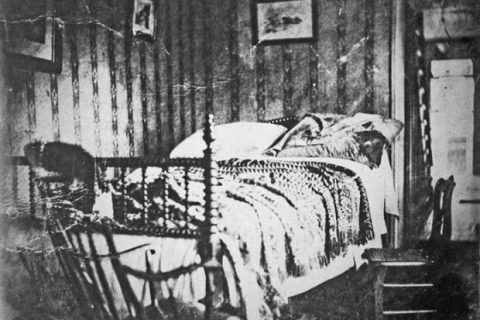
In the barn they found the bodies of four members of the family, piled up and covered with straw, and shortly afterwards, in the house, those of Maria and little Josef. Nobody had survived.
The autopsy, carried out the next day right there in the barn, showed that little Cäzilia, who was seven, had stayed alive for several hours after the attack. Tufts of her own hair were found beside her, torn out as she lay in the straw.
The deaths dated back to the night of 31 March, but in the following days smoke had been seen coming from the farm’s chimney. Investigators found the animals cared for and fed, all the bread in the kitchen eaten and meat recently cut from the pantry.
Whoever killed the Gruber family had stayed on and lived at the farm for a few days, alongside the bodies of the victims.
A man passing by on the night of 1 April said he had seen smoke coming from the oven and had been dazzled with a lantern by someone who came out of the house.
The investigation
But who could it have been, and why? Robbery was soon ruled out because a large sum of money was found in the house. The investigation, led by Inspector Georg Reingruber from Munich, got off to a bad start: onlookers had already walked everywhere, moved the bodies and even cooked in the farm’s kitchen. Not even fingerprints were taken.
The weapon was only found in 1923, when the farm was demolished: it was hidden in the attic, still covered in dried blood. There was also a penknife in the hay. Today a small memorial to the victims stands near where the farm used to be.
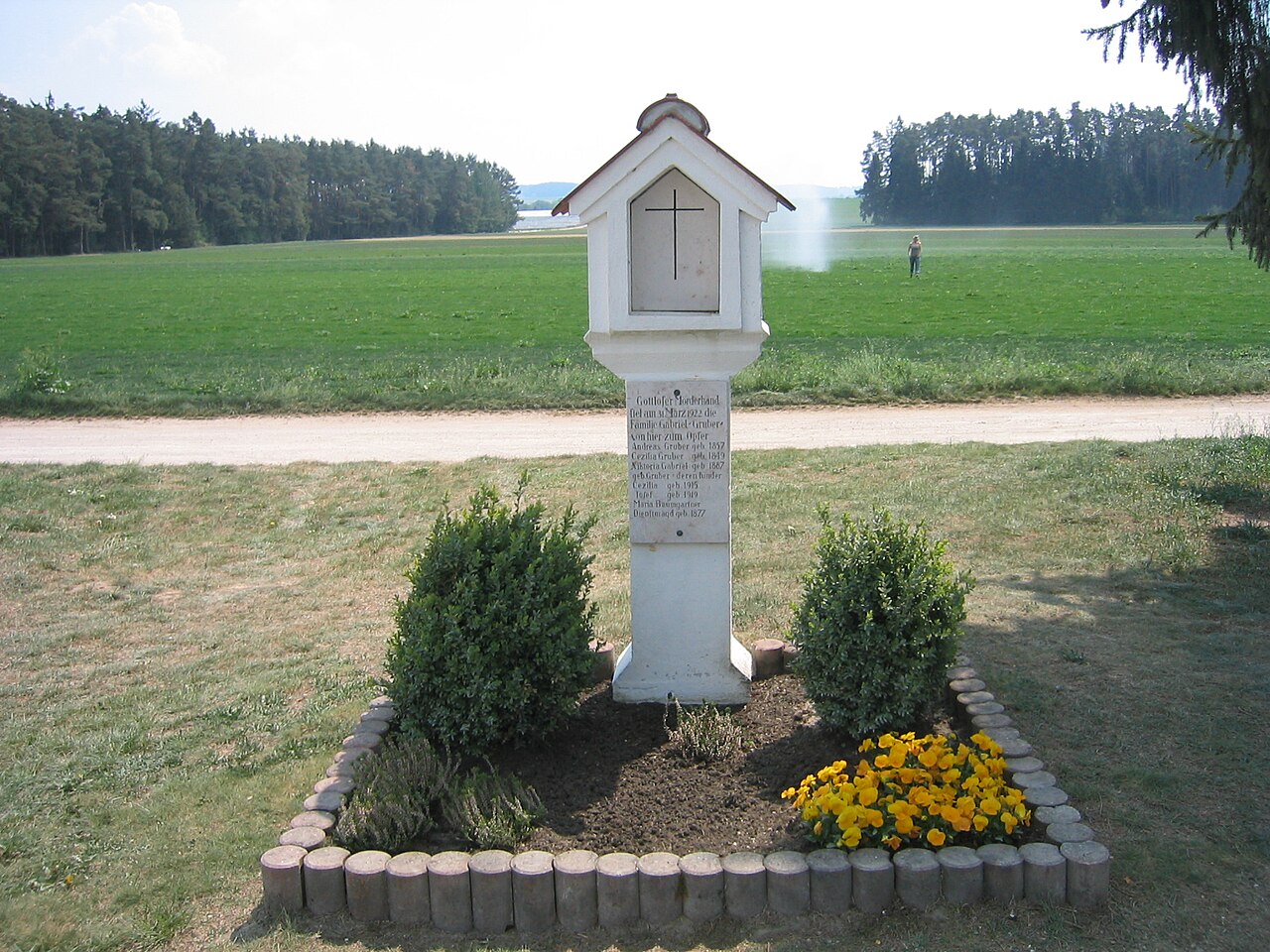
There were more than a hundred suspects. Among the main ones was Lorenz Schlittenbauer himself: that day he had gone into the house alone, opening the locked door without any trouble, and had moved the bodies. In the following years he made remarks that seemed to reveal details only the killer could know, but he won several slander suits against people who called him “the Hinterkaifeck murderer”. He died in 1941.
Suspicion also fell on Karl Gabriel, Viktoria’s husband, whose body was never brought home, but two fellow soldiers said they had identified him on the battlefield. And on the brothers Adolf and Anton Gump, accused by their sister on her deathbed, but no evidence was found against them either. The case was officially closed in 1955 and the last interrogations took place in 1986.
The mystery continues
The farm murders remain unsolved, considered among the most gruesome and puzzling crimes in German history, and many amateur detectives still try to solve them. The case also inspired the novel Tannöd by Andrea Maria Schenkel, published in 2006, which sold over a million copies and became a film in 2009.
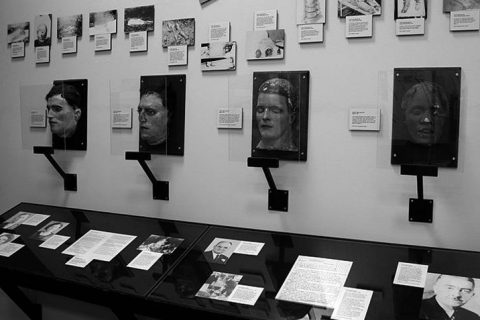
In 2007 fifteen students from the Fürstenfeldbruck police academy re-examined the case with modern techniques, but unfortunately much of the evidence has been lost, including the victims’ skulls sent to Munich, and too much time has passed for definite answers.
However, all the students, each working independently, arrived at the same main suspect, who was not named in the final report out of respect for his descendants still living.
🦋 Emadion lives through its readers. If this story kept you up at night, buy me a coffee: it helps me bring you the next nightmare.
☕ Support Emadion on Ko-fi