 Posted by
- Who: the Toraja, a people living in the highlands of the island of Sulawesi, Indonesia.
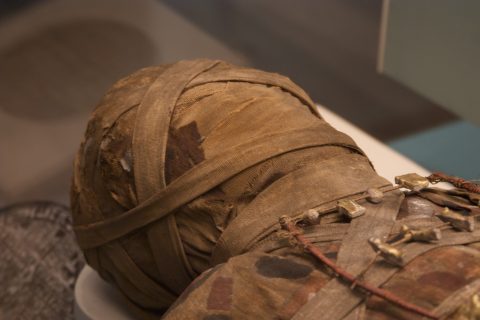
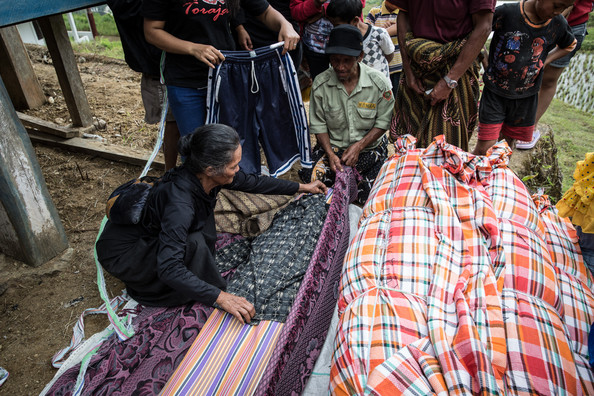
- What Ma’nene is: a rite in which the bodies of the dead are exhumed, washed, groomed and dressed in new clothes.
- When: every year in August.
- The funeral: for the Toraja it is the most important ceremony of life, with sacrifices of buffalo and pigs.
Ma’nene is an Indonesian festival celebrated by the Toraja people every August, in which the mummies of relatives are exhumed, washed and dressed in new clothes. The Toraja live in the highlands of the southern part of the island of Sulawesi, and their name comes from the language of the neighbouring Bugis: to riaja, “the people of the uplands”.
For the Toraja the funeral is the most important ceremony, so much so that a man’s wealth is measured by how lavish the funerals he holds are.
These people save all their lives to be able to hold proper funerals, and it is not unusual for a young person to postpone marriage if a relative is close to death.
The Toraja, once animists, are today mostly Christian, partly Muslim, and some still follow the ancient religion of the ancestors, Aluk To Dolo, “the way of the ancestors”, recognised by the Indonesian state. But whatever their faith, they all take part in these funeral rituals.
The funeral celebration
The funeral is a celebration, and the deceased is not buried until there is enough money to hold a proper funeral. Sometimes months, or even years, go by.
Until that day the deceased is wrapped in several layers of cloth and left to live with the family, in the traditional house, the tongkonan. He is not considered dead, but is referred to as “the sick one” or “the one who sleeps”. According to tradition, the soul lingers around the village until the funeral has been held; only then does it begin its journey to Puya, the land of souls.
Once the money has been raised the celebrations begin: the whole village gathers and sacrifices buffalo and pigs in honour of the deceased, then the meat is shared out among those present in order of importance. The more powerful the deceased, the more buffalo are sacrificed, because the Toraja believe he needs them for the journey to the afterlife: the more he has, the sooner he will arrive.
The climax of the feast is the slaughter of dozens of buffalo and hundreds of pigs with machetes, amid dancing and music, while boys catch the spurting blood in long bamboo tubes. Animals brought as gifts by guests are carefully recorded, because they become a debt of the deceased’s family. A cockfight is also part of the rite, considered sacred because it spills blood on the earth.
The animals’ horns are placed in front of the relatives’ house, and the houses with the most horns belong to the wealthiest.
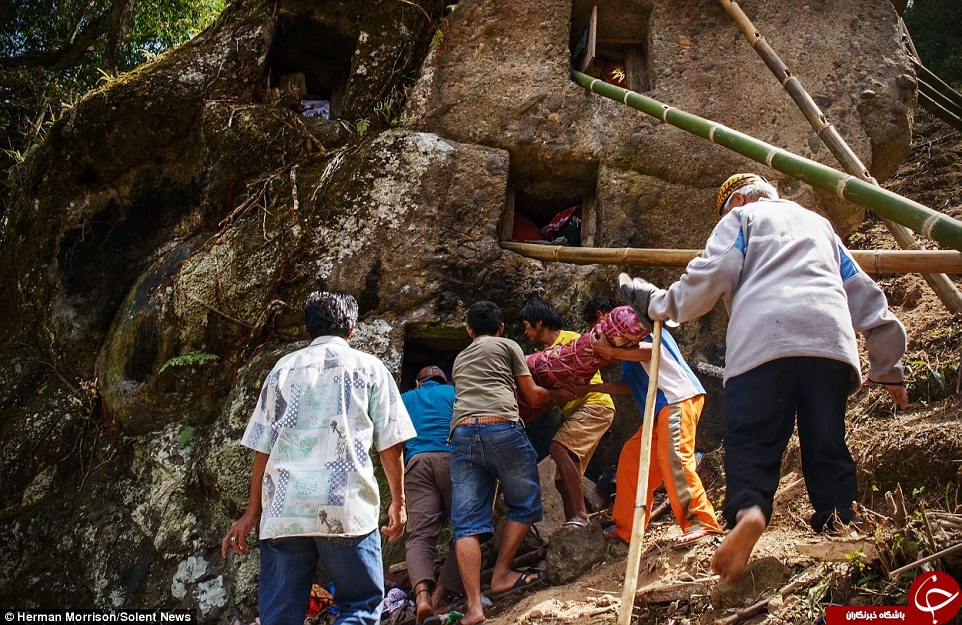
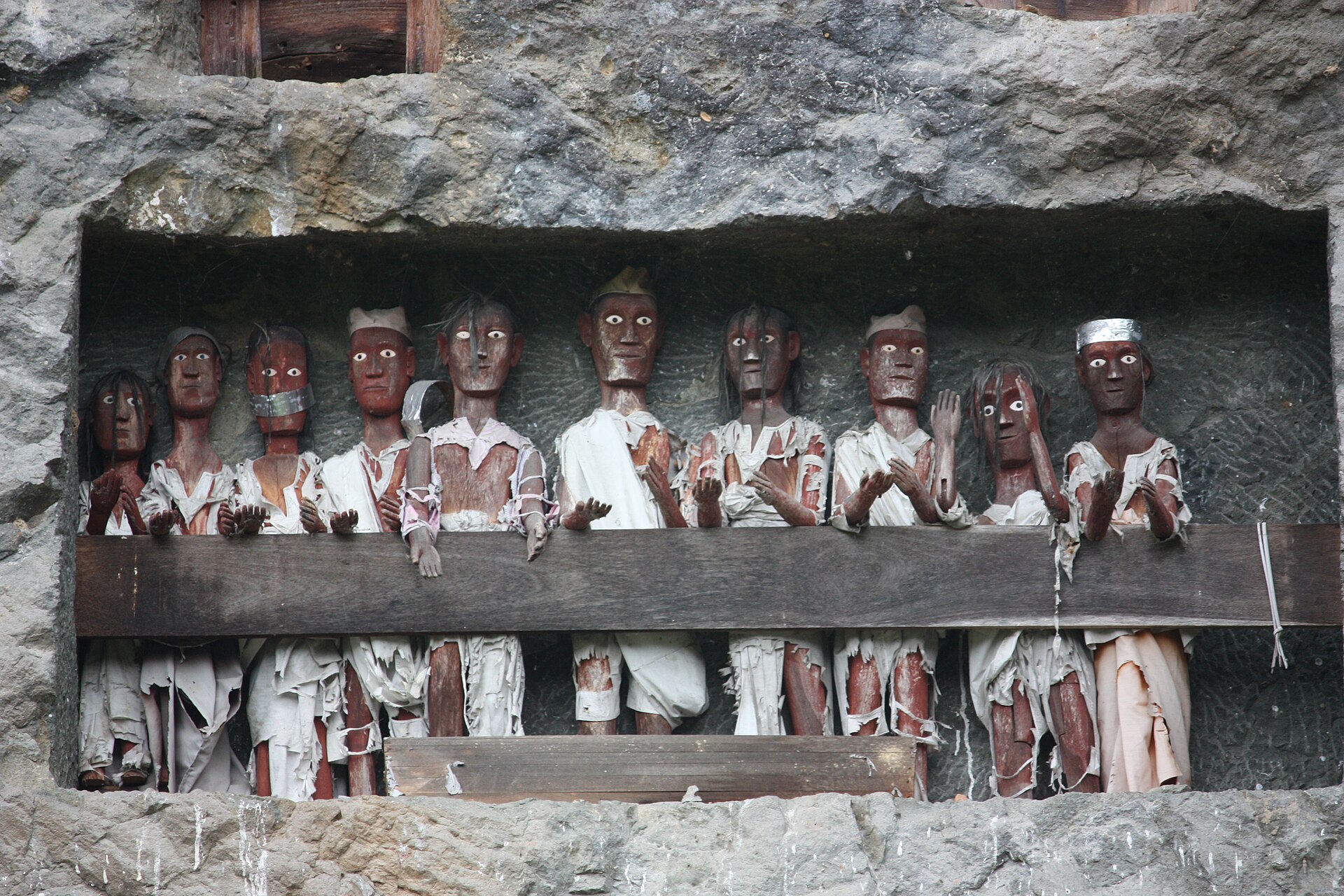
The celebrations can last several days, after which the dead are placed in coffins decorated with geometric shapes and laid to rest in caves or in tombs carved into a mountain face, where wooden statues representing the deceased, called tau tau, are also placed, looking down over the valley.
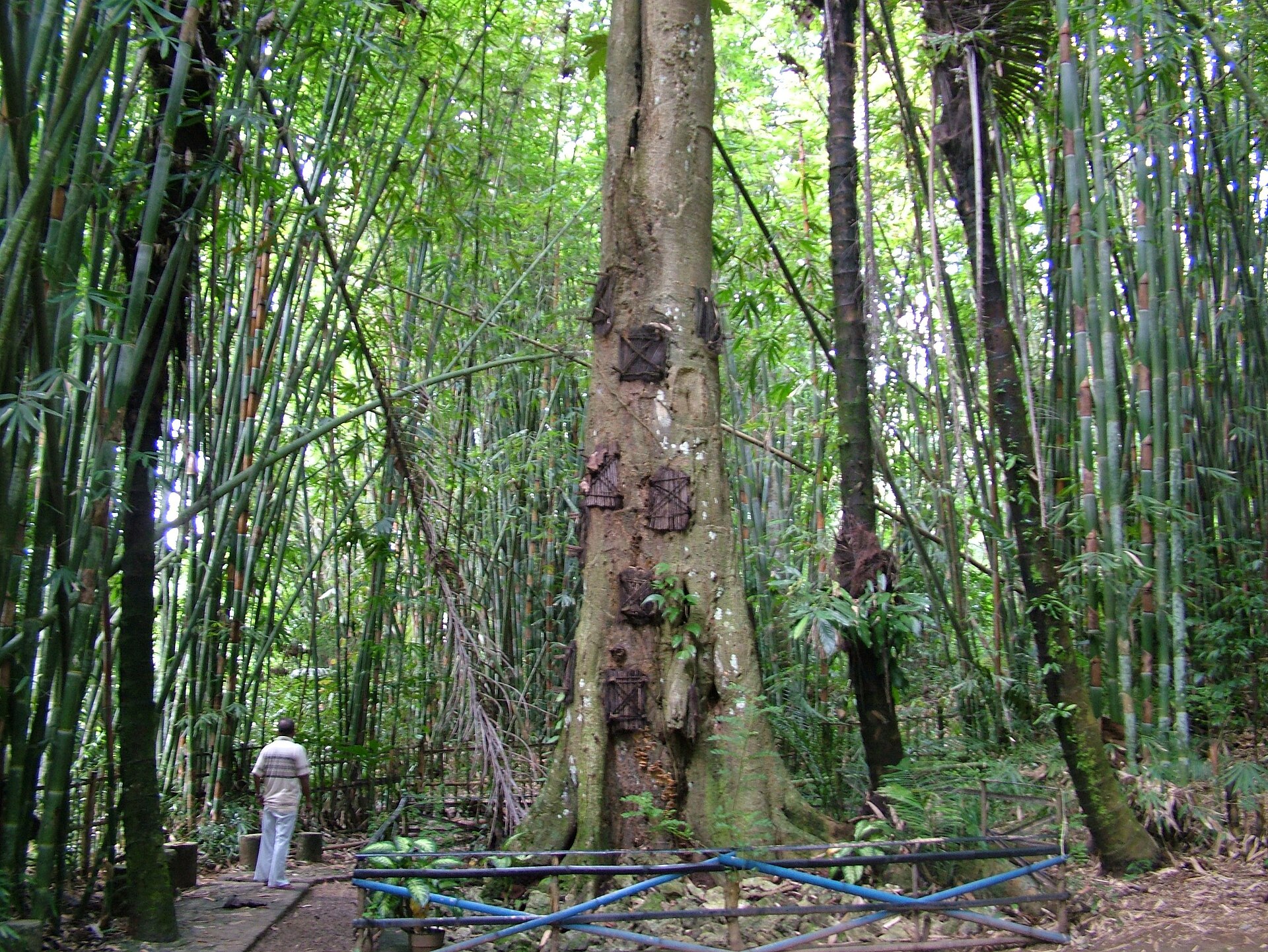
If the one who dies is a baby who has not yet cut its teeth, the body is wrapped in palm leaves and placed in a hollow carved into the trunk of a living tree, the so-called “baby tree”. According to tradition, the child’s spirit lives on in the tree.
The Ma’nene ritual
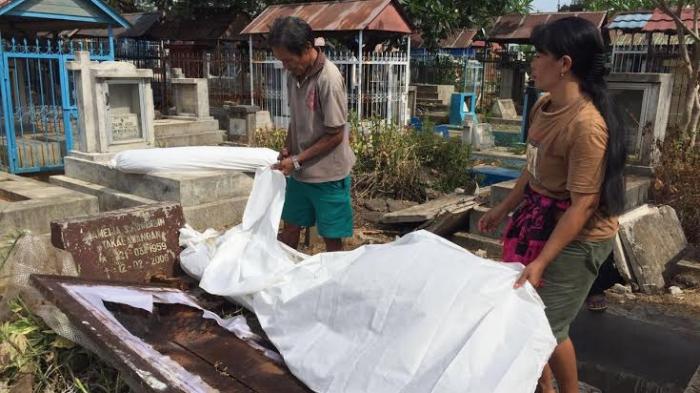
Every year, in August, Ma’nene is celebrated, a festival in which all the villagers go to the tombs of their loved ones and exhume them.
According to tradition, the dead were once made to “walk” along specific paths to the village, where they are washed, groomed and dressed in new clothes.
If the coffin is damaged it is restored. This practice has been handed down from generation to generation for centuries, and is thought to date back to very ancient times.
This tradition survived several invasions by other peoples and the arrival of missionaries, but it was beginning to fade with the coming of progress.
Fortunately, though, this very tradition draws thousands of tourists to Tana Toraja every year: since the 1970s it has become one of the most famous destinations in Indonesia, and tourism is now a source of livelihood for these people, who can keep practising this ancient ritual.
🦋 Emadion lives through its readers. If this story kept you up at night, buy me a coffee: it helps me bring you the next nightmare.
☕ Support Emadion on Ko-fi