 Posted by
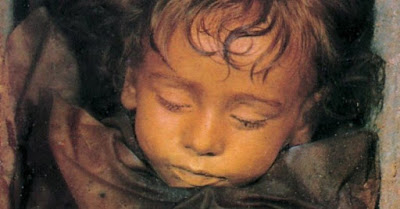
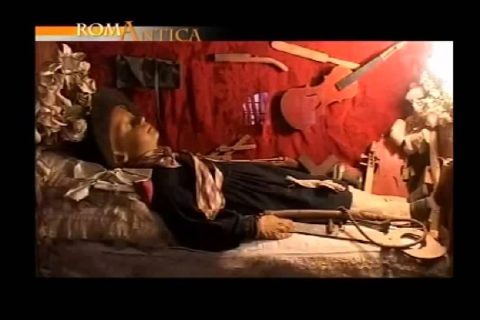
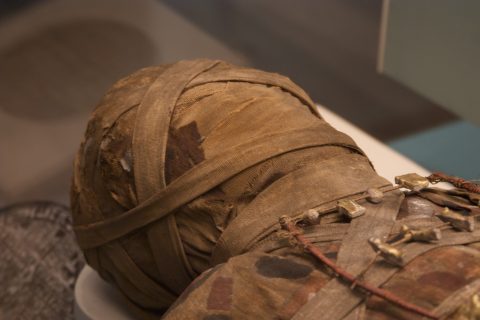
In Salò, a small village with 10.000 people in the italian provicne of Brescia, there are some italian mummies. They may not be as ancient and exotic as the Egyptian mummies, but they are very peculiar: they aren’t wrapped in linen bandages and they look like sculptures.
For this reason the method used for embalming these bodies is called “petrification”, however that’s not a proper scientific definition.
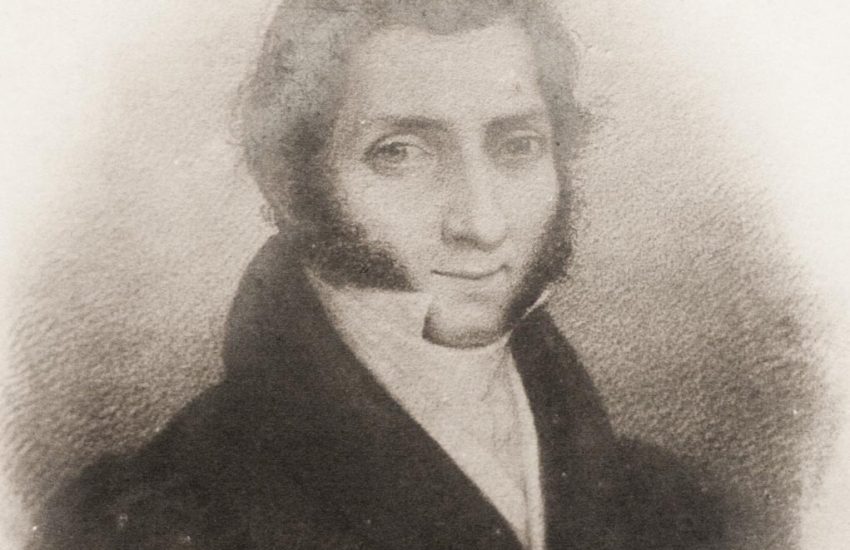
The author of these spectacular mummies was Giovan Battista Rini, also known as “The Salò petrifier”.
The Salò petrifier
Giovan Battista Rini was an Italian surgeon, expert in embalming. Born in Salò on 17 February 1795 and died there on 29 November 1856, he is famous for using a particular technique of embalming mistakenly called “petrification”.
He graduated in medicine in Pavia and worked in a hospital in Milan. Later he returned to Salò to perfect his technique of embalming along the footsteps of Girolamo Segato, of whom I have already talked about in another article.
The subjects of his experiments were bandits and members of the Carbonari Society, but his studies were not only limited to petrification.
Some specimens were in fact prepared “by corrosion”, that is, by removing some tissue to show others. In this way he could highlight particular anatomical details such as, for example, the muscles and veins.
At the time these studies were of tremendous help to medicine since the modern techniques of conservation did not exist yet and the bodies used for the studies would quickly decay.
Like his predecessor he never divulged the secrets of this technique, but a recent examination on the bodies brought to light some elements.
In 2012 a team of researchers, including anthropologist Dario Piombino-Mascali, examined eight of Rini’s specimens, then kept in the pathology department of Desenzano hospital, with CT scans. They found that Rini used heavy metals such as arsenic and mercury to thicken the skin and make it more resistant. Other materials found were silica, lime and sulphur.
In his will he left his findings to the hospital in Salò, which later entrusted them to the town council.
Since June 2015 you can admire them at the MuSa, the Museum of Salò, in the former complex of Santa Giustina, and almost 200 years later they are still perfectly preserved.
Rini worked in the same years as another famous Lombard “petrifier”, Paolo Gorini of Lodi: both were active between 1843 and 1856. As Piombino-Mascali has pointed out, however, not all of Rini’s specimens are true “petrifications”: many belong more broadly to dry anatomical preparations.
🦋 Emadion lives through its readers. If this story kept you up at night, buy me a coffee: it helps me bring you the next nightmare.
☕ Support Emadion on Ko-fiSources
- Wikipedia, Giovan Battista Rini (Italian)
- Dario Piombino-Mascali, Giovan Battista Rini e Paolo Gorini: due personaggi a confronto, Acta medico-historica Adriatica, 2022
- Visit Sirmione, The MuSa of Salò
- Visit Brescia, MuSa di Salò