
 Posted by
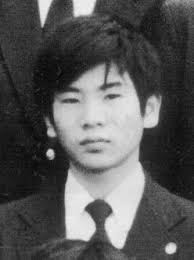
- Who: a 14-year-old boy from Kobe, known as “Boy A” or by the alias Seito Sakakibara.
- Victims: Ayaka Yamashita, 10, and Jun Hase, 11, killed between March and May 1997; three other girls injured.
- Where: in the Suma district of Kobe, Japan.
- Arrest: 28 June 1997.
- Today: released in 2004, he lives under a name the authorities keep secret.
Seito Sakakibara is the alias used by a 14-year-old Japanese boy guilty of torturing and killing two elementary school children. During the trial and in the media his name was not released and, as is customary in Japan for minors, he was referred to only as “Boy A”.
The first attacks
It all began on 10 February 1997 in Suma, a district of Kobe, when the boy struck two twelve-year-old girls on the head as they walked home from school.
On 16 March he attacked Ayaka Yamashita, a 10-year-old girl, with a hammer; she died a week later. Ten minutes afterwards he stabbed and injured another girl, aged nine.
That day he wrote in his diary that he had carried out “sacred experiments to confirm how fragile human beings are”. When he learned that Ayaka had died, he thanked “Bamoidōkishin” in his diary, a kind of deity he said he had created out of his hatred as a child, for the fact that nobody had caught him.
The murder of Jun Hase
On 24 May he met Jun Hase in the street, an 11-year-old boy in the special education classes at Tainohata Elementary School, the same school he himself had attended. Saying he would show him a turtle, he led him up a nearby hill and strangled him with his own shoelaces. He hid the body in an empty television relay station.
The next day he went back and cut off the boy’s head with a hacksaw stolen from a supermarket, then disfigured his face.
On 27 May, at two in the morning, he slipped out of his bedroom window and took the head to the gate of his junior high school, Tomogaoka, because he wanted his classmates to see it as they arrived. Instead, a few hours later, it was found by a passer-by. In the boy’s mouth was a note written in red pen, signed Sakakibara, which said:
This is the beginning of the game… Try to stop me if you can, stupid police officers… I desperately want to see people die, killing is a thrill for me. A bloody judgement is needed for my years of great bitterness.
It also bore the words “SHOOLL KILL” in English, with “school” misspelled: he thought it meant “school killer”. By “vegetables”, in another line of the note, he meant the people around him: he got the idea from his parents, who had once told him to imagine people as vegetables so as not to feel nervous.
On 6 June 1997 Sakakibara sent a letter to the newspaper “Kobe Shinbun” claiming responsibility for the murder and beheading of little Jun, and announcing that he would kill again. Police noted that the killer’s style recalled that of the Zodiac, the killer who terrorised San Francisco in the late 1960s, who sent letters to newspapers boasting about his murders and announcing more. Indeed, according to his friends, the boy was fascinated by that case.
The three-page letter was also written in red ink and contained the name Sakakibara Seito, already present in the note found with Jun’s head. The characters used for that name, taken individually, mean “alcohol”, “devil”, “rose”, “saint” and “fight”.
The letter
Now, the game begins. I am putting my life at stake for the sake of this game… If I’m caught, I’ll probably be hanged… police should be angrier and more tenacious in pursuing me… It’s only when I kill that I am liberated from the constant hatred that I suffer and that I am able to attain peace. It is only when I give pain to people that I can ease my own pain.
The letter also criticised the Japanese education system, which he said had formed him through compulsory education into an invisible person. A local TV station had misread his name as “Onibara”, “Demon Rose”, and Sakakibara insisted on being called by the name he had chosen: if they mispronounced it again, he would get angry and kill three “vegetables” a week, making it clear he did not only kill children.
At first journalists thought he was an educated man in his thirties, because of the complicated characters he used. In fact they were expressions common in manga.
The arrest of Sakakibara
On 28 June the boy was called in by the police. At first he denied everything, but when he was told his handwriting matched the letters he burst into tears and confessed not only to Jun’s murder but also to that of Ayaka Yamashita and the attacks on the other girls. The weapons, three hammers and a dagger, were found in a pond.
Ayaka’s father had said he could recognise the culprit and had asked the boy’s school to let him see the students, but the school got around the request. Of course the case had a huge impact on public opinion, which blamed violent films, just as in the case of Tsutomu Miyazaki.
Medical tests found nothing abnormal in his brain. Psychiatrists diagnosed conduct disorder. He had been seeing a child psychiatrist since 1995 and had a long history of cruelty to animals: he admitted to killing at least twenty cats. He showed no remorse, saying it was Jun’s fault for agreeing to follow him.
What happened next
On 13 October 1997 the Kobe family court had him detained indefinitely in a medical juvenile training school. In 1999 Ayaka’s family received 80 million yen in compensation. The boy’s parents divorced and his father wrote a book, donating all the proceeds to Ayaka’s family.
Following this case, in 2000, the age of criminal responsibility in Japan was lowered from 16 to 14.
On 11 March 2004, at 21, the Ministry of Justice announced he would be released, and from 1 January 2005 he has been completely free. His identity and where he lives are still kept secret today.
In June 2015, at 32, he published an autobiography titled Zekka, in which he said he was sorry but described the murders in minute detail. Despite efforts by Jun’s family to block its release, the book topped the bestseller charts, earning him about 10 million yen.
🦋 Emadion lives through its readers. If this story kept you up at night, buy me a coffee: it helps me bring you the next nightmare.
☕ Support Emadion on Ko-fi