 Posted by
- What they are: old North Korean fishing boats found drifting or washed up on Japan’s coasts, sometimes with the remains of the crew on board.
- How many: dozens every year; in 2019 there were at least 156.
- Why: experts believe they are fishermen who go too far out to sea and die of exposure or starvation.
- One cause: illegal fishing by Chinese fleets in North Korean waters, which has drastically reduced squid stocks.
Ghost ships off the coast of Japan
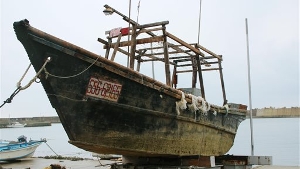
Since mid-October, “ghost ships” have been found off the Japanese coast. They are full of rotting corpses, some of them beheaded, while others contain only skeletons.
The boats are old, made of heavy wood and very slow. On board, besides the bodies, fragments of what looks like a Korean flag were found, and Korean characters appear on some of the boats: these two clues seem to point to the conclusion that the boats are North Korean.
It has not yet been officially stated who the crews were, whether sailors who went off course or desperate people trying to flee North Korea.
So far 8 ships have been found, but more may well turn up in the coming weeks.
Update
I wrote this article at the end of 2015, and sadly the ghost ships have not stopped: every year dozens of North Korean boats reach the coast of Japan, especially in winter, pushed by the seasonal winds.
According to Japanese broadcaster NHK, in October and November 2015 alone the boats found held the remains of 25 people. The bodies were badly decomposed and one boat held six skulls, a sign it had been adrift for a long time.
The Japanese Coast Guard began collecting data in 2011, with 57 boats. Since then the numbers have grown: 80 in 2013, 104 in 2017, with at least 31 bodies and 42 survivors, and at least 156 in 2019. On 28 December 2019 seven bodies washed up on the island of Sado.
Today experts think they are almost always fishermen rather than people fleeing: anyone trying to escape North Korea by sea prefers South Korea, which is closer and speaks the same language. The boats are old, without powerful engines or GPS, and often with very little food on board. Some are reportedly run by soldiers or rented out by the army to civilians. In winter the fishermen go after king crab and squid, which are among the country’s main exports to China.
One of the causes is illegal fishing: up to 800 Chinese vessels have fished for squid in North Korean waters, in violation of UN sanctions, causing a 70% decline in squid stocks there. So North Korean fishermen are forced to go further out and stay at sea longer, at the risk of getting lost and dying of cold or hunger.
There are not always only bodies on board, though: in November 2017 eight North Korean men reached Japan’s northern coast alive after their boat broke down. Unclaimed bodies are cremated and the ashes kept in a Buddhist compound in Wajima, while the boats are dismantled and burned.
🦋 Emadion lives through its readers. If this story kept you up at night, buy me a coffee: it helps me bring you the next nightmare.
☕ Support Emadion on Ko-fi