 Posted by
In Salt Lake City, Utah, the religious group Summum offers the world’s only “modern mummification”. It costs around $67,000, not including the sarcophagus and transport, and takes months of work. Its founder, Corky Ra, was the first human to be mummified, in 2008, and now rests in a gilded sarcophagus inside the group’s pyramid. Most of its “clients”, though, are pets.
Photo by Paul Hudson with license CC BY 2.0.
In Salt Lake City, Utah, among anonymous warehouses and the hum of the motorway, stands a bronze-coloured metal pyramid. Inside, an expert hand works on a body that is not awaiting a funeral. No. This body will be prepared for a new “life”. A life made of bandages, resin and eternal silence. Welcome to the world of modern mummification, where the ancient art of the Egyptians meets contemporary America and the thirst for immortality.
In an age where everything is dematerialising, some people pay tens of thousands of dollars to remain physically intact. But who are these new pharaohs of the third millennium? And what drives them to want to stay present even after death?
The ancient obsession with holding on to the flesh
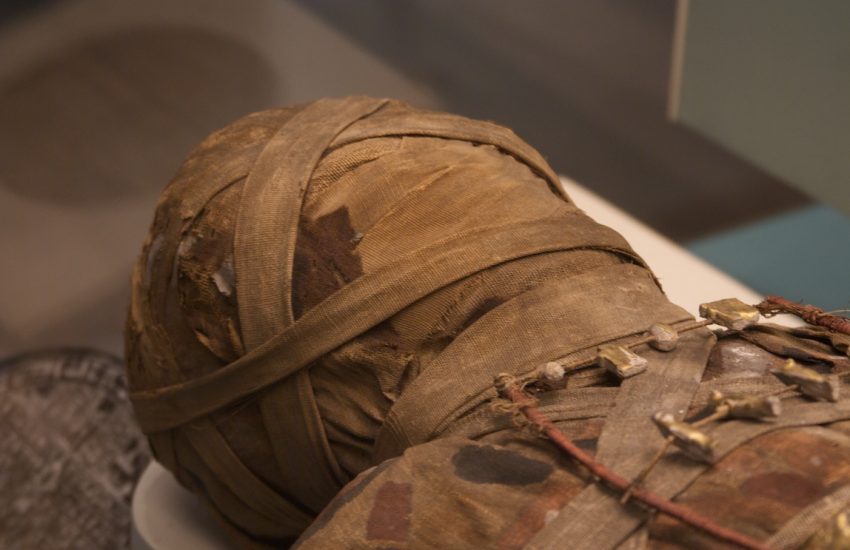
Mummification is probably one of the most fascinating and disturbing funeral rituals in history. In Egypt, to accompany the dead into the afterlife, it answered a single obsession: the permanence of the body. In Egyptian religion the soul could only return to the body if it had remained intact, hence ever more sophisticated techniques to empty, dry, embalm and bandage the dead.
Over the centuries the idea of preserving the body has seduced other cultures too, from the saints displayed in church reliquaries to the plastinated bodies of modern science. And today this obsession has not faded at all. On the contrary, it has become a service, complete with a price list.
The new embalmers, who offers mummification today
Mummification is no longer offered by the priests of Anubis but by Summum, a new religious movement based in Salt Lake City. It was founded in 1975 by Claude Rex “Corky” Nowell, who said he had met higher beings, the “Summa Individuals”, who revealed the principles of creation to him. In 1980 he legally changed his name to Summum Bonum Amon Ra, but everyone knew him as Corky Ra. His doctrine blends ancient Egyptian religion with the figure of Moses, and its practices include meditation, a sacramental wine it makes itself and, of course, mummification.
Its headquarters is a metal pyramid about eight metres high, built in the late 1970s, which is also where “modern mummification” takes place, a process Summum calls “thanatogenetics”. For the group it is not just a way of preserving the body but an aid to “transference”, the passage of the deceased’s essence to a better destination. The service is open to anyone, of any faith, and Summum offers it as a non-profit religious organisation, asking for a “donation”. According to its leaders, it is the only place in the world that practises permanent body preservation.
The price? For a human it starts at around $67,000, not including the sarcophagus, the funeral and the transport of the body. The sarcophagus, which Summum calls a “mummiform”, can cost from $20,000 to over $100,000, depending on how elaborate you want it. You can choose the classic gilded Egyptian style, with ankhs and scarabs, or a simple modern capsule bearing the symbols of your own religion.
The process can take from four months to a year. The body is carefully bathed and cleansed, the internal organs are removed through a small incision, cleansed and put back. It is then treated with chemicals, some also used in genetic engineering, which Corky Ra claimed would preserve even the DNA. Finally it is wrapped in many layers of gauze and enclosed in a fibreglass shell, then sealed inside the mummiform with amber resin, and every opening is welded shut.
Eccentric clients and real cases
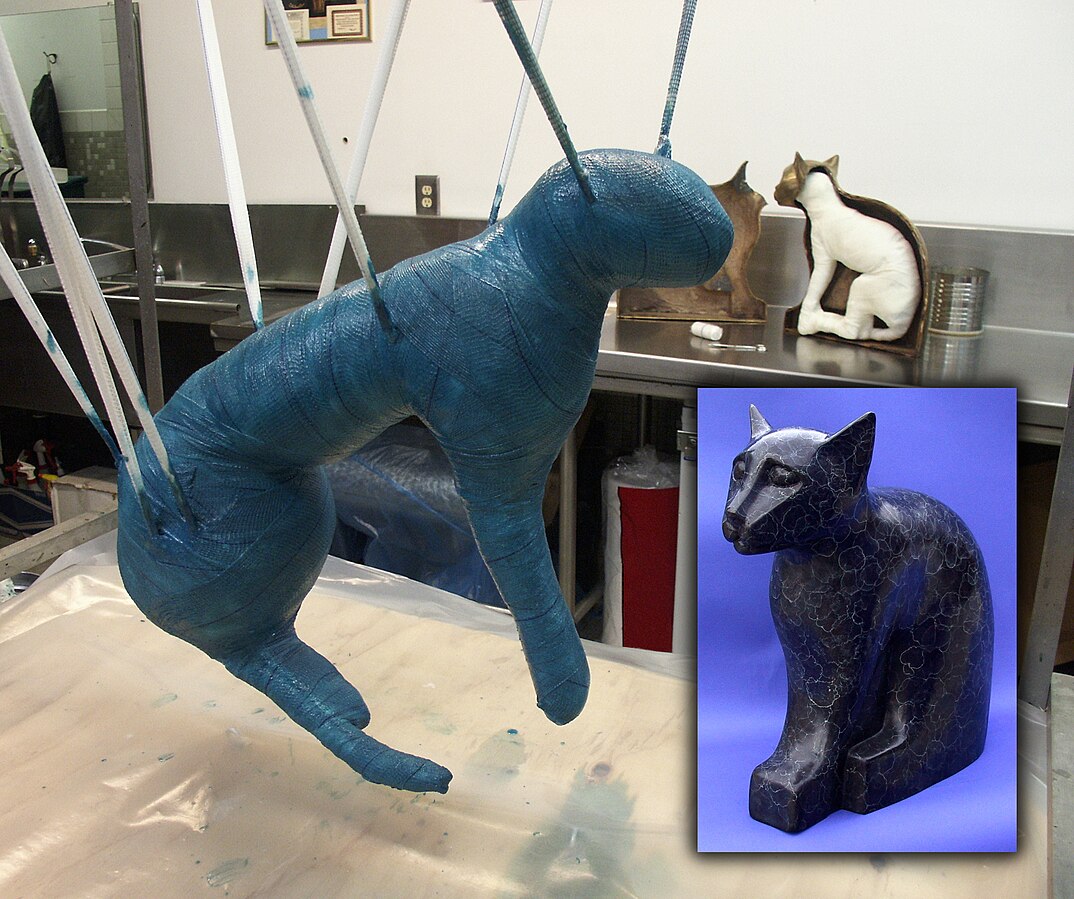
Who gets mummified today? According to Summum, more than a thousand people worldwide have already signed up. But the truth is that most mummifications are of pets. Cats and small dogs cost around $4,000, but for a large dog the bill can be much higher.
The first human mummified by Summum was its founder. Corky Ra died in January 2008, and today his body rests in a bronze mummiform covered in gold, standing inside the pyramid next to that of his cat Oscar. The sarcophagus had been commissioned from a local artist as early as 1985. Members of the group say they often feel his presence.
Law, ethics and religion, my body, my choice
Unlike cryopreservation, which has stirred medical and ethical controversy, Summum’s mummification sits on calmer ground. The group obtained a religious exemption from the IRS precisely for this service, and the mummiform, once sealed, can be buried or entombed like an ordinary coffin. In the United States the rules on how to dispose of your body vary from state to state, while keeping a corpse at home without authorisation is generally forbidden and can lead to charges such as abuse of a corpse.
Traditional religions are generally wary of these practices. For Christianity artificial preservation of the body has no spiritual value, while Islam and Judaism require the body to return to the earth as soon as possible. Yet some see mummification as an act of freedom after death, a statement of identity or an extreme gesture against oblivion.
When death becomes a piece of furniture
The line between tribute and obsession can sometimes get thin. Every now and then the news tells of people who could not part with a dead relative and kept the body at home for months or years, dressing it and talking to it as if it were still alive. These stories are very different from Summum’s: there is no rite and no choice by the deceased, only a grief that cannot find a way out.
A new religion of immortality
Ultimately, modern mummification is also a religion of the self. The body becomes the temple, the idol, the relic, a permanent monument to oneself. In a world where death is hidden from view and reduced to hygiene and paperwork, mummification stands out as a provocative act: I am staying here. It is a way of asserting control even beyond death, but perhaps also a statement of fear, as if a well-enough preserved body could resist oblivion.
The chill of eternity
Modern mummification is the most visible and disturbing side of humanity’s long battle against the inevitable. In an age that idolises youth and shuns decay, the idea of remaining still and eternal in one’s own body is an illusion some are willing to pay dearly for. But in the end, even the most expensive sarcophagus will only be a container. And perhaps what really survives is not the body we leave behind, but the memory that remains in those who loved us.
🦋 Emadion lives through its readers. If this story kept you up at night, buy me a coffee: it helps me bring you the next nightmare.
☕ Support Emadion on Ko-fiSources
- Summum, Wikipedia
- Atlas Obscura on Slate, Modern Mummification for You and Your Pet
- KSL, Religious group performs mummification rituals in Utah pyramid
- KSL, Northern Utah organization offers only place where you can be mummified
- FOX 13, Salt Lake City pyramid only place in the world for modern mummification
- Summum, The Process