 Posted by
- The ship: the Mignonette, a 16-metre yacht built in 1867 and suited only to coastal sailing.
- The crew: captain Tom Dudley, Edwin Stephens, Edmund Brooks and cabin boy Richard Parker, 17.
- The shipwreck: 5 July 1884, in the South Atlantic.
- The trial: R v Dudley and Stephens, which established that necessity does not justify murder.
- The sentence: death, commuted to six months in prison.
The Mignonette was a yacht that sank in 1884, forcing its crew to resort to cannibalism to survive: its sailors are remembered as “the Mignonette cannibals”.
The story of the Mignonette cannibals
Australian lawyer John Henry “Jack” Want decided to buy the Mignonette during a visit to England in 1883. To take her to Australia he needed a crew, but it was hard to find one: the yacht was only 16 metres long, built for sailing close to shore, and the voyage was around 24,000 kilometres.
In the end he found a crew of four: captain Tom Dudley, sailors Edwin Stephens and Edmund Brooks and cabin boy Richard Parker, a 17-year-old on his first voyage.
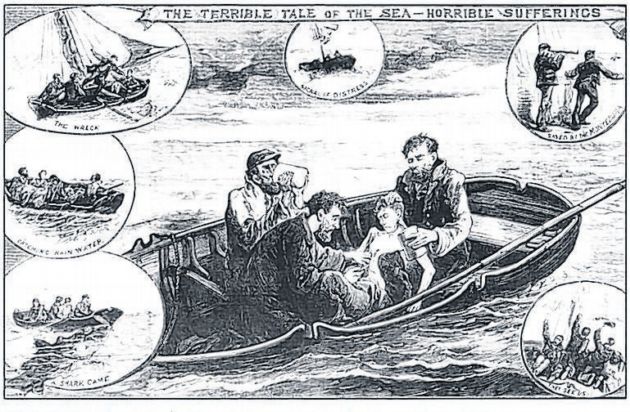
On 19 May 1884 the Mignonette left Southampton bound for Sydney. On 5 July, about 2,600 kilometres north-west of the Cape of Good Hope, during a gale a wave smashed the side of the yacht and the small crew had to abandon ship in the only lifeboat on board.
The ship sank in five minutes. The lifeboat was flimsy, four metres long, and had been holed as it was lowered. They had to abandon ship in a great hurry and could not take any water or food with them, apart from the navigation instruments and two tins of turnips. On the first night they even had to fight off a shark with their oars. The nearest land, Saint Helena or Tristan da Cunha, was over 1,000 kilometres away.
Around 9 July they managed to catch a turtle: they tried to quench their thirst with its blood, which however got mixed with seawater, and they ate its meat.
With the turtle and the second tin of turnips they held out until mid-July. They could not collect any rainwater and their thirst became unbearable. The more time passed, the lower their chances of survival, and the crew knew it well.
The idea of cannibalism
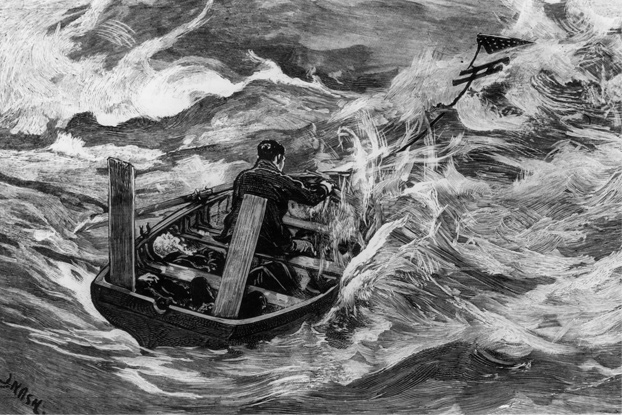
So the captain began to put forward the idea that one of them would have to be sacrificed so the others could survive, by drawing lots.
Nobody else agreed with him, though, and the days dragged on.
Around 20 July the youngest of the group, Richard Parker, fell seriously ill after drinking seawater, and the captain again proposed drawing lots to decide who would be killed to feed the others.
Brooks refused. That night Dudley talked it over with Stephens: Parker was probably dying, while the two of them had wives and children. Poor Richard, then only seventeen, was not married.
Since he was very ill and weak, by now almost in a coma, they decided he would be the victim.
The acts of cannibalism
The next day, around 24 July, the captain went up to the boy, prayed and killed him with a penknife, while Stephens stood ready to hold him down. Brooks said he had given neither consent nor refusal.
Killing him before he died naturally meant having blood to drink. The other three crew members quenched their thirst with his blood and then fed on his body, Dudley and Brooks most of all.
Years later Dudley said he had never forgotten that scene: they were like mad wolves, fathers of families who were no longer in their right minds.
On 29 July they sighted a sail: it was the German ship Moctezuma, which rescued them and on 6 September landed them at Falmouth, in Cornwall.
The trial
As soon as they arrived, the three told the customs officers everything openly, convinced that what they had done was justified by necessity: at sea, cannibalism to survive was considered a custom. But a policeman overheard the account and had them arrested for murder.
Public opinion sided strongly with them, especially after Richard’s brother Daniel, also a sailor, came to court and shook their hands. The government nonetheless wanted a trial, to put an end to the custom.
Brooks was used as a witness and only Dudley and Stephens were tried. The case, R v Dudley and Stephens, established a principle still valid today in common law countries: necessity does not justify murder.
Dudley and Stephens were sentenced to death, but with a recommendation for mercy. The sentence was then commuted to 6 months in prison.
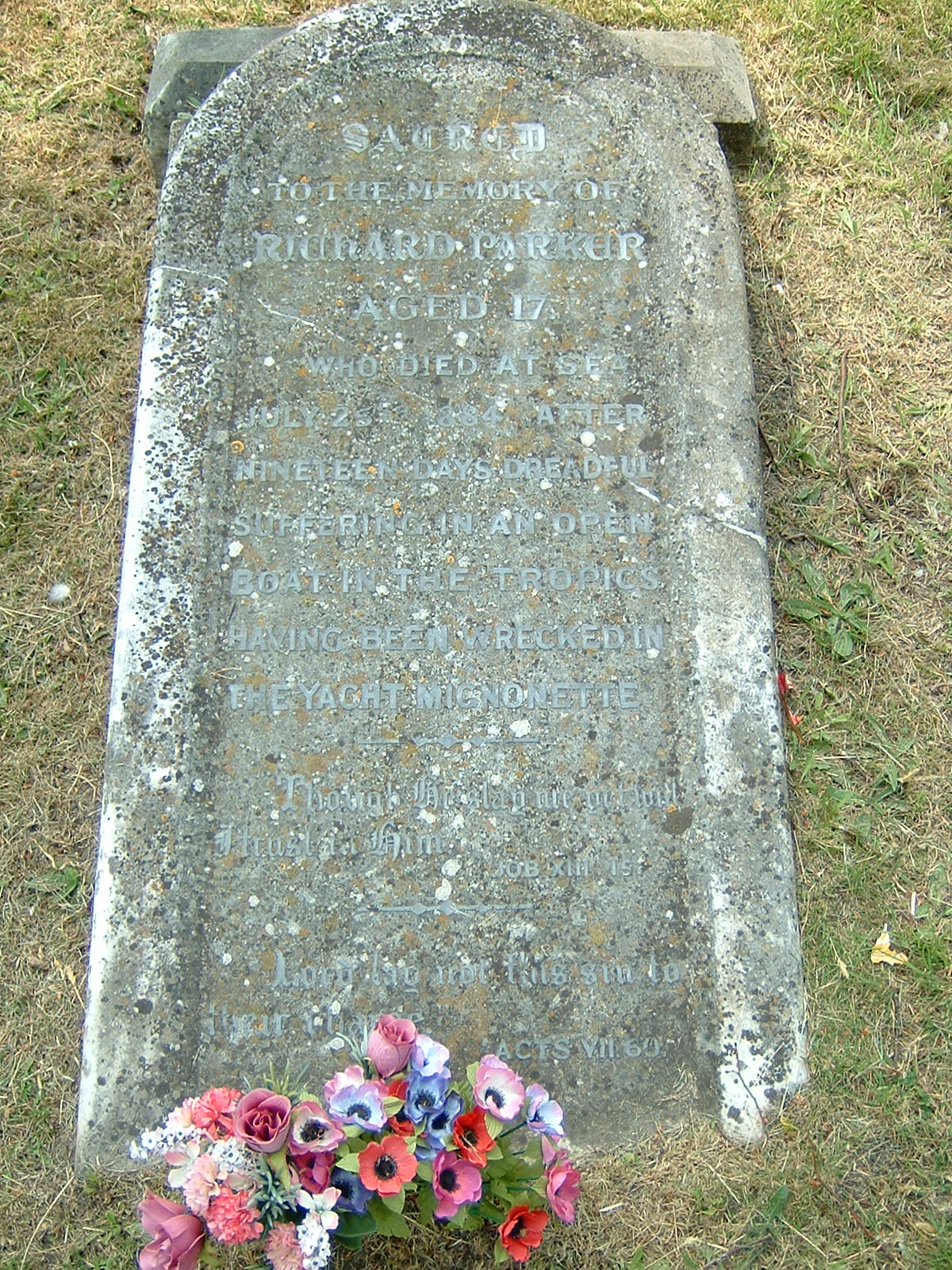
In Southampton, in the churchyard of Jesus Chapel at Peartree Green, a stone still remembers young Richard Parker.
Coincidence or premonition?
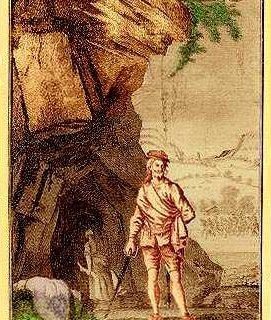
There is something strange about this story, though. Edgar Allan Poe wrote a novel, “The Narrative of Arthur Gordon Pym of Nantucket”, in which a ship is wrecked and only 4 crew members survive, left adrift.
To survive they decide to draw lots so that the others can feed on one of them. The man chosen is a sailor named Richard Parker.
What is strange about it? The novel was written in 1838, 46 years before the shipwreck.
🦋 Emadion lives through its readers. If this story kept you up at night, buy me a coffee: it helps me bring you the next nightmare.
☕ Support Emadion on Ko-fi