 Posted by
- Who: Joachim Georg Kroll (Hindenburg, 17 April 1933 – Rheinbach, 1 July 1991).
- Nickname: “the Ruhr Cannibal”.
- Crimes: at least eight murders of women and girls in the Ruhr region between 1955 and 1976; he confessed to 14.
- Arrest: on 3 July 1976, in Duisburg.
- Sentence: life imprisonment, in April 1982, after a 151-day trial.
Joachim Kroll was a German serial killer, necrophile and cannibal who for over twenty years killed women and girls in the Ruhr region. Many of his victims were little girls, and for this reason I will not go into the details of the violence they suffered in this article.
Biography
He was born on 17 April 1933 in Hindenburg (now Zabrze, Poland), in Upper Silesia, into a poor family. He was the sixth of nine children and his father was a miner; during the war his father was a prisoner, and after it the family moved to North Rhine-Westphalia. For this reason his education was very poor, and later tests put his IQ at just 76.
A fact that contradicts a widespread cliché, that serial killers all have a high IQ.
He did, however, have another trait often associated with serial killers: he wet the bed well into adulthood.
After his father’s death his mother became his only point of reference. Always shy and reserved, he had few friends, and after his mother died something in him snapped. Around 1960 he moved to Duisburg, where he worked as a toilet attendant for Mannesmann and then for Thyssen.
The murders
He began killing in 1955, after his mother’s death. He usually surprised his victims and strangled them quickly, then abused the bodies and cut off parts, which he took home to eat.
His victims were girls, teenagers and adult women, but he was not caught for twenty years because he rarely killed in the same place and, also because other killers were active in the area at the time, his capture was long delayed.
He killed so many people that during his confession he could not remember all his victims. The first murder was that of 19-year-old Irmgard Strehl, killed in a barn in Lüdinghausen in February 1955. In 1956 it was the turn of 12-year-old Erika Schuletter.
Others followed, including Manuela Knodt, 16, in 1959, Petra Giese and Monika Tafel, 13 and 12, in 1962, and Barbara Bruder, 12, whose body was never found. In 1965 he attacked a couple in a car in Duisburg and killed the young man, Hermann Schmitz, his only male victim, while his girlfriend escaped. His last adult victim was Maria Hettgen, 61, in 1969.
His story is also marked by another tragedy. Innocent people were accused of some of his murders: a mechanic, Heinrich Ott, arrested for the murder of Klara Tesmer, took his own life in prison; Walter Quicker, accused of Monika Tafel’s death, was released but, hounded by neighbours, took his own life a few months later; and the same happened to Adolf Schickel, boyfriend of Ursula Rohling, wrongly accused of her death.
After his capture he admitted he had tried cannibalism on a whim, and liked it so much he kept doing it, also, he said, to save on groceries.
The arrest
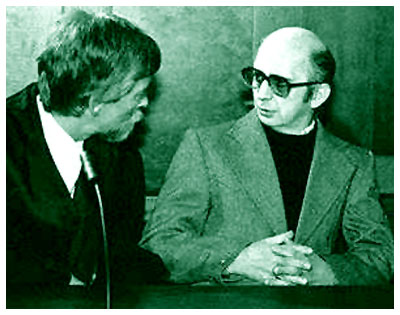
On 3 July 1976 a four-year-old girl, Marion Ketter, disappeared. Police began questioning people in the Laar neighbourhood, and at one point one of Kroll’s neighbours said the building’s drains were blocked.
When he had asked Kroll whether he knew anything about it, he had simply replied: “guts”.
The police went up to Kroll’s flat, at Friesenstraße 24, and found little Marion’s remains. Kroll was arrested immediately.
The trial
Kroll confessed to Marion’s murder and gave details of 13 other murders and an attempted murder committed over the previous twenty years, but he was tried for eight murders and one attempted murder. Kroll thought he would have an operation to cure his homicidal urges and then be released.
Instead, in April 1982, after a 151-day trial, he was sentenced to life imprisonment. He died of a heart attack on 1 July 1991 in Rheinbach prison.
🦋 Emadion lives through its readers. If this story kept you up at night, buy me a coffee: it helps me bring you the next nightmare.
☕ Support Emadion on Ko-fi