 Posted by
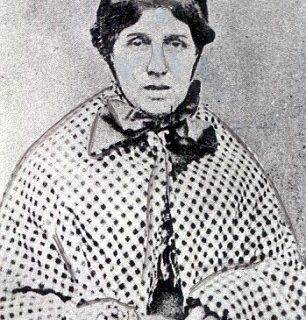
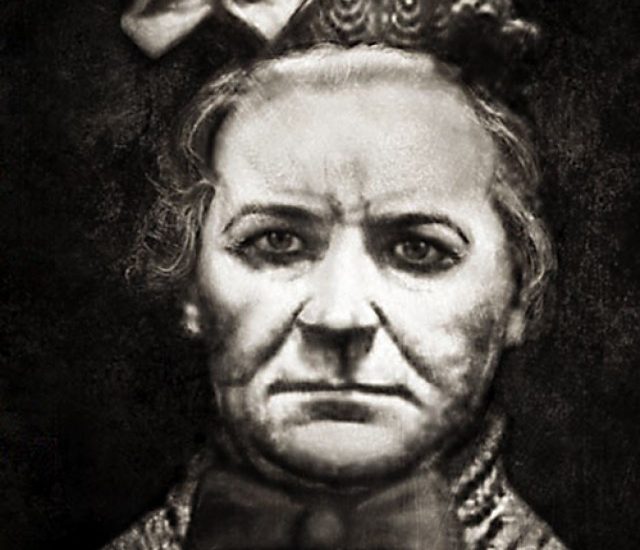
- Who: Amelia Elizabeth Dyer, née Hobley (Pyle Marsh, 27 November 1837 – London, 10 June 1896).
- Nickname: “the Ogress of Reading”.
- Crimes: for almost thirty years she killed the babies entrusted to her for money.
- Sentence: hanged at Newgate for the murder of baby Doris Marmon.
- Victims: perhaps hundreds, which would make her one of the most prolific serial killers in history.
Amelia Dyer was born in 1837 and was one of the most prolific serial killers of Victorian England, earning the nickname “the Ogress of Reading”. She was tried and hanged for a single murder, but she is thought to have killed hundreds of children, and some speak of over 400.
Biography
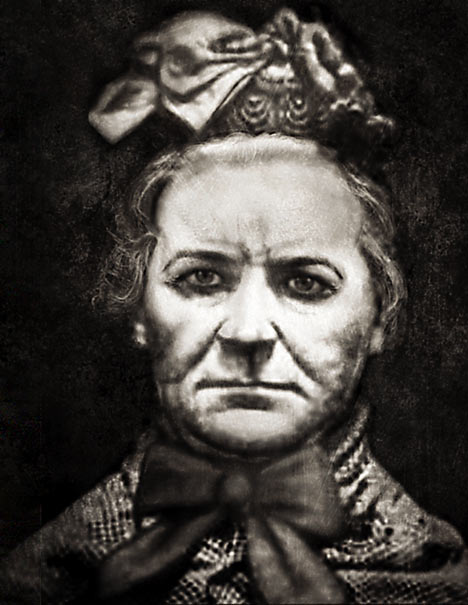
Amelia was born on 27 November 1837 in Pyle Marsh, a village near Bristol, the fifth of six children; her father, Samuel Hobley, was a shoemaker. Her mother, after contracting typhus, developed serious mental health problems with violent fits, and Amelia looked after her until her death in 1848. Eleven years later her father died too.
Around 1861 Amelia married a 59-year-old man, George Thomas (both lied about their ages to narrow the gap), and trained as a nurse. After the birth of a daughter she had to give up work, and when her husband died in 1869 she was left without money. So she found another way to earn: taking in illegitimate children, supposedly to have them adopted.
At the time an illegitimate child was a disgrace, and since 1834 the law had released the fathers of children born outside marriage from contributing to their upkeep.
Young women who became pregnant therefore had to give up their babies, paying people to raise them or have them adopted. Many people specialised in this business, known as “baby farming”, taking in young women and looking after them until the birth.
This could be very profitable if the woman was the daughter of a well-off family that wanted to keep the birth secret. In that case they would pay very large sums to protect the family’s good name and hush everything up.
The murders
Amelia placed newspaper ads presenting herself as a respectable married woman who would give the child a safe and loving home, in return for a one-off payment. At first she simply neglected the children, letting them starve or sedating them with opium. That way she pocketed the money and got rid of the child. Mothers rarely checked, and doctors recorded these deaths as “debility from birth”.
In 1872 Amelia remarried, to William Dyer, a brewery labourer from Bristol, had two children, and began to go further. Where before she had neglected the children and let them starve, now she began killing them right after receiving the payment.
In 1879 a doctor became suspicious of the many child deaths in her home and alerted the police. She was not convicted of murder, only sentenced to six months’ hard labour for neglect.
In the following years she was committed to asylums several times, and also tried to take her own life, conveniently at times when it suited her to disappear from view. Having worked as a nurse in asylums she knew exactly how to behave to avoid the harshest treatment. She also began abusing alcohol and opiates.
When she came out she resumed the killings, taking in children and then strangling them with white dressmaking tape and throwing their bodies into the Thames. To avoid suspicion she often changed town and name, and in 1895 she settled in Reading, at 45 Kensington Road.
In January 1896 a young barmaid, Evelina Marmon, who had just had a baby girl, Doris, answered an ad from a “Mrs Harding” offering a “nice country home” for £10. Evelina wanted to pay in instalments so she could one day take her daughter back, but “Mrs Harding”, that is Amelia, insisted on payment in advance. A few days later, in a house in London, Doris was killed.
The discovery of the bodies and the arrest
Unluckily for her, on 30 March 1896 a bargeman pulled a parcel from the Thames at Reading containing the body of a baby girl, later identified as Helena Fry. On the wrapping paper, examined under a microscope, Detective Constable Anderson managed to read the name “Mrs Thomas” and an address.
This led the police to Amelia, but they still had no evidence to charge her. So they put her under surveillance and then used a young woman as a decoy, posing as a client. On 3 April, instead of the young woman, the police turned up at the appointment and searched the house.
They found the white tape she used to strangle the children, telegrams about adoptions, letters from mothers asking for news of their babies, and pawn tickets for the poor children’s clothes. The police reckoned that in the previous few months alone at least twenty children had been entrusted to her.
Amelia was arrested on 4 April. Dredging the Thames in the following weeks, six more bodies were found, including those of little Doris and of Harry Simmons, a 13-month-old boy. The white tape, she told police herself, was how you could tell “it was one of mine”.
Trial and sentence
On 22 May 1896, at the Old Bailey in London, she pleaded guilty to the murder of Doris Marmon. Her only defence was insanity, but the prosecution showed that her asylum stays had just been a way to escape suspicion. The jury took four and a half minutes to find her guilty.
In the three weeks she spent in the condemned cell she filled five exercise books with her “last true and only confession”. She was hanged at Newgate prison on 10 June 1896. Before dying she also wrote a letter clearing her daughter and son-in-law, who had been accused of being her accomplices.
Nobody knows how many children she really killed, but the letters, the little clothes and the testimonies point to hundreds of victims. Following the case, adoption and child protection laws in Britain were tightened, and the case helped raise the profile of the young National Society for the Prevention of Cruelty to Children, the NSPCC.
🦋 Emadion lives through its readers. If this story kept you up at night, buy me a coffee: it helps me bring you the next nightmare.
☕ Support Emadion on Ko-fi