 Posted by
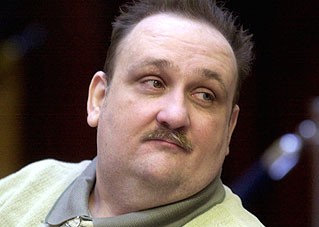
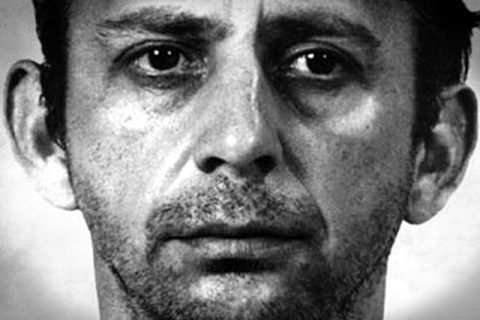
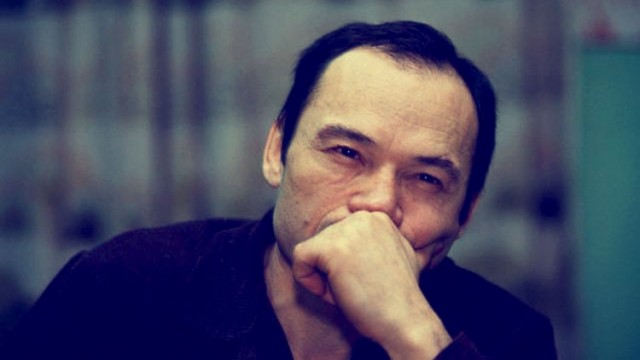
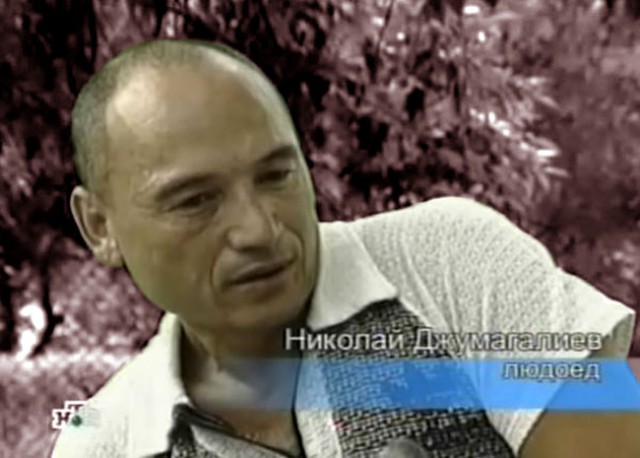
Nikolai Dzhumagaliev, born in 1952 in Kazakhstan and nicknamed “Metal Fang” because of his dental crowns, killed and partly ate at least eight women between 1979 and 1980. Declared schizophrenic, he was committed to a psychiatric hospital, from which he escaped in 1989. While on the run he killed at least one more woman and was recaptured in 1991. In 2014 he was convicted of a tenth murder and he is still confined in a psychiatric clinic.
Nikolai Dzhumagaliev is a serial killer and cannibal from the former Soviet Union, one of the most frightening criminals in its history. Ten murders are attributed to him, although for years there was talk of many more victims.
Biography
Nikolai was born on November 15, 1952 in Uzynagash, in what was then the Kazakh Soviet Socialist Republic, the third of four children of a Kazakh father and a Belarusian mother, who worked on a collective farm. He grew up with three sisters, one of whom disappeared when he was still a child.
At school he was a below-average but well-behaved pupil. After ninth grade he studied at a railway school and did his military service in the chemical defense troops. Then for years he traveled around the Soviet Union as a seasonal worker, from the Urals to Siberia, working as a sailor, an electrician and a bulldozer operator. In 1977 he returned to Uzynagash and found a job as a firefighter.
Because of his metal dental crowns he was nicknamed “Metal Fang”. Everyone considered him a polite, solitary and calm man, always well dressed, almost a gentleman.
The motive
Right after his arrest he explained his crimes like this: “I sided with the animals. I did to people what they do to animals”. In his diary, however, he wrote that he was driven mainly by sexual desire and believed that by eating women’s bodies he would “know them completely”.
He hated women, whom he considered inferior to men, and called his murders revenge for “violating the laws of nature”. He also said he was inspired by a book about ancient Germanic priestesses who drank blood to foretell the future.
According to some scholars his misogyny may have stemmed from a sexually transmitted disease he caught as a young man and from being rejected by a woman he fell in love with during his travels. Psychiatrists diagnosed him with schizophrenia, a diagnosis confirmed by Moscow’s Serbsky Center.
The murders
His first murder took place on the night of January 6, 1979. Nikolai ambushed Natalya Andronnik as she was walking home alone from an Adventist service, along a road near Uzynagash.
He stabbed her several times in the chest, dragged her to a nearby landfill and killed her by slitting her throat. Then he drank her blood, dismembered the body and took some parts home in a backpack.
When the remains were found on January 20, the medical examiner realized some of the flesh had been removed. The villagers were terrified: men armed themselves with axes to escort their wives and daughters when they went out. In 1979 Nikolai killed five more women. On one occasion he broke into a house near Almaty at night and slit the throats of a woman and her adult daughter as they slept; the granddaughter survived by hiding in a wardrobe.
By the summer of 1979 he had started curing human flesh in a barrel at home, like salo, the salted pork fat typical of the region.
On August 21, 1979, during an evening with friends, completely drunk, he tried to shoot a pigeon with an old hunting rifle. He tripped and the gun went off, killing a fellow firefighter. He was convicted of negligent homicide and sentenced to four and a half years, but as a model prisoner he was allowed weekend leave at home and at the end of 1980 he was released.
He started killing again immediately. On November 8, 1980 he killed a woman near a construction site, and on December 13 he broke into the home of Valya Manukhina and stabbed her eighteen times as she slept next to her newborn, also wounding her mother-in-law.
The arrest
On December 18, 1980 Nikolai threw a party at his home with some friends, who spent the night drinking and eating dumplings. According to one of the guests, in the early hours of December 19 Nikolai went into the bedroom with one of the women there, Tatiana.
Shortly after he came out covered in blood and asked his friends if they knew what they had eaten. They thought they had eaten pork, but he showed them a woman’s severed head. The guests vomited and fled the house.
One of them called the police. Officers found Nikolai naked, disemboweling Tatiana’s body with a knife, but while they were distracted he managed to escape with a hunting knife and a hatchet. He was found the next day, hiding in the basement of an elderly distant relative.
He confessed to eight murders and handed police his diary, in which he described eating the flesh and organs of his victims as pelmeni, Russian dumplings, and as salo. He said he had shown the head to his friends only to see their reaction, but had eaten the meat himself. His neighbors could not believe that such a quiet, polite man was a cannibal killer.
Trial and escape
The trial was held on December 3, 1981 at the Alma-Ata Regional Court, with the building surrounded by three rows of soldiers armed with machine guns to stop the victims’ relatives taking justice into their own hands. Because of his schizophrenia the judge ordered him committed to a special psychiatric hospital in Tashkent, Uzbekistan.
After eight years his condition seemed to have improved and it was decided to transfer him to an ordinary psychiatric hospital. On August 29, 1989, during the transfer, he took advantage of a bathroom stop, broke down a wall and escaped.
He was on the run for almost two years. In 1990, in Aktobe, he was seen leaving a woman’s house with blood on his face: it was his ninth confirmed murder. Meanwhile the authorities denied rumors that he had been seen in Moscow to avoid panic. He said he had hidden in the mountains of Central Asia, trading medicinal herbs for food.
In April 1991, as the Soviet Union was falling apart, he was arrested in Uzbekistan for stealing a sheep. He had got himself arrested on purpose to hide in the prison system and claimed to be Chinese, hoping to get new papers. But an Interior Ministry colonel who had been hunting him for years recognized him.
Nikolai Dzhumagaliev today
He was taken back to Kazakhstan and committed to a psychiatric hospital. In September 2014 he was also convicted of the 1990 murder in Aktobe, his tenth. Today he is in a specialized psychiatric clinic in Aktas, where he repairs small appliances and hopes to be released one day.
The clinic’s doctors describe him as a calm, cooperative patient who is no longer dangerous. Experts on serial killers, however, strongly disagree.
In January 2016 a rumor spread on WhatsApp and Facebook that he had escaped again, and some blamed him for the disappearance of a 22-year-old woman. It was fake news: police tracked down the author of the message, a 21-year-old woman from his own village, who was arrested and confessed.
For another story of cannibalism, read also the one of Nathaniel Bar-Jonah.
🦋 Emadion lives through its readers. If this story kept you up at night, buy me a coffee: it helps me bring you the next nightmare.
☕ Support Emadion on Ko-fi