 Posted by
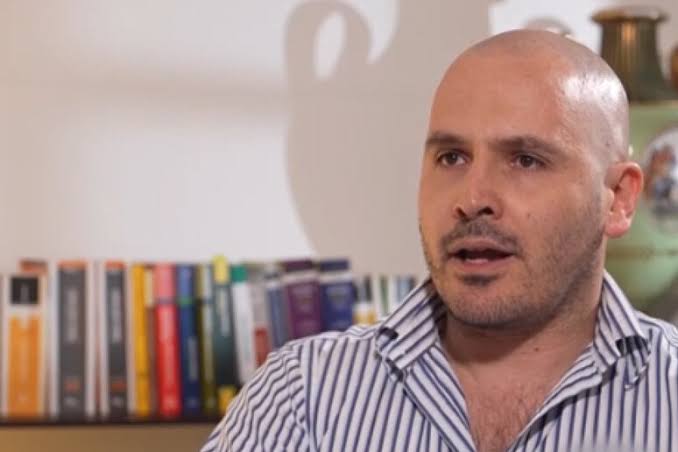
Andrea Sempio, a friend of Chiara Poggi’s brother, has been under investigation for the Garlasco murder since 11 March 2025, after two earlier inquiries were dropped in 2017 and 2020. According to Pavia prosecutors, he is linked to the crime by the DNA under Chiara’s fingernails, “fingerprint 33” on the cellar wall and an alibi they consider false. On 3 November 2026 prosecutors asked for him to stand trial as the sole perpetrator. Sempio has always said he is innocent, and under the law he is until a final ruling says otherwise.
In 2007 Andrea Sempio was 19 and one of the friends of Marco Poggi, Chiara’s younger brother. He spent time at the house on Via Pascoli, played video games with Marco and knew the family. For almost eighteen years his name stayed on the sidelines of the Garlasco murder. Today, at 38, he is the only suspect in the new investigation, and he could be tried for a murder for which another man has already been convicted.
For the story from the beginning there is the main article on the Garlasco murder, and for Alberto Stasi’s conviction the one on his trials. Here we look at how the investigation got to Sempio, and what is really on the table.
The first two dropped inquiries
It all started in December 2016, when Stasi’s defence presented an expert report on the DNA found under Chiara’s fingernails: according to its experts it was compatible with Sempio’s, collected secretly from objects he had used in a bar. Pavia prosecutors opened a file, but dropped it in March 2017: the genetic material was too scarce and degraded for a reliable comparison. In July 2020 a second inquiry, based on a Carabinieri report, was also dropped.
2025, the reopening
On 11 March 2025 Sempio received a notice that he was under investigation again, this time for murder in complicity with Stasi or others. With more modern techniques, the old DNA samples had become usable. In May came the searches of his home in Voghera and his parents’ home in Garlasco, with phones, computers and notes seized.
From then on the case became a media phenomenon. There are dedicated TV shows every evening, experts contradicting each other live, wiretaps published in instalments. It is background noise worth stepping back from: what matters is what the magistrates actually have.
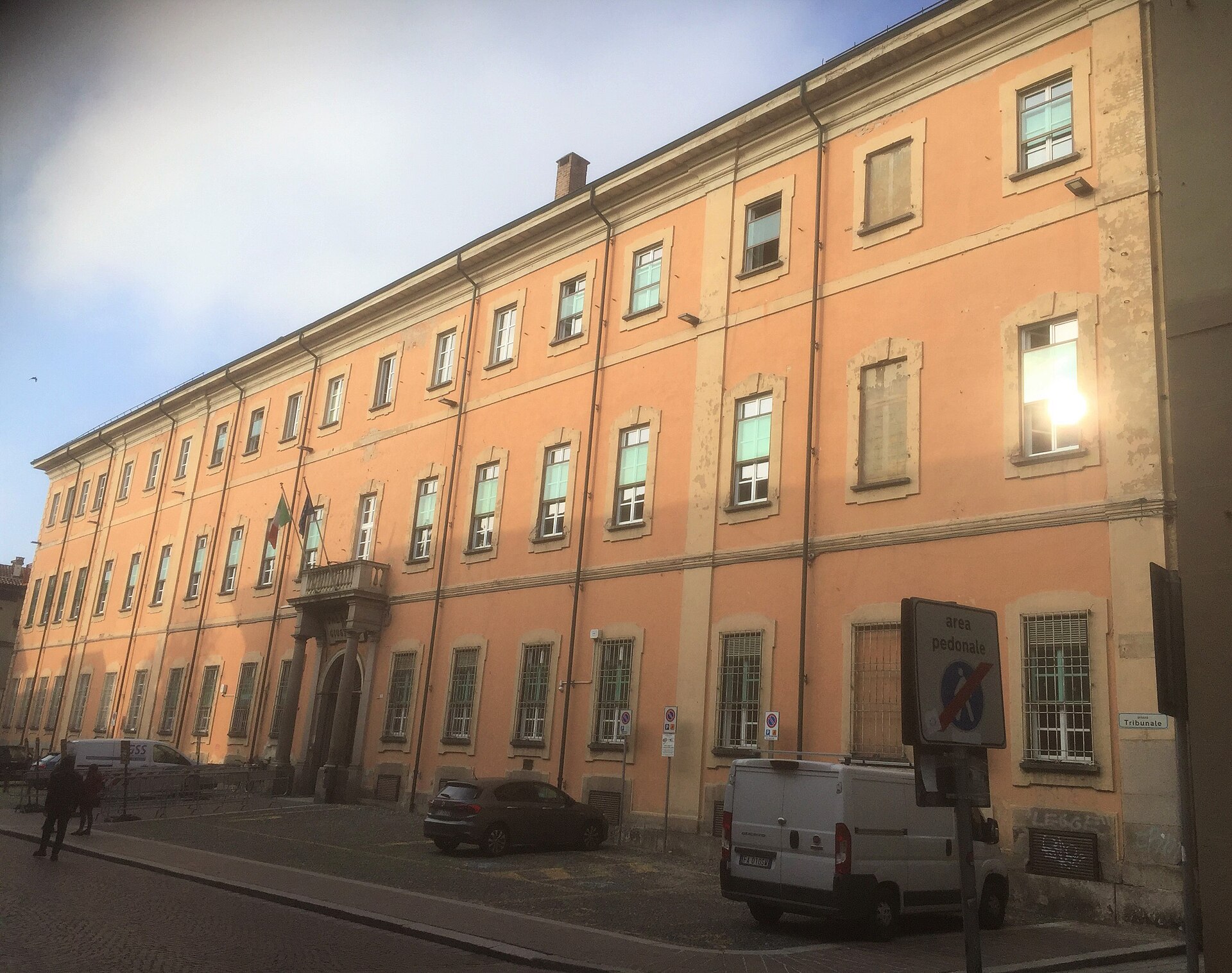
Photo: FabioRomanoni – Wikimedia Commons – CC BY-SA 4.0
The DNA under the fingernails
Between June and December 2025 a long “incidente probatorio” took place, a gathering of evidence before a judge that will also count in any trial. The geneticist Denise Albani, appointed by the Pavia judge, concluded that the male DNA found on two of Chiara’s fingernails is compatible with the paternal line of the Sempio family.
It is an important result, but with clear limits. It is a Y haplotype, that is, markers passed down unchanged from father to son: they point to a family, not to a person. The expert herself said so clearly, and added that it cannot be established whether that DNA was on top of or under the nails, nor how and when it got there. For the prosecution it is a key piece of the puzzle; for the defence it proves nothing.
Fingerprint 33
In 2007 the Carabinieri forensic unit (RIS) recorded a palm print, not in blood, on the wall to the right of the stairs leading to the cellar, exactly where Chiara was found. At the time it was considered unusable. With new technology, the prosecution’s experts have attributed it to Sempio. The defence disputes the attribution, and the victim’s family, too, believes there is no certain evidence.
The Vigevano parking ticket
The heart of his old alibi is a parking ticket from Piazza Sant’Ambrogio in Vigevano, issued at 10:18 on 13 August 2007. Sempio has always said that he went to a bookshop in Vigevano that morning, which turned out to be closed. He only handed the ticket to the Carabinieri on 4 October 2008, more than a year later, when he was questioned for the second time. In an interview with the TV show Le Iene, his mother said it was she who had suggested he keep it.
According to prosecutors, at 9:58 his mobile phone was connected to a cell in Garlasco, and the ticket was not his. Sempio, on the other hand, insists: “The ticket is mine”. For the prosecution the alibi is false; for the defence nothing really contradicts his version.
Today’s charges
On 29 April 2026 the theory changed: no longer a murder committed together with others, but Sempio as the sole perpetrator. According to prosecutors, he struck Chiara at least twelve times, with cruelty, after she had rejected an advance from him. On 6 May Sempio appeared for questioning and exercised his right to remain silent. The next day prosecutors closed the investigation, listing 21 elements against him: besides the DNA, the print and the alibi, also some wiretaps and what they consider lies and contradictions.
The defence, led by lawyers Liborio Cataliotti and Angela Taccia, responded with dozens of pages of counter-reports. In September prosecutors closed the investigation a second time, with new expert reports, and on 16 October the lawyers filed five more reports by their experts. On 3 November 2026 prosecutors, led by chief prosecutor Fabio Napoleone, asked for Sempio to stand trial. A preliminary hearing judge will now decide whether the evidence is enough for a trial. The hearing could come as early as January.
“My innocence will be proven,” Sempio said after the request.
The other inquiry, into the 2017 decision
Alongside the murder investigation there is another one, opened in Brescia, into the decision to drop the case in 2017. It concerned alleged corruption involving Mario Venditti, a former magistrate of the Pavia prosecutor’s office who had asked at the time for Sempio’s case to be dropped. On 17 September 2026 the case against Venditti was dismissed, while the part concerning Sempio’s father, who is still under investigation, was transferred to the Pavia prosecutor’s office.
Two truths that cannot coexist
If a judge sends Sempio to trial as the sole perpetrator, Stasi’s conviction will become even harder to defend. Stasi’s lawyers have already announced that they will request a review in mid-November. But being sent to trial is not a conviction, and many of the elements debated on TV will have to stand up in a courtroom.
Almost twenty years later, the Garlasco murder remains like this: a case closed by the courts that has reopened, with two names and a single victim. I will update this article as news comes in.
🦋 Emadion lives through its readers. If this story kept you up at night, buy me a coffee: it helps me bring you the next nightmare.
☕ Support Emadion on Ko-fiSources
- Il Giorno – Garlasco, quanti colpi di scena in quasi 20 anni (Italian)
- Il Post – La storia del delitto di Garlasco, dall’inizio (Italian)
- Open – La perizia Albani sul DNA sotto le unghie (Italian)
- Il Fatto Quotidiano – L’impronta 33 e lo scontrino di Sempio (Italian)
- Unione Sarda – The 21 elements against Sempio
- MilanoToday – Chiesto il rinvio a giudizio per Sempio (Italian)