
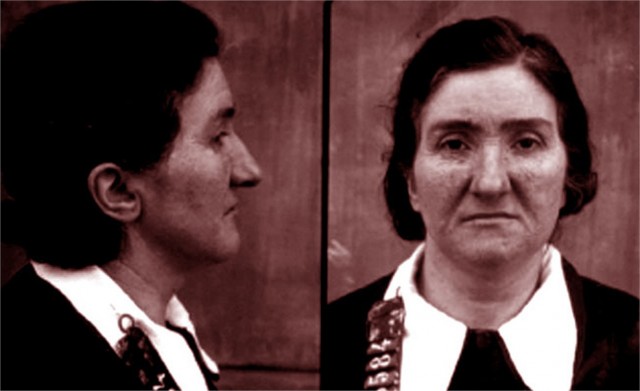
 Posted by
- Who: Leonarda Cianciulli (Montella, 18 April 1894 – Pozzuoli, 15 October 1970).
- Nickname: “the Soap-Maker of Correggio”.
- Victims: three women, Faustina Setti, Francesca Soavi and Virginia Cacioppo, killed between 1939 and 1940.
- Motive: according to her, human sacrifices to save her children; according to the prosecution, the victims’ money.
- Sentence: 30 years in prison and at least 3 in a criminal asylum, where she stayed until her death.
Leonarda Cianciulli was an Italian serial killer, known as the Soap-Maker of Correggio because she turned at least one of her victims into soap.
Almost everything we know about her comes from her memoir, “Confessions of an Embittered Soul”, more than 700 pages written in prison. Many doubt she really wrote it herself, since she had only gone to school until the third grade: it may be the work of her lawyers.
Biography of the soap-maker
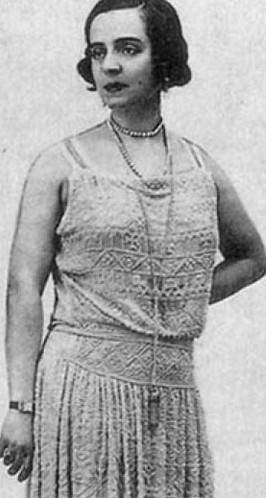
Leonarda was born on 18 April 1894 in Montella, in the province of Avellino, the youngest of six children of Mariano Cianciulli, a cattle breeder, and Serafina Marano. As a child she suffered from epilepsy and, despite the family’s poverty, sources suggest her childhood was less unhappy than she herself would describe it in her memoir.
In 1917 she married Raffaele Pansardi, a clerk at the local land registry, angering her parents, who wanted her to marry one of her cousins.
Despite their opposition Leonarda married Raffaele and they later moved to Lauria, in the province of Potenza, his home town.
According to the memoir, her mother cursed her on the eve of the wedding and from then on Cianciulli cut off all contact with her, which marked her deeply.
From 1921 to 1930, when they settled in Correggio, they moved several times, first to Lauria and then to Lacedonia, partly because of the rumours about Leonarda:
she was impulsive, rebellious towards her husband’s authority, of loose morals and given to swindling.
Proof of this lies in her various convictions: for theft in 1912, for threatening someone with a dagger in 1919 and for fraud in 1927, when she served ten months in prison for cheating a peasant woman. In 1930 the Vulture earthquake destroyed their home and the family moved to Correggio, in the province of Reggio Emilia.
Leonarda had 17 pregnancies, but only 4 children survived: before them she suffered 3 miscarriages and 10 infants died in the cradle, a fate a fortune teller had predicted when she once told her:
You will marry, you will have children, but all your children will die.
After meeting a local sorceress, however, she was able to give birth to her four children, whom she would protect at any cost. From then on she became passionate about palmistry, astrology and spells, convinced she could neutralise the curse that way.
A new life
In Correggio, while her husband worked at the Registry Office on a modest salary and took to drink, Leonarda opened a small furniture and clothing shop, also offering palm readings, and business began to go well.
Leonarda was well liked in town, considered an exemplary mother and a fervent fascist, and often welcomed visitors into her home, entertaining them with stories and pastries. Among them were 3 women, no longer young and alone, tired of their routine and eager to start a new life elsewhere, whom Leonarda would lure into her trap.
In 1939, when the war broke out, while her daughter and the two youngest boys were in no danger, the eldest and most beloved, Giuseppe, a literature student in Milan, risked being called to the front, and this threw Leonarda into utter terror.
Remembering how the sorceress had broken the fortune teller’s curse, she decided to turn to magic to save her son, by making human sacrifices.
The murders
The first victim was Faustina Setti, a seventy-year-old woman, alone and barely literate, whom Leonarda told she had found a husband for her in Pola. She advised her to sell everything but tell no one, to avoid envy, and had her sign a power of attorney to manage her property.
On 17 December 1939, the day of her departure, Faustina went to Leonarda, who persuaded and helped her to write postcards telling friends and relatives she was well. Then she killed her with an axe, dragged her into a closet, cut her into nine pieces and collected her blood in a basin.
She dissolved the body in a large pot with seven kilos of caustic soda and threw the remains into a cesspit, then dried the blood in the oven, ground it and used it as an ingredient, together with flour, sugar, chocolate, milk and eggs, in the pastries she offered to the ladies who came to visit. She and her son Giuseppe ate them too.
She then sent her eldest son, Giuseppe, to post the victim’s letters.
The second victim was Francesca Soavi, a nursery school teacher looking for work outside Correggio. Leonarda told her she had found her a post at a girls’ boarding school in Piacenza, but to tell no one, and when Francesca came to say goodbye on 5 September 1940, she had her write postcards, gave her drugged wine and killed her with the axe.
She then sent her son to Piacenza to post the letters and told people in town that Francesca had asked her to sell all her belongings.
The third victim was Virginia Cacioppo, a 59-year-old widow who had been a successful soprano: she had made her debut in Carmen in 1904 and sung works by Verdi, Puccini and Mozart in Italy, Lebanon and Egypt. She too was taken in with the promise of a job in Florence as secretary to a theatre impresario, on condition she tell no one, and in the autumn of 1940 she went to Leonarda to say goodbye (on 30 September according to some sources, 30 November according to others).
Virginia too was killed and dissolved in caustic soda but, as she would write in her memoir, since her flesh was “fat and white”, she added a bottle of cologne to the pot and made creamy bars of soap that she gave to friends and neighbours, while also using her blood for her cakes. “That woman was really sweet,” she added.
The capture
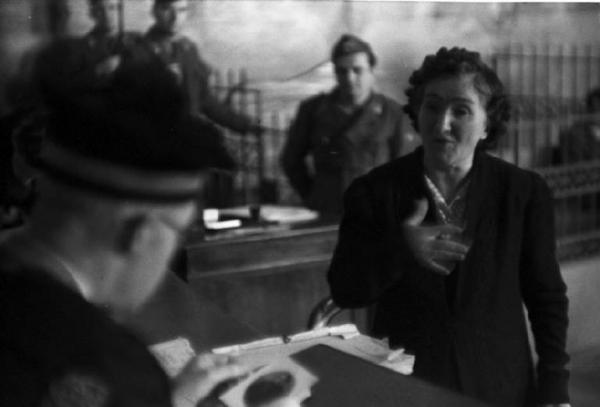
It was because of Virginia that Leonarda came under suspicion. In 1941 rumours about the three missing women were going around town, and Cacioppo’s sister-in-law, Albertina Fanti, having heard nothing from her, decided to alert the police chief of Reggio Emilia. The police immediately suspected Leonarda, since she was a friend not only of Cacioppo but also of the other two missing women.
Cianciulli denied having anything to do with it, threatening to sue the investigators and defying them, and so she was arrested. Commissioner Serrao questioned her, but she denied everything.
The breakthrough came from one of Cacioppo’s treasury bonds, cashed at a bank by a parish priest: the priest said he had received it from a friend of Cianciulli’s, who in turn said he had received it from her to settle a debt. At that point Leonarda confessed only to the last murder, and only after many exhausting interrogations did she confess to the other two as well, giving details. Blood and a denture belonging to the victims were also found in her home.
When an officer asked her what had happened to the three women, Leonarda replied:
Well, I ate my friends, and if you want to be eaten too, I’m ready to devour you […], I ate the missing women, one roasted, one stewed, one boiled.
Her son Giuseppe was considered an accomplice, partly because he had posted the victims’ letters and had their clothes washed, and for this he spent 5 years in jail before being released for lack of evidence. His mother did everything she could to convince the judges that she alone was guilty.
The trial
The trial opened in Reggio Emilia on 12 June 1946. The prosecution argued that Leonarda had killed to keep the victims’ money, but the soap-maker said she had done it as a blood tribute.
According to her, her dead mother had appeared to her in a dream and told her that if she did not shed innocent blood in her honour, she would take her children’s lives.
It is also said that, to prove she had acted alone, she was secretly taken to a morgue, where she dismembered a corpse in just twelve minutes, but this is probably a legend.
Psychiatrist Filippo Saporito, director of the criminal asylum of Aversa, considered her completely insane, but the jury recognised only partial insanity. On 20 July 1946 she was found guilty of the three murders, the theft of the victims’ property and desecration of corpses, and sentenced to 30 years in prison and at least 3 years in a criminal asylum.
Death
In fact she entered the asylum and never came out. She died on 15 October 1970 in the asylum of Pozzuoli, of a cerebral apoplexy. She was buried in a pauper’s grave and, when nobody claimed her remains in 1975, they ended up in the common ossuary.
A nun remembered her this way: in the asylum she made delicious cakes, but none of the other inmates dared eat them, because they were convinced they contained something magic.
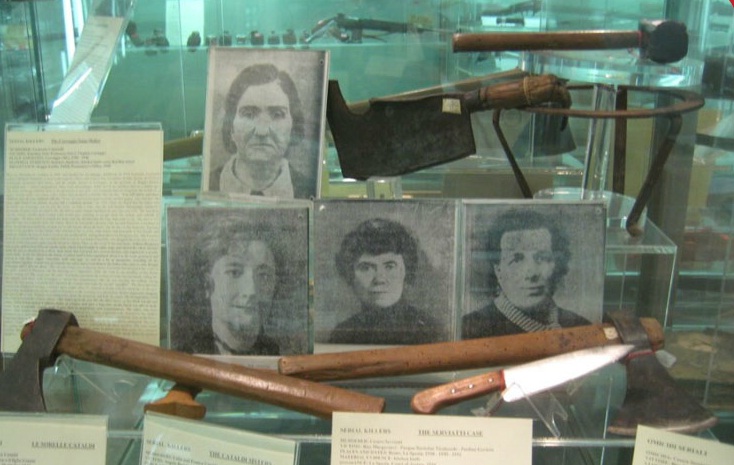
The tools she used for the three murders have been kept at the Criminology Museum in Rome since 1949. Her story also inspired Mauro Bolognini’s 1977 film Gran bollito.
🦋 Emadion lives through its readers. If this story kept you up at night, buy me a coffee: it helps me bring you the next nightmare.
☕ Support Emadion on Ko-fi