
 Posted by
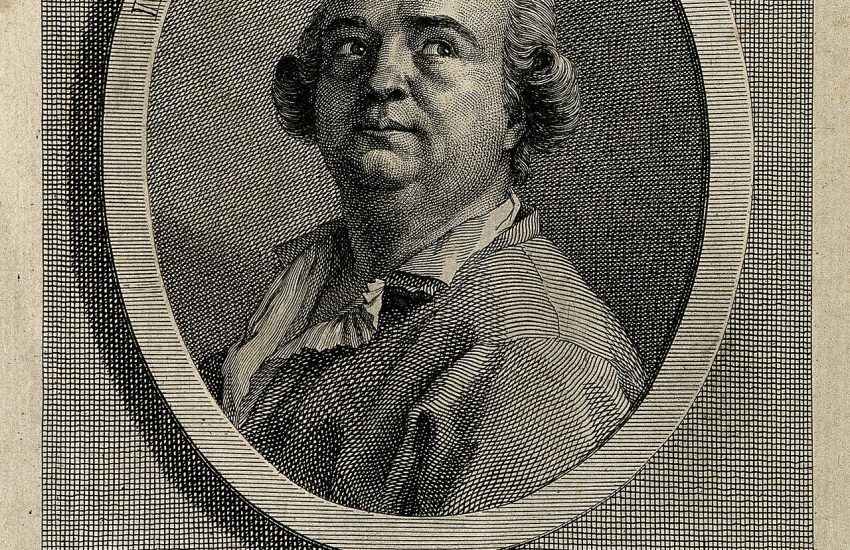
In the salons of 18th-century Europe, from Strasbourg to London and Paris, everyone wanted to meet him. He claimed to be thousands of years old, to have learned the secrets of eternal life from Egyptian priests, to be able to heal the sick and turn metals into gold. He called himself Count Alessandro di Cagliostro. In reality he had been born in a poor alley in Palermo, and his real name was Giuseppe Balsamo.
Cagliostro, born Giuseppe Balsamo (1743-1795), was a Palermo-born adventurer, healer, alchemist and Freemason who won over the courts of Europe. Caught up in the scandal of Marie Antoinette’s necklace, he was arrested by the Inquisition in Rome and died a prisoner in the fortress of San Leo.
The boy from the Albergheria
Giuseppe Balsamo was born on June 2, 1743 to a poor family in the Albergheria, Palermo’s old Jewish quarter. As a young man he was a novice with the Brothers Hospitallers, where he learned the basics of pharmacy and chemistry, but he soon turned to scams and forgery. After swindling a goldsmith he had persuaded to search for buried treasure, he had to flee the city. In Rome he married the very young Lorenza Feliciani, who became his partner in adventure under the name Serafina, and began to travel across Europe.
The Grand Copht
As Count Cagliostro, Balsamo reinvented himself as magician, healer and master of wisdom. He handed out elixirs, treated the poor for free, held séances in which a child or a young “dove” saw visions in a carafe of water. Above all he founded his own Masonic rite, the “Egyptian rite”, which he led with the title of Grand Copht, and which was open to women too. In Strasbourg he won the protection of the powerful Cardinal de Rohan, and in Paris he became a celebrity: he was said to have summoned the ghosts of Voltaire, Diderot and d’Alembert at a dinner.
The queen’s necklace
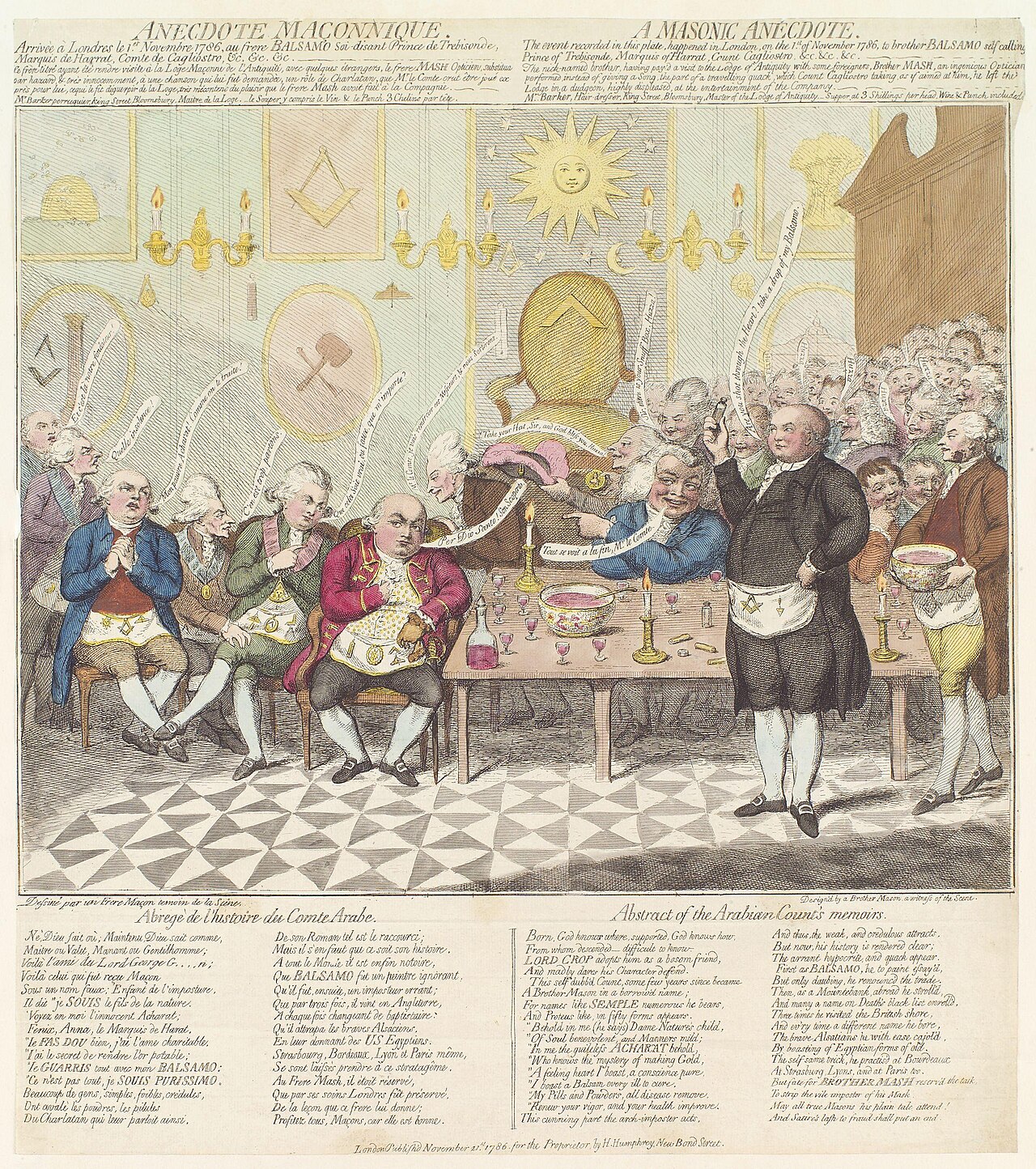
His downfall began in 1785 with one of the century’s most sensational scandals: the Affair of the Necklace. An adventuress, the Comtesse de La Motte, persuaded Cardinal de Rohan to buy a hugely valuable diamond necklace, making him believe that Queen Marie Antoinette secretly wanted it. The necklace vanished, broken up and sold. Cagliostro, a friend of the cardinal, was accused of masterminding the fraud and locked in the Bastille. At the 1786 trial he was acquitted, but the king banished him from France. In London a journalist publicly unmasked him as Giuseppe Balsamo; Goethe too, traveling in Sicily, went to visit his family in Palermo.
)_by_James_Gillray.jpg)
The “pozzetto” of San Leo
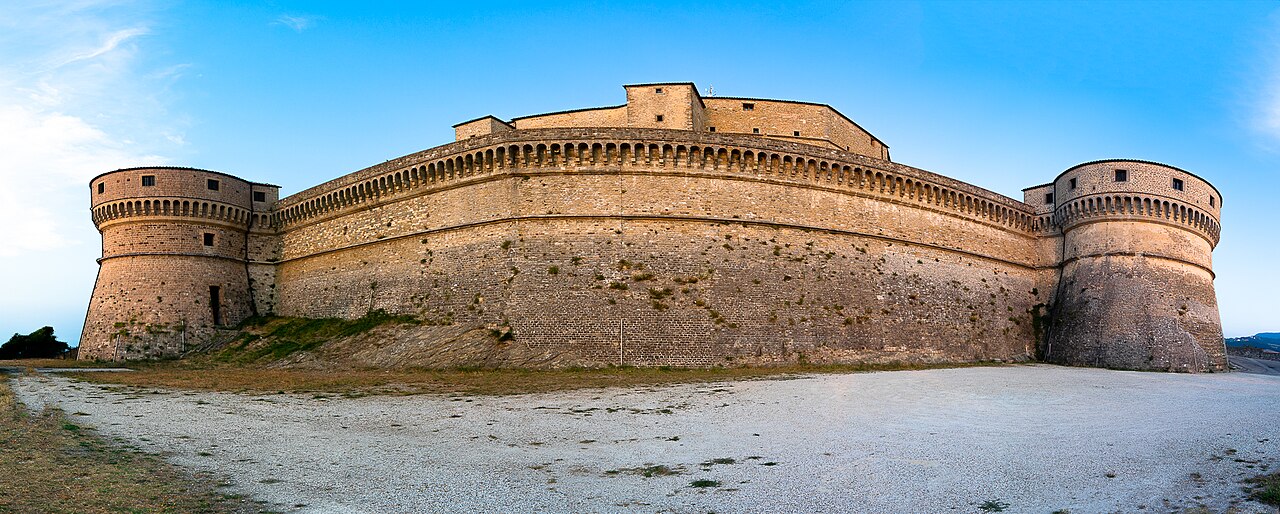
After years of wandering, Cagliostro returned to Rome. It was a fatal mistake: on December 27, 1789, while trying to found a Masonic lodge, he was arrested by the Inquisition, helped by his wife’s revelations, and locked in Castel Sant’Angelo. In 1791 he was sentenced to death for heresy; the sentence was commuted to life imprisonment. He was transferred to the fortress of San Leo, atop a rocky spur in Montefeltro, and shut in a cell called “il pozzetto”, the little well, entered through a trapdoor in the ceiling. He died there on August 26, 1795, aged 52.
But his legend did not die with him. Cagliostro inspired Goethe, Schiller, Dumas and many others; some say he was truly a magician, others consider him the greatest con man of his time. In San Leo his cell can still be visited. And some swear that at night his footsteps can still be heard in the fortress.
Featured image: the fortress of San Leo, where Cagliostro died a prisoner in 1795, Roberto Gelmetti, CC BY-SA 4.0, via Wikimedia Commons.

🦋 Emadion lives through its readers. If this story kept you up at night, buy me a coffee: it helps me bring you the next nightmare.
☕ Support Emadion on Ko-fi