 Posted by
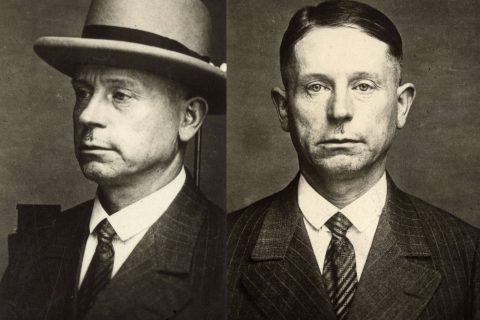
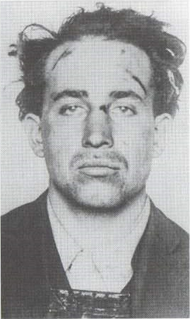
Earle Nelson (1897-1928), known as “the Gorilla Man” or “the Dark Strangler”, killed at least 22 people between 1926 and 1927, almost all middle-aged landladies, in the United States and Canada. He posed as a polite young Christian looking for a room, then strangled them and violated their bodies. He was arrested in Winnipeg, convicted of the murder of Emily Patterson and hanged on January 13, 1928. He inspired Hitchcock’s film Shadow of a Doubt.
Earle Nelson was one of the first American serial killers and necrophiles. Born in 1897, he committed at least 22 murders and was sentenced to death.
Biography
Earle Leonard Ferral, his real name, was born on May 12, 1897 in San Francisco, but before he was two his parents died, both of syphilis.
So he went to live with his maternal grandmother, Jennie Nelson, a devout Pentecostal, whose surname he would take. At 7 he was expelled from primary school. Around age ten, while riding his bicycle, he collided with a streetcar and was unconscious for six days. After he woke up his behavior changed dramatically.
He began to suffer from frequent headaches and memory loss, like Nannie Doss. He talked to imaginary people, constantly quoted Bible passages and as a teenager obsessively read the Book of Revelation. Already as a boy he began frequenting the brothels and bars of San Francisco’s red-light district, the Barbary Coast.
First crimes
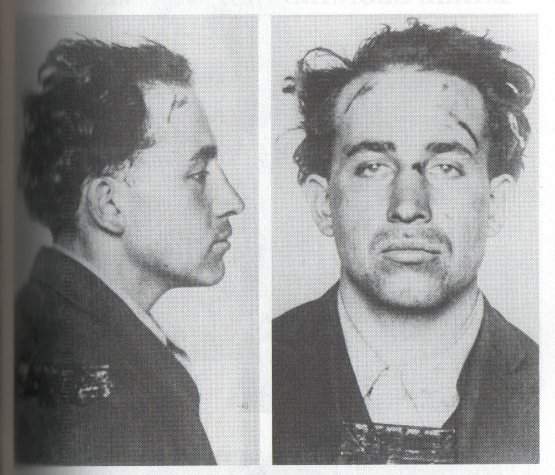
Nelson started his criminal career early and in 1915 he was sentenced to two years in San Quentin prison for breaking into a cabin he believed was abandoned. More arrests for theft followed, an escape, and several enlistments in the army and navy under false names, all ending in desertion.
In 1918, after behaving strangely during one of his brief stints in the navy, he was committed to Napa State Mental Hospital. He told psychiatrists he saw faces, heard music and voices. He escaped at least three times, so that staff nicknamed him “Houdini”, until after yet another escape they stopped looking for him.
In 1919 he married Mary Martin, a 60-year-old woman, but the marriage lasted only six months because of his jealousy, religious mania and violence. On May 19, 1921, posing as a plumber, he entered a house in San Francisco and attacked a 12-year-old girl in the basement, but she screamed and he fled. He was caught a few hours later on a streetcar.
He was then committed to Napa again, from which he escaped twice more. In 1925 he was discharged and the following year he began his series of murders.
The murders
His first known victim was Clara Newman, a wealthy 60-year-old San Francisco landlady, killed on February 20, 1926. Nelson had introduced himself as “Roger Wilson”, a prospective tenant. A few days later, on March 2, he killed his second victim, Laura Beale, 63, in San Jose.
His main victims were middle-aged landladies, whom he often found through room-for-rent ads.
He posed as a polite, charming young Christian and often read the Bible to win their trust. Then he strangled them and violated their bodies. He often hid the bodies under a bed or in an empty room, and left.
After each murder he changed his name and city: San Francisco, Portland, Seattle, then the Midwest and the East Coast, as far as Buffalo, Detroit and Chicago. That way he evaded police for a year and a half. At the time serial killers were not a known phenomenon, and the investigations were also slowed down by the arrest of innocent people.
The last murders in Canada
In June 1927 Nelson arrived in Winnipeg, Canada. On June 8 Lola Cowan, a 14-year-old girl who sold artificial flowers door to door, disappeared. Two days later, on June 10, Emily Patterson was found dead by her husband, strangled and beaten with a hammer, under her son’s bed. He found her as he knelt by the bed to say his evening prayers.
Missing from the Patterson home were a suit, Emily’s wedding ring, the family Bible and 70 Canadian dollars. The next day a jeweler bought the ring from Nelson for $3.50, and a barber noticed dried blood and scratches on his head.
On June 12, searching the city’s boarding houses, police entered the room where Nelson had stayed and found Lola Cowan’s body under the bed. Unlike the other victims, she had also been mutilated, and the bed looked as though Nelson had slept in it.
Arrest and trial
On June 16, 1927 in Killarney, a Manitoba border town, police arrested a man who fit the description and said his name was “Virgil Wilson”. He was so calm and cooperative that the officers thought they had the wrong man.
That same evening “Wilson” escaped from jail, but made the mistake of trying to catch the same train carrying the Winnipeg police officers. He was recaptured twelve hours after his escape.
In Winnipeg almost 4,000 onlookers were waiting for him. His fingerprints, sent from San Francisco, confirmed that “Virgil Wilson” was actually Earle Nelson. At trial his lawyer tried to prove he was mentally ill and therefore not responsible for his actions. The jury, however, found him guilty of the murder of Emily Patterson and he was sentenced to death.
He was hanged in Winnipeg on January 13, 1928. With 22 confirmed victims he was, at the time, the person credited with the most murders in US history. His crimes inspired Alfred Hitchcock’s 1943 film Shadow of a Doubt.
🦋 Emadion lives through its readers. If this story kept you up at night, buy me a coffee: it helps me bring you the next nightmare.
☕ Support Emadion on Ko-fi