 Posted by
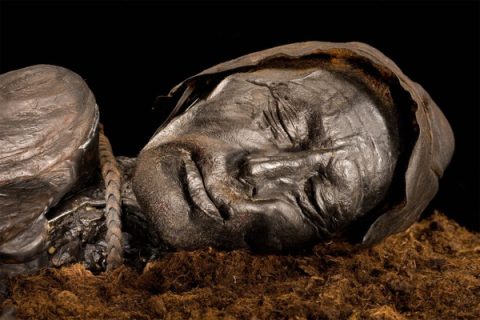
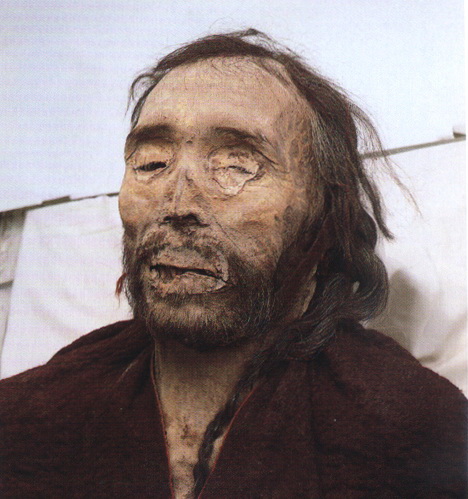
Five incredibly well-preserved mummies: the Inca “doncella” of Llullaillaco volcano, sacrificed about 500 years ago; Cherchen Man, who died 3,000 years ago in the Taklamakan desert; the Ming-era “wet mummy” found in Taizhou in 2011; Ötzi, the Iceman who lived 5,300 years ago; and the cave lion cubs found in Siberian permafrost, the oldest of which is more than 40,000 years old.
In this article I present five of the best-preserved mummies in history. To learn more, I recommend “The World of Mummies: From Otzi to Lenin. “, a book that examines the most famous and interesting cases.
The Llullaillaco maiden
The mummy of this girl was found on March 16, 1999 by archaeologists Johan Reinhard and María Constanza Ceruti near the summit of Llullaillaco volcano, 6,739 meters high, on the border between Argentina and Chile, together with the mummies of two other children. The site, at about 6,700 meters, is one of the highest archaeological sites in the world.
The three children died between 1462 and 1507 during a capacocha, an Inca ritual sacrifice. Analyses showed that in the months before their deaths they had consumed increasing amounts of coca leaves and chicha, a maize beer, and they are thought to have died in their sleep.
The extremely dry ground and intense cold allowed incredible preservation of their tissues, internal organs, hair and clothes: the bodies look asleep. She was nicknamed “la doncella”, the maiden. Since 2007 the three children have been displayed at the Museum of High Altitude Archaeology in Salta, Argentina.

Cherchen Man
Cherchen Man is the name given to a mummy found in September 1985 in the Zaghunluq cemetery, near the town of Qiemo, or Cherchen, in China’s Xinjiang region. He is one of the so-called Tarim mummies.
The man, found on the edge of the Taklamakan desert, died around 1000 BC, at about fifty. He was about 1.77 meters tall, with reddish-brown hair flecked with grey, high cheekbones, an aquiline nose and a ginger beard: features reminiscent of Europeans.
He was buried with three women, while a nearby tomb held an infant, wrapped in a burgundy shroud and wearing a blue cashmere bonnet. According to archaeologist Victor Mair, the man, one of the women and the infant may have been a family. Next to the infant were a horn cup and a sheep’s udder that may have been used as a feeding bottle. The dry desert climate also perfectly preserved his clothes, including a red tunic and striped woolen leggings.

The wet mummy
This mummy was found by chance on March 1, 2011 by workers widening a road in the city of Taizhou, in China’s Jiangsu province, two meters underground, along with two other wooden coffins.
The woman lived during the Ming dynasty, more than 600 years ago, and was about 1.5 meters tall. She was of high rank, as shown by her silk clothes and jewelry, including a green ring still on her finger. She was immersed in a mysterious brown liquid.
Even her hair, eyebrows and eyelashes remained intact. According to archaeologist Victor Mair, “wet mummies” survive so well because the burial water is low in oxygen, which stops bacteria from breaking down the body. Although it was the liquid that preserved her, the mummification is thought to have been accidental. Today she is displayed at the Taizhou Museum.

Ötzi, the Similaun Iceman
Yes, looking at him like this he does not seem very well preserved.
But if I tell you this man lived about 5,300 years ago, between 3275 and 3230 BC, things change. He is Europe’s oldest natural human mummy, his skin is intact and 61 tattoos are visible on his body.
Ötzi was found on September 19, 1991 by two German tourists, Helmut and Erika Simon, at 3,210 meters in the Ötztal Alps, on the border between Italy and Austria. At first he was thought to be a recently deceased mountaineer. An arrowhead lodged in his left shoulder and other wounds showed that he was murdered.
DNA analysis revealed that his mitochondrial DNA belongs to a branch that matches none of the modern branches, so it was named K1ö. His full genome, resequenced in 2023, showed that 90% of his ancestry came from farmers who had arrived from Anatolia. Today he is at the South Tyrol Museum of Archaeology in Bolzano.

The Siberian lion cubs
In 2015, along the Uyandina River in Yakutia, two cave lion cubs named Uyan and Dina were found in the Siberian permafrost. It is not the first time nearly intact prehistoric animals have been found in permafrost, such as mammoths. The cubs were about one or two weeks old when they died, and they have intact fur and even whiskers.
The cave lion went extinct thousands of years ago and was a close relative of modern lions. According to early estimates, the two cubs died more than 12,000 years ago.
But they were not the only ones. In 2017 and 2018, just 15 meters apart along the Semyuelyakh River, two more cubs were found, Boris and Sparta, aged one or two months. A 2021 study revealed they were not siblings: Sparta lived about 28,000 years ago, while Boris lived as far back as 43,000 years ago. Sparta was so well preserved that she still had her fur, internal organs and skeleton, and researchers even hope to find traces of her mother’s milk.

🦋 Emadion lives through its readers. If this story kept you up at night, buy me a coffee: it helps me bring you the next nightmare.
☕ Support Emadion on Ko-fi