 Posted by
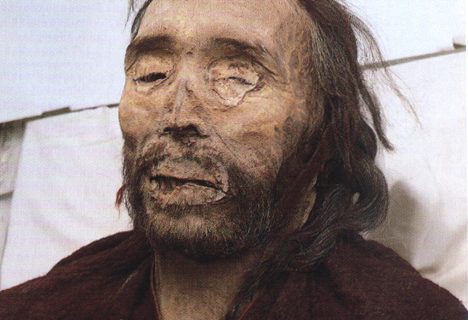
Bog bodies are corpses naturally mummified in the peat bogs of northern Europe, where acidic water, cold and lack of oxygen preserve skin, hair and organs for thousands of years. Many date to the Iron Age and show signs of violent death, perhaps human sacrifice or execution. Here are the five best preserved: Clonycavan, Grauballe, Tollund, Bocksten and Yde.
Bog bodies
Bog bodies are corpses naturally mummified in peat bogs, found mainly in northern Europe, Britain and Ireland. About 122 have been documented and they span an enormous period: from 8000 BC up to World War II, with soldiers who died in the wetlands of the Soviet Union.
Thanks to the special conditions of the soil, with water almost as acidic as vinegar, low temperatures and lack of oxygen, bog bodies have very well preserved skin and soft tissue, but often a badly damaged skeleton.
This is because the acid dissolves the calcium phosphate of the bones, while the keratin in skin, hair and nails resists. The bodies are preserved a bit like pickled vegetables. Another effect of preservation in peat bogs is that the skin turns dark, as if tanned, and the hair takes on a reddish color.
Many bog bodies date to the Iron Age and appear to have died violently, perhaps as human sacrifices or as condemned criminals. Here are some examples.
Clonycavan Man
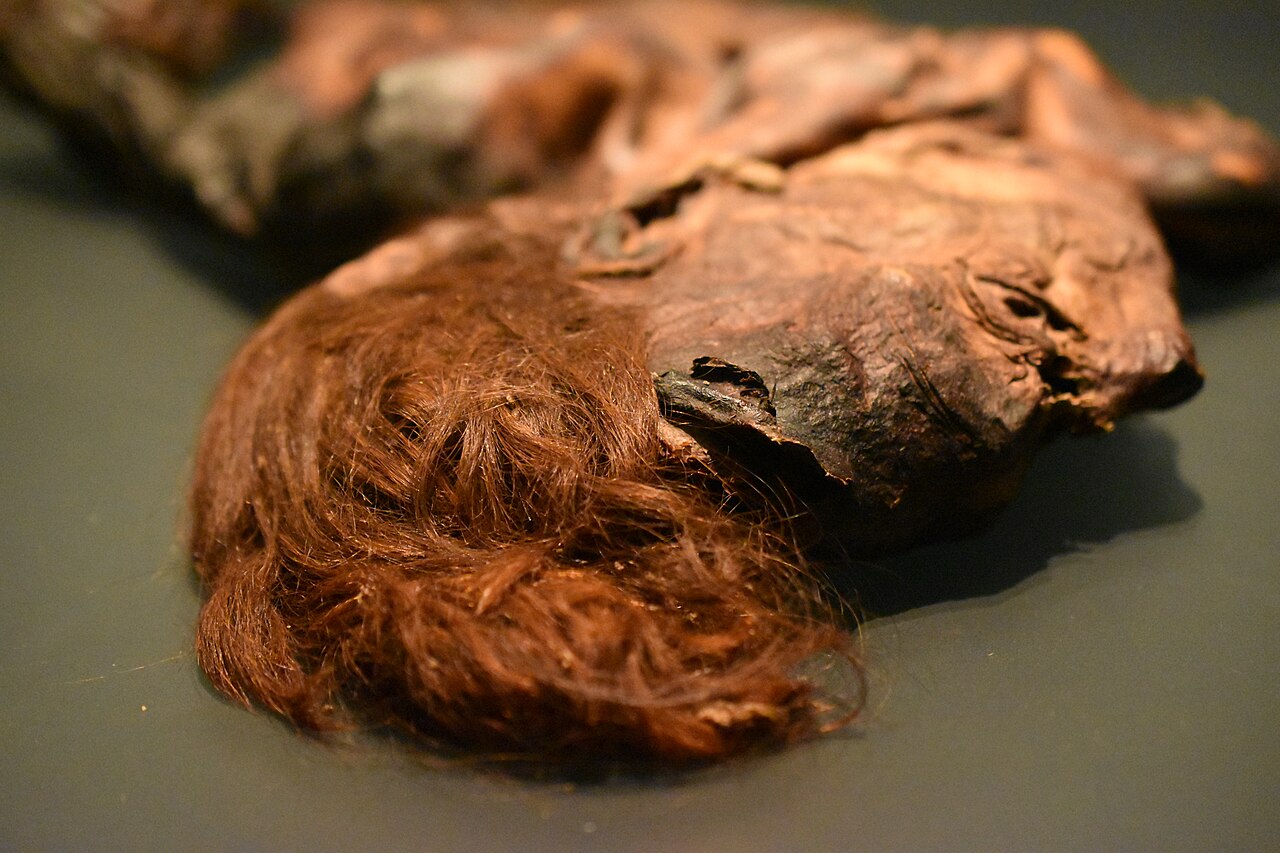
Clonycavan Man was found on February 21, 2003 near Ballivor, County Meath, Ireland, during industrial peat harvesting. Workers spotted the remains on a screen that separates larger debris from the peat. Only the head and upper body survive: the lower part was destroyed by the machinery.
The mummy has several wounds on the skull and face: the young man died violently, struck several times on the head and face.
According to radiocarbon dating he died between 392 BC and 201 BC, so he has been preserved for over 2,200 years. A distinctive feature is his hair, held up with a “gel” made of plant oil and pine resin imported from southwestern France or northern Spain. This shows that trade already existed between Ireland and continental Europe, and that the man must have been wealthy to afford imported cosmetics. Perhaps he wore his hair like that to look taller, since he was about 157 cm (5’2″) tall.
His discovery, followed three months later by that of Old Croghan Man, prompted the National Museum of Ireland to launch a major research project on bog bodies.
Grauballe Man
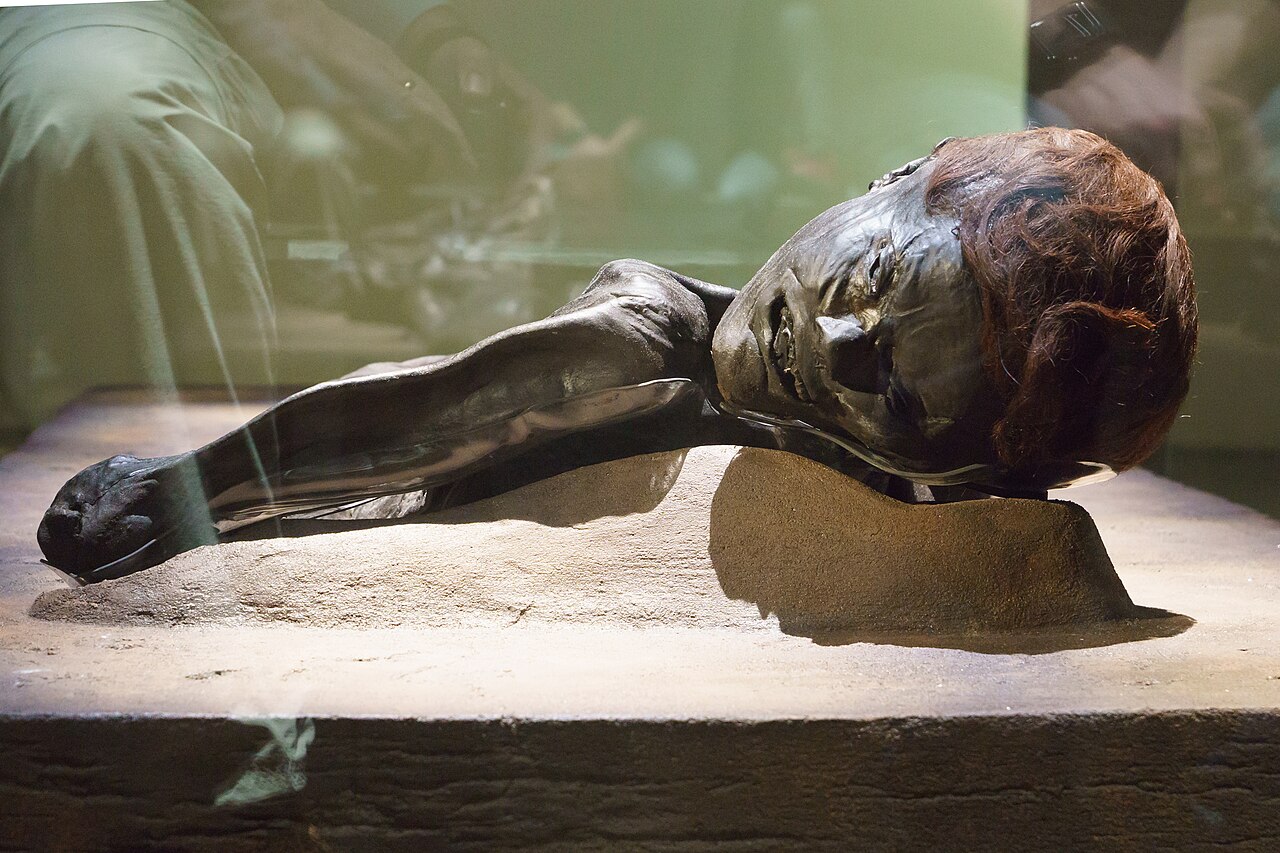
Grauballe Man was found on April 26, 1952 by a team of peat cutters near the village of Grauballe, Jutland, Denmark. The next day many curious locals came to see him and one of them accidentally stepped on his head. He is one of the best-preserved bog bodies ever: hair, beard, nails, skin and even internal organs.
His fingers are so well preserved that his fingerprints can be made out.
The man was about thirty and died between 321 and 261 BC. His throat was cut with a single deep wound that severed his trachea and esophagus. It is thought to have been a human sacrifice or an execution. The mummy has no clothes: either he was killed completely naked or his clothes deteriorated over time. Today he is on display at Moesgaard Museum, near Aarhus.
Tollund Man
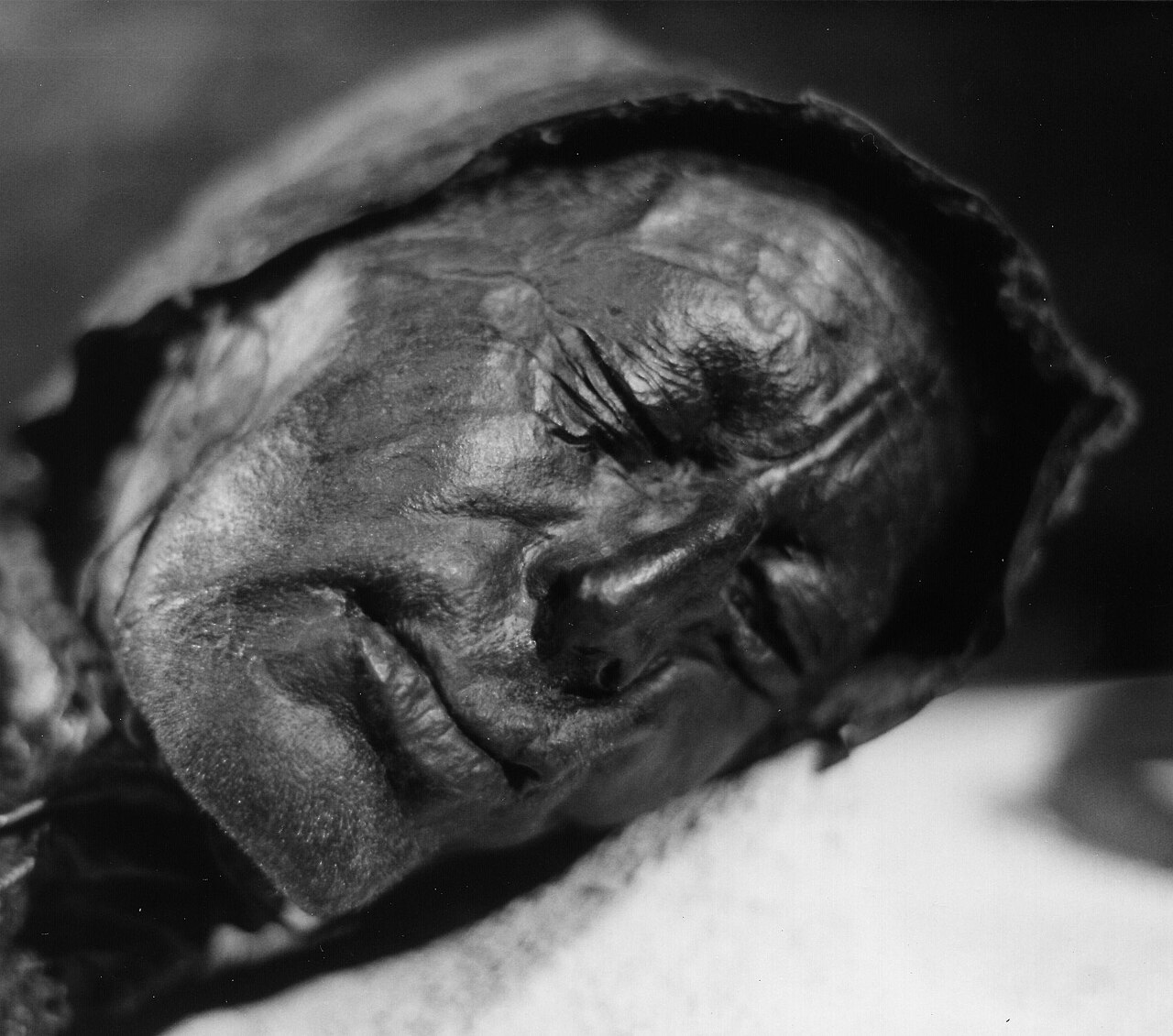
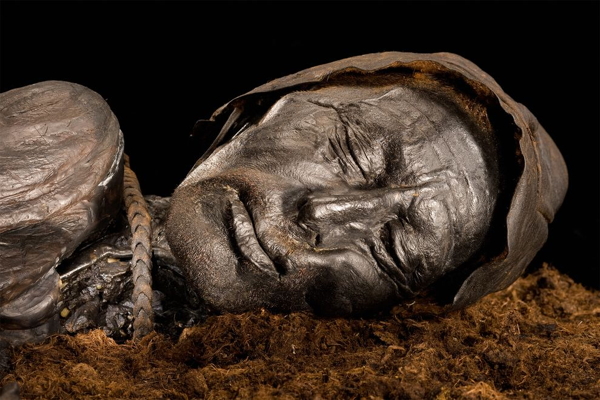
Tollund Man was found on May 8, 1950 by two peat cutters, 12 km from Silkeborg, Denmark. The body was so well preserved that the family who found it thought it was the victim of a recent murder and called the police.
In fact Tollund Man died between 405 and 384 BC, about 2,400 years ago. His eyes and mouth were closed, his wrinkles and short beard still visible, as if he were asleep.
He lay in a fetal position, under more than two meters of peat. He wore only a sheepskin and wool cap and a belt. Around his neck was a noose of plaited hide, and examinations confirmed that he died by hanging, but it is not known whether it was a ritual sacrifice or an execution. Today his head is on display at Silkeborg Museum.
Bocksten Man
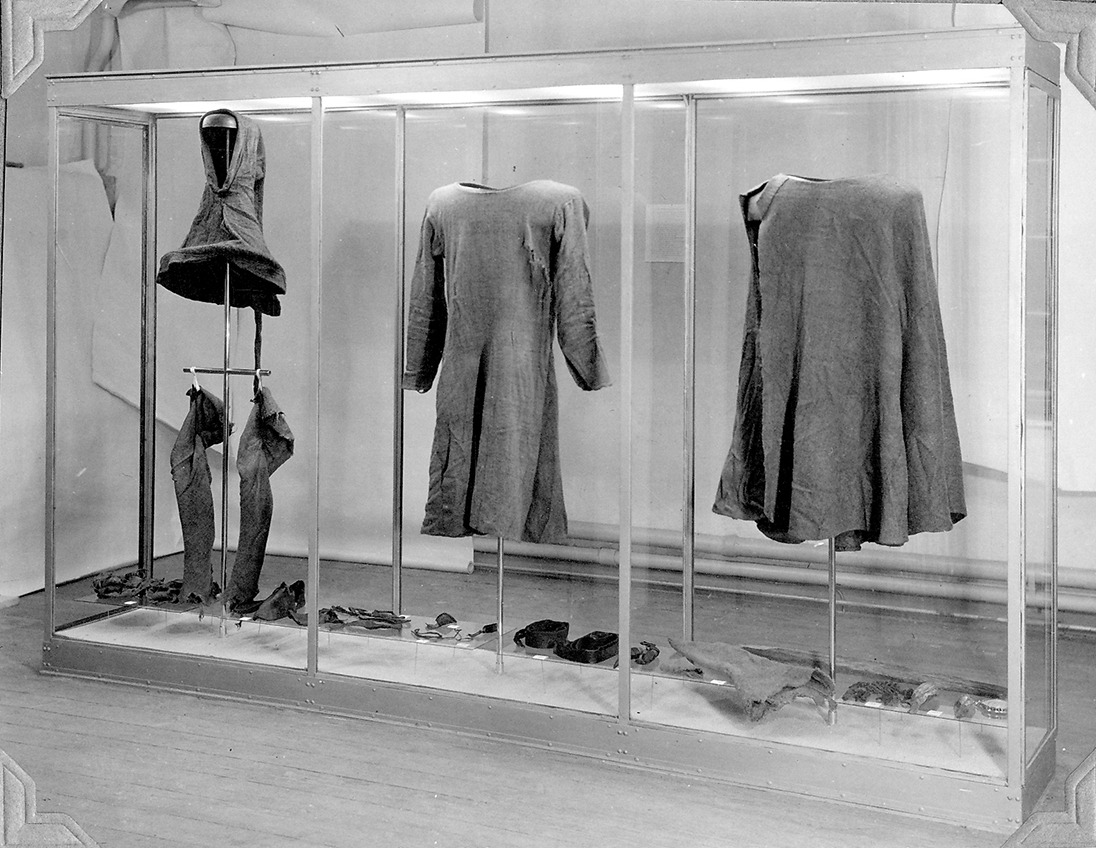
Bocksten Man is a medieval bog body. He was discovered on June 22, 1936 in a peat bog near Bocksten farm, in Halland, Sweden, by a farmer and his children who were gathering peat. At first the children thought they had found the remains of an animal.
His woolen clothes are extraordinarily well preserved and are among the most complete medieval garments ever found.
Besides his tunic he wore a hood with a long tail, a cloak, hose and leather shoes, as well as a belt and two knives. He died around the mid-14th century. Forensic examination found that he was struck several times on the head and his body was fixed with wooden stakes to the bottom of a small lake, which later turned into a bog. Today he is on display, together with his clothes and a facial reconstruction, at the museum in Varberg.
Yde Girl

Yde Girl is a bog body found on May 12, 1897 in the Stijfveen bog, near the village of Yde, in the Netherlands. When found she was in excellent condition, but the peat cutters handled her and left her exposed to the air, and some parts were stolen. So the body deteriorated badly before reaching the Drents Museum in Assen, where she still is today.
Her long reddish hair is very well preserved.
The girl was about 16 and died between 42 BC and 59 AD. She had scoliosis and problems with her right leg. She was found with a long wool band wrapped several times around her neck and died from compression of the neck, probably deliberately killed, but it is not known whether it was a sacrifice or an execution. In 1992 forensic expert Richard Neave reconstructed the face the girl must have had.
🦋 Emadion lives through its readers. If this story kept you up at night, buy me a coffee: it helps me bring you the next nightmare.
☕ Support Emadion on Ko-fi