 Posted by
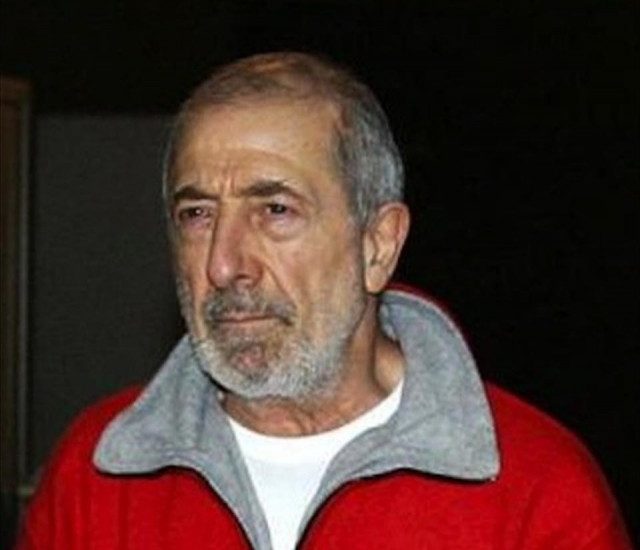
Donato Bilancia (1951-2020) is the Italian serial killer with the most victims: between October 1997 and April 1998 he killed 17 people in Liguria and southern Piedmont, including two former friends, a married couple, money changers, night watchmen, sex workers and two women on trains. Arrested on 6 May 1998, he was given 13 life sentences and died in prison in Padua in 2020.
Donato Bilancia, born in Potenza on 10 July 1951 and raised in Genoa, is the Italian serial killer with the most victims: 17 murders between October 1997 and April 1998, in Liguria and southern Piedmont. The press called him the “train monster” or the “monster of Liguria”.
Bilancia is an unusual killer for a number of reasons I will explain below, and his victims were friends, sex workers, night watchmen and money changers.
📍 This story is on the Mystery Map: see where it happened →
Donato Bilancia, an unusual killer
Bilancia certainly shows some of the typical traits of serial killers:
- First of all, a difficult childhood, marked by humiliations, by wetting the bed for a long time and by juvenile crime.
- A lack of empathy for the pain and suffering of his victims.
- He is a lucid and ruthless killer. When he feels the need to kill, he does it without thinking too much and with great coldness.
- He is impulsive: his first two murders were committed out of revenge.
- He does not regret what he did.
But he also shows some unusual traits, not common in a serial killer:
- The first unusual trait is his age. Donato Bilancia killed for the first time at 46, while the average age at which serial killers commit their first murder is 29.
- He then began by killing people close to him, two friends. This is unusual, since serial killers usually start by killing complete strangers.
- He avoids contact with his victims and does not like blood. Unlike many serial killers, he is not excited by the sight of blood: on the contrary, it disgusts him.
The revenge killings of Centanaro and Parenti
Bilancia began to kill on 16 October 1997, and his first victim was Giorgio Centanaro. Just 8 days later he killed his second and third victims, Maurizio Parenti and his wife.
According to the killer himself, it was a wrong done to him by these two men that made him lose his mind and start his killing spree.
Centanaro and Parenti, in his view, had betrayed him. Bilancia had been a skilful thief and had become very rich. Just as he “earned” staggering sums, he spent them in illegal gambling dens, which were also frequented by his first two victims. In his confession he said that one day the two had sent him to a gambling den where he lost many millions of lire. Then one day he overheard a conversation between Centanaro and Parenti in which one said to the other: “Did you see how I hooked Walter?” (Walter was the name he went by).
Feeling used and betrayed, he decided to kill them both.
First he followed Centanaro and found out where he lived, then he struck at the right moment. One night he approached him, saying he had to show him something, and his unsuspecting victim let him come up to his flat. Bilancia did not use the gun because Centanaro lived in an apartment block and he did not want to attract attention. So he decided to suffocate him. First he made him undress down to his underwear, then he began to gag him with tape, explaining the reasons for what he was doing. Then he killed him by smothering him with his hands and left. The police filed the case as a natural death.
Eight days later he went to Parenti and, on the pretext of showing him something, followed him into his home. Once inside, though, he handcuffed him and asked where the safe was. Parenti’s wife heard the commotion and woke up; Bilancia made her give him the combination of the safe, then shot them both after explaining his motives, and left with 13 million lire.
The killings for money

The next victims were the Solari couple, a wealthy pair, whom Bilancia killed for money just three days after killing the Parentis. Donato Bilancia was a skilful thief, and an acquaintance tipped him off about the couple because they kept a lot of money at home.
The killer got them to open the door by saying he had a registered letter for them to sign, but once inside he wanted to know where the money was.
Mrs Solari screamed, she was frightened and tried to escape, and Bilancia lost control of the situation. He shot her, then shot her husband too, and left without taking anything.
The victims were Bruno Solari and Maria Luigia Pitto, who owned a jewellery shop. According to other accounts, however, money was not the only motive: Bilancia feared reprisals from the underworld circles Parenti moved in, and he may have kept killing partly to confuse the investigation. He later said that at that point he did not care about stealing, only about killing.
On 13 November he wanted to commit another robbery. His target was Luciano Marro, a money changer in Ventimiglia. He waited for him to go out to take out the rubbish, slipped through the armoured door the man had left open and made him open the safe. Marro tried to fight back, Bilancia panicked and emptied the whole magazine into him, then stole 45 million lire and left.
On 20 March 1998 he killed another money changer, Enzo Gorni, in Latte, a village near Ventimiglia.
The killings of the night watchmen

Before Enzo Gorni’s murder, however, on 25 January Donato Bilancia killed Giangiorgio Canu, a night watchman. During his interrogation Bilancia said this had been his easiest target. He had studied his schedule, then had copies made of the keys to the front door (for him, an expert thief, it was child’s play), and one evening he waited for him to come down. As soon as the lift opened, Bilancia threw a jacket over his head and shot him. Then he took his wallet, which he threw away shortly afterwards, perhaps to make it look like a robbery.
This apparently motiveless murder was in fact committed as revenge against night watchmen.
Bilancia remembered being wounded by a night watchman while fleeing after a burglary. On 24 March he would kill two more night watchmen who intervened when Bilancia tried to kill a sex worker.
The killings of sex workers
From 9 March 1998 Bilancia also began to kill sex workers. There were 4 in total, and the method was always the same: he picked them up in his car, had sex with them and then shot them in the head.
On 24 March Bilancia tried to kill a transgender sex worker who was in the car with him, but two night watchmen intervened and the killer shot them dead. He also shot the woman, but she managed to escape, and her description of the killer would prove very important.
It happened at Villa Minerva, in the Barbellotta area of Novi Ligure, in the province of Alessandria. The two security guards killed were Massimiliano Gualillo and Candido Randò. The survivor, who went by the name Lorena, was seriously wounded but managed to give investigators an identikit and a description of a dark Mercedes, even remembering part of the number plate.
Donato Bilancia also killed two women on trains: on 12 April 1998 the Milanese nurse Elisabetta Zoppetti, on the La Spezia-Venice Intercity between Serravalle Scrivia and Tortona, and on 18 April the babysitter Maria Angela Rubino, on the Genoa-Ventimiglia train between Sanremo and Bordighera.
He waited for them to go to the toilet, then opened the door with a square key and shot them in the head.
In one case he left biological traces on the victim’s body, from which investigators would obtain his DNA.
With the train murders, the “monster of Liguria” was all over the papers. Fear ran so high that the Chief Prosecutor of Genoa, Guido Zavanone, advised passengers to be careful on Ligurian trains: travel only if necessary, and never alone.
His crimes against women stemmed from a hatred he felt towards women. In 1987, in fact, his brother Michele had taken his own life together with his 4-year-old son Davide, to whom Bilancia was very attached, and he had always blamed his brother’s wife. This episode marked him deeply and perhaps, not by chance, he later chose to kill women on trains: his brother’s tragedy, too, was linked to the railway.
The last murder
On 20 April 1998 he committed his last murder, that of the petrol station attendant Giuseppe Mileto, at the Conioli Sud service area on the Genoa-Ventimiglia motorway, during a robbery. On 6 May 1998 he was arrested by the Carabinieri and offered no resistance; on the contrary, he confessed to all the murders, including that of Centanaro, which had been filed as a natural death.
Many elements were crucial to his arrest:
- the testimony and identikit provided by the woman who survived;
- the car used for the crimes, which did not belong to him. The original owner kept receiving fines, and it was then noticed that they often came from places where murders had taken place;
- the DNA found at the scene of one of the murders, then compared with the trace Bilancia left on a cigarette butt.
The car was a black Mercedes 190 that Bilancia had bought from an acquaintance, Pino Monello, for 5 million lire, without ever registering the change of ownership. At motorway toll booths he used to tailgate other cars to avoid paying, so the fines went to Monello, who eventually went to a lawyer and then to the Carabinieri. Investigators followed Bilancia for several days and collected his DNA from cigarette butts and a coffee cup: it matched the traces found at the crime scenes. After his arrest, he confessed within a few days.
Trial, prison and death
On 12 April 2000 Bilancia was sentenced to 13 life terms for the 17 murders and to 16 years for the attempted murder of Lorena (some English-language sources say 20 years). The sentence was later upheld on appeal and by the Court of Cassation.
In prison, first at Marassi in Genoa and then at Due Palazzi in Padua, he took up studying: in 2016 he earned an accounting diploma with 83/100 and then enrolled at university. In November 2017, after about twenty years behind bars, he was granted his first leave to visit his parents’ grave in Nizza Monferrato, under escort. A later request, to visit a child with Down syndrome to whom he donated part of his pension, was refused because he was considered “still dangerous”, and in late October 2020 the Court of Cassation upheld the refusal. Bilancia never truly repented: he claimed he had killed because he was “possessed” by an illness.
He died on 17 December 2020, aged 69, after catching COVID-19 during an outbreak in the Padua prison. According to some accounts, depressed by the refused leave, he refused treatment.
His story inspired the TV miniseries Ultima pallottola (“The Last Bullet”), directed by Michele Soavi and broadcast on Canale 5 in 2003, with Carlo Cecchi as the serial killer. In 2004 his interview on the Rai programme Domenica in also caused a great deal of controversy.
🦋 Emadion lives through its readers. If this story kept you up at night, buy me a coffee: it helps me bring you the next nightmare.
☕ Support Emadion on Ko-fiSources
- Donato Bilancia – Wikipedia (Italian)
- Donato Bilancia – Wikipedia
- AGI – Il serial killer Donato Bilancia è morto di Covid in carcere
- MOW – Storia della Mercedes-Benz 190 che ha incastrato il serial killer Donato Bilancia