Posted by
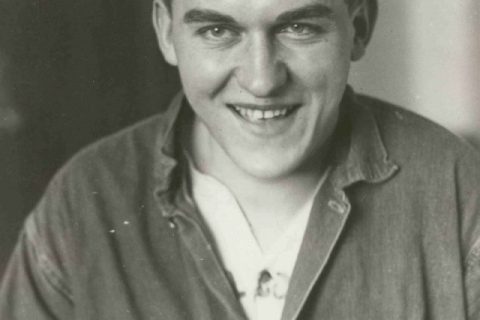
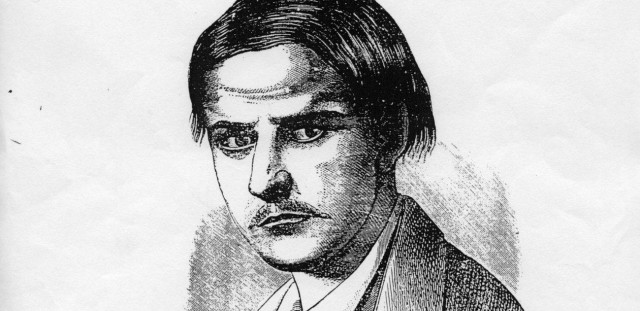
- Who: Vincenzo Verzeni (Bottanuco, 11 April 1849 – Bottanuco, 31 December 1918).
- Nicknames: “the Vampire of Bergamo” and “the Strangler of Women”.
- Crimes: two murders and six assaults between 1867 and 1872.
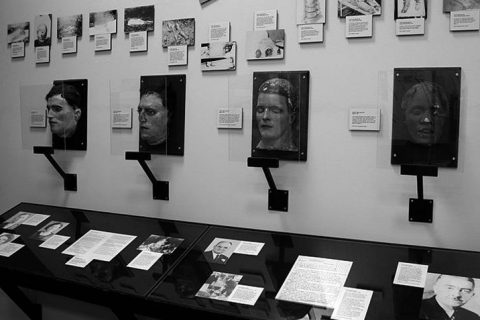
- Expert report: he was studied by Cesare Lombroso, the father of modern criminology.
- Sentence: life in a criminal asylum and hard labour for life.
Vincenzo Verzeni seems to be the first certified serial killer in Italian history. He was already attacking his victims at 18 and was arrested in 1873.
The story of Vincenzo Verzeni
Vincenzo was born on 11 April 1849 in Bottanuco, a village in the province of Bergamo, into a poor peasant family.
His father was always drunk and violent, while his mother suffered from epilepsy. Vincenzo was a sturdy young man, 166 cm tall and weighing 68 kg, and a loner.
His family problems made him grow up withdrawn, and so he could not relate to people his own age, especially girls.
Always quiet and polite, he seemed harmless. But nobody knew that behind this front was a sadistic killer.
The first attacks
The first recorded attack was on his cousin Marianna, in 1867. While she was sleeping Vincenzo grabbed her by the throat and tried to bite her neck. When she screamed, though, Verzeni ran away.
In 1869 he carried out three attacks. The first was on Barbara Bravi, a peasant woman approached by a stranger who grabbed her by the neck.
When she screamed the man ran off once again, and although Barbara did not recognise her attacker at first, after Vincenzo’s arrest she did not rule out that it might have been him.
The second victim was Angela Previtali, who was abducted and held for a few hours in an isolated spot. After a while, though, moved to pity, Vincenzo let her go without harming her.
The third victim that year was Margherita Esposito, who was attacked in the street. She managed to hit him in the face and get free, and identified her attacker as Vincenzo Verzeni, who did indeed have wounds on his face. But no action was taken.
In 1871 he attacked two more women, Maria Galli on 10 April and Maria Previtali on 26 August, in two separate incidents. He grabbed Maria Previtali, threw her to the ground and tried to bite her neck, and both recognised Vincenzo as their attacker.
The murders
The first murder took place on 8 December 1870, but Verzeni was not immediately held responsible and in the meantime continued his attacks.
The victim was Giovanna Motta, a 14-year-old girl, who disappeared on her way to visit relatives in the nearby village of Suisio. Her body was found four days later, horribly mutilated, her neck covered in bites. Out of respect for the young victim I will not report the other details. Next to her, on a rock, some pins were found.
The second victim was Elisabetta Pagnoncelli, killed in 1872. Her body too was found mutilated, torn open and covered in scratches and bites, just like Giovanna’s.
The arrest
Vincenzo was arrested in 1873 and his psychiatric evaluation was entrusted to Cesare Lombroso, the father of modern criminology. Lombroso did not consider him insane, but described him as “a sexual sadist, vampire, devourer of human flesh”, suffering from cretinism and advanced pellagra.
During the trial the killer said:
I killed those women and tried to strangle the others because I felt immense pleasure in the act. […] After strangling her I bit her and sucked the blood that had flowed, which gave me enormous pleasure.
Vincenzo escaped the death penalty by the vote of a single juror and was sentenced to life in the criminal asylum of the Senavra in Milan and to hard labour for life.
In the asylum he would receive extreme “treatments”, such as buckets of freezing water thrown from three metres up and scalding baths.
Death
For a long time it was believed that he had taken his own life in his cell on 13 April 1874: this is what the asylum nurses declared. In 2010, however, two TV producers, Mirko Cocco and Michele Pinna, discovered that he had survived and had been transferred to the prison of Civitavecchia.
This is confirmed by an article in the Eco di Bergamo of 3 December 1902, which shows that after serving his sentence Vincenzo had returned to his home village, Bottanuco.
He stayed there until his death from natural causes on 31 December 1918, as certified by the town’s death record.
His mummy is said to be still kept in Roberto Paparella’s Museum of Criminological Art.
His story also inspired Leonardo Sciascia’s short story “Processo per violenza”, in the collection Il mare colore del vino, and the crime novel Nostalgia del sangue by Dario Correnti.
🦋 Emadion lives through its readers. If this story kept you up at night, buy me a coffee: it helps me bring you the next nightmare.
☕ Support Emadion on Ko-fi