 Posted by
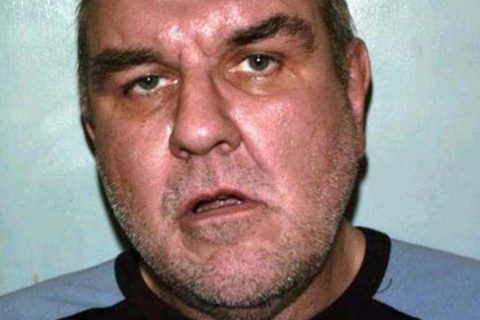
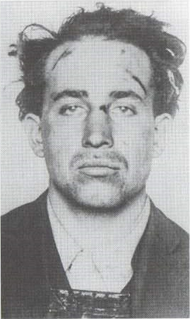
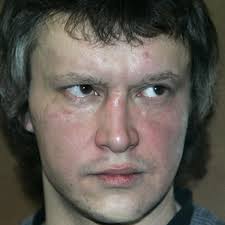
Alexander Pichushkin, the “chessboard killer”, killed at least 49 people between 1992 and 2006 in Moscow’s Bittsa Park, mostly elderly homeless men he lured with vodka. He wanted to reach 64 victims, one for each square of the chessboard. He was caught thanks to his last victim’s metro ticket and in 2007 he was sentenced to life imprisonment. Today he is in solitary confinement in the Arctic penal colony “Polar Owl”.
Alexander Pichushkin, also known as Sasha, is a Russian serial killer convicted of 49 murders, although he claims to have committed 60. He is known as the chessboard killer or “the Bittsa Park maniac”.
Life of Alexander Pichushkin
Sasha was born on April 9, 1974 in Mytishchi, near Moscow, and grew up on Khersonskaya Street, in a two-bedroom apartment on the fifth floor where he lived with his mother, his half-sister, her husband and their son. The building was a six-minute walk from Bittsa Park.
As a little boy he was sociable and calm, until he had an accident.
One day he fell backwards off a swing and was struck in the forehead by the seat as it swung back. From that day on he became more aggressive, and experts speculated that his frontal cortex had been damaged.
Damage of this kind produces poor impulse control and a tendency towards aggression, and is more severe in children, because their forehead protects the brain far less than an adult’s. Sasha did indeed become hostile and impulsive, so much so that his mother decided to take him out of mainstream school and enroll him in one for children with learning disabilities.
Kids from the mainstream school bullied him, beating him and calling him “that retard”, which only intensified his anger. In early adolescence it was his maternal grandfather who realized Sasha was highly intelligent and that his talent was being wasted: his school focused only on overcoming disabilities, not on rewarding achievement.
Life with his grandfather
So Sasha went to live with his grandfather, who encouraged him to pursue his interests. There he learned to play chess, which became his passion, and he became so good that he played against the old men who played in public in Bittsa Park.
In chess Sasha found an outlet for his aggression: dominating the board in every game.
Toward the end of his adolescence his grandfather died, and Sasha was devastated. He moved back in with his mother and began drinking large amounts of vodka to dull the pain and calm his aggression. He kept playing chess in the park, drinking with the other players, but unlike them the alcohol seemed to have no effect on him. During this period he also took up a new and sinister hobby.
Whenever he knew he was going to meet children, he took a video camera with him and threatened them.
In a video that has been made public, Sasha holds a child upside down by one leg, threatening to drop him from the window. He watched his videos over and over to reaffirm his power, but by 1992 this was no longer enough to satisfy his urges.
The first murder
His first murder dates to July 27, 1992, when he was eighteen. Sasha arranged to meet his classmate Mikhail Odïtchuk in Bittsa Park: according to his account, they had planned together to kill 64 people. But Mikhail changed his mind and told him he no longer wanted to do it.
Feeling mocked by his best friend, Sasha strangled him with a rope and threw the body into a sewer entrance in the park. Mikhail’s body has never been found.
Witnesses had seen the two boys walking together toward the park, and Sasha was questioned by police on July 30. He admitted meeting his friend but said he had left him unharmed. There was no evidence and he was released.
For years he did not kill again. According to some accounts, what rekindled his interest was the moratorium on the death penalty that Russia introduced in 1996.
The Bittsa Park murders
Russian media speculated that he wanted to compete with another notorious Russian serial killer, Andrei Chikatilo, convicted of killing 52 children and young women.
Sasha said he wanted to kill 64, one for each square of the chessboard, but later recanted, saying that if he had not been stopped he would have kept killing indefinitely.
On May 17, 2001 he played chess in the park with Yevgeny Pronin, a 52-year-old man. After the game he invited him for a walk, saying it was the anniversary of his dog’s death and that he wanted to visit its grave. In an isolated spot he took out a bottle of vodka, they toasted the dog, and then he hit him on the head with the bottle. He threw the body into a well.
Between 2001 and 2005 he attacked 36 people, three of whom survived. His victims were mostly elderly homeless men whom he approached in the park offering a drink. He killed them by striking the back of their skull with a hammer or a bottle, or pushed them into the sewage canals under the park to drown.
Sometimes he “signed” the corpse by driving sticks or an empty vodka bottle into the victim’s skull.
From October 2005 he stopped hiding the bodies. He killed his victims with repeated hammer blows to the head and then pushed a vodka bottle into the open wound. He always attacked from behind, to take the victim by surprise and avoid getting blood on his clothes. Ten of his victims lived in the same four buildings on Khersonskaya Street where he lived.
The arrest
In June 2006 Sasha invited a 36-year-old coworker, Marina Moskalyova, for a walk. She was suspicious and, before going out, left her son a note with Sasha’s name and phone number. He knew about it, but killed her anyway.
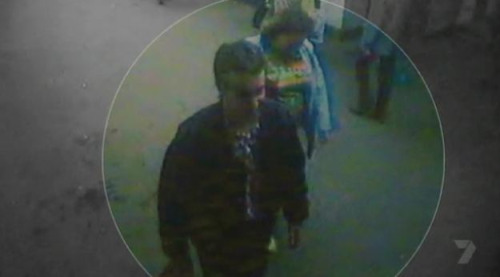
Marina’s body was found in Bittsa Park on June 14, 2006, with the killer’s trademark injuries. In her pocket was a metro ticket, and surveillance cameras had filmed her, a few hours before her death, walking on the platform with Sasha.
Sasha was arrested on June 16, 2006. He led police to the crime scenes, recalling precisely how he had killed, and was filmed reenacting the murders in detail, as Russian procedure requires. The chief investigator, Andrei Suprunenko, later said the story of the chessboard on which he marked his victims was part of the “chess genius” myth, and pure fantasy.
He said that deciding whether his victims should live or die made him feel like God, and added:
For me, life without murder is like life without food for you. I felt like the father of all these people, since it was me who opened the door for them to another world.
Trial and prison
Psychiatric evaluations found him fit to stand trial. During the trial he was kept in a glass cage for his own safety. On October 24, 2007 he was convicted of 49 murders and 3 attempted murders. He asked the court to add another eleven, to bring the total to 60.
Judge Vladimir Usov sentenced him to life imprisonment, with the first 15 years to be served in solitary confinement. Sasha appealed, claiming the sentence was “too harsh” and asking for it to be reduced to 25 years.
Today Alexander Pichushkin spends his days in solitary confinement in the Arctic penal colony “Polar Owl”.
🦋 Emadion lives through its readers. If this story kept you up at night, buy me a coffee: it helps me bring you the next nightmare.
☕ Support Emadion on Ko-fi