 Posted by
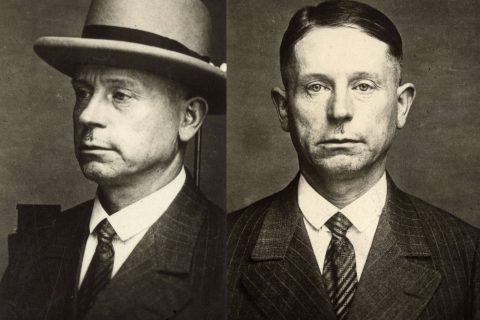
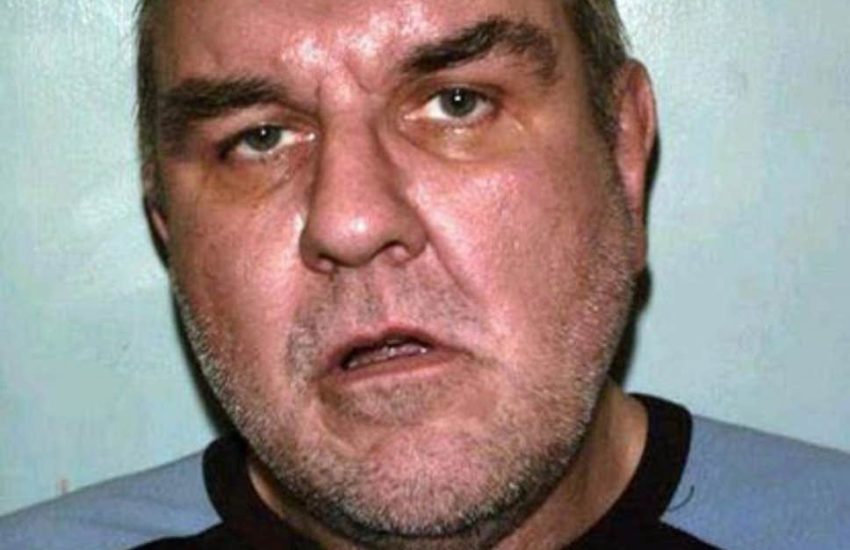
Anthony Hardy, the “Camden Ripper”, killed at least three women who worked as prostitutes in London in 2002-2003, Sally White, Bridgette MacClennan and Elizabeth Valad, dismembering two of them. In November 2003 he was given three life sentences. Police suspected there could have been as many as nine victims. He died in 2020.
Anthony Hardy was an English serial killer, guilty of killing at least 3 women who worked as prostitutes, although the number of victims may be higher.
The discovery of the bodies
It is 30 December 2002, in London. It is very cold, and winter is a particularly hard time for people living on the streets. Besides the cold, there is the problem of food, hard to find without money. So many homeless people end up rummaging through the bins of the city’s pubs and restaurants, hoping to find a bite to eat.
It was one of these homeless men who, while rummaging through a pub’s bin, discovered something disturbing: human remains. He called the police and the investigation began, leading straight to Hardy, who was arrested a week later. In his flat police found more body parts of the victims.
Anthony Hardy
But who is Anthony Hardy? At the time of his arrest he was almost 52 and had a troubled past. Although his childhood and adolescence were apparently uneventful, as a young man the people close to him began to realise that something was wrong.
In the 1970s he married a classmate and they moved to Tasmania, Australia, where they raised their 4 children, three boys and a girl. In 1982 came the first documented incident: Hardy tried to kill his wife, first hitting her on the head with a bottle and then trying to drown her in the bath. His wife did not press charges, but Hardy was admitted to a psychiatric hospital for a few weeks.
Once he was out, he and Judith, together with the children, now in their mother’s custody, returned to England, and they divorced in 1986. Life in England did not improve, and Hardy began stalking his ex-wife. He was arrested for this and once again admitted to a psychiatric hospital, where he was diagnosed with bipolar disorder.
After leaving hospital he used alcohol and drugs, committed petty thefts and got into a few fights. In the 1990s things got no better: he had no home and spent his nights in hostels. Alcohol and drugs only made his mental instability worse.
In 2000 he moved into a council studio flat, but he did not settle down. He committed acts of vandalism, and in 2002 his neighbours called the police because they thought something suspicious was happening in his flat.
Finding the bodies
In his bedroom police found the body of a woman, Sally White, 38, whose death, according to pathologist Freddy Patel, was caused by a heart attack, despite the injuries to her head. In December of the same year, however, a homeless man found human remains in the rubbish. They were the remains of two more women, Bridgette MacClennan, 34, and Elizabeth Valad, 29. He alerted the police and Hardy was arrested a week later.
The investigation revealed that the woman found months earlier in his flat had also been one of his victims. All three victims were prostitutes, with whom Anthony Hardy was obsessed. The studio flat had not been chosen at random, but precisely because it was near a place where prostitutes often worked. The man was also obsessed with sex and wanted to dominate women.
Modus operandi
Approaching his victims and luring them to his home, given their work, had not been difficult at all. All the victims were strangled and sexually assaulted after death. After killing them, Hardy photographed them, putting the bodies in positions he found arousing. Then he dismembered the victims and disposed of some body parts in the rubbish, while keeping others, probably as trophies.
Confession and sentence
Although Anthony Hardy at first denied any involvement in the three women’s deaths, he eventually confessed, claiming however that the women had died during consensual, if somewhat rough, sex. But Hardy was judged to be a liar and unreliable, and in November 2003 he was given three life sentences.
Officially the sentence refers to the 3 women found, but other bodies found in the area in the same period suggest that the Camden Ripper’s victims may have numbered as many as nine. Anthony Hardy died on 25 November 2020.
Why was a violent, mentally unstable man with several previous convictions still free? Could this massacre have been avoided? Tell us what you think in the comments below.
🦋 Emadion lives through its readers. If this story kept you up at night, buy me a coffee: it helps me bring you the next nightmare.
☕ Support Emadion on Ko-fi