 Posted by
Joe Ball (1896-1938), owner of the Sociable Inn tavern in Elmendorf, Texas, kept five alligators in a pond behind the bar. When some barmaids went missing in 1937-38 he was suspected of killing them and feeding their bodies to the alligators. He took his own life when the police came to question him. His handyman confessed to two murders, but the story of 20 victims eaten by the reptiles is now considered largely a legend.
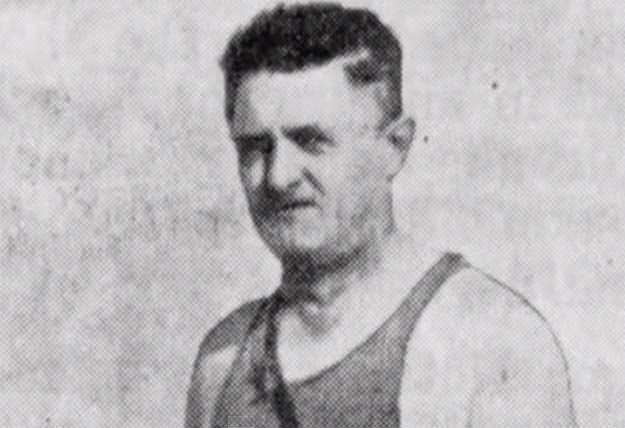
Joe Ball was born in 1896 and was held responsible for two murders, although for decades it was said that he had killed as many as 20 women. He was nicknamed “The Butcher of Elmendorf”, “The Bluebeard of South Texas” and “The Alligator Man”, because he was said to feed his victims’ bodies to the alligators he kept outside his tavern.
Biography of Joe Ball
Joseph Douglas Ball was born on January 7, 1896 in San Antonio, Texas, the second of eight children of a wealthy farm owner who later opened a general store. His brother Raymond became the first mayor of Elmendorf.
Joe fought on the front lines in Europe during World War I and, back in the United States, taking advantage of Prohibition, he became a bootlegger. After Prohibition ended he opened a tavern in Elmendorf, called the Sociable Inn. Although Joe was not well liked by the locals, the place was always full thanks to a strange attraction.
He had built a concrete pond where he kept five alligators. Joe charged customers to see them, especially at feeding time, when they were usually fed live cats and dogs.
Joe was not liked by his neighbors: according to the stories he once threatened one of them with a gun for complaining about the stench coming from the pond, while another reportedly had to move away because of his threats.
The disappearances
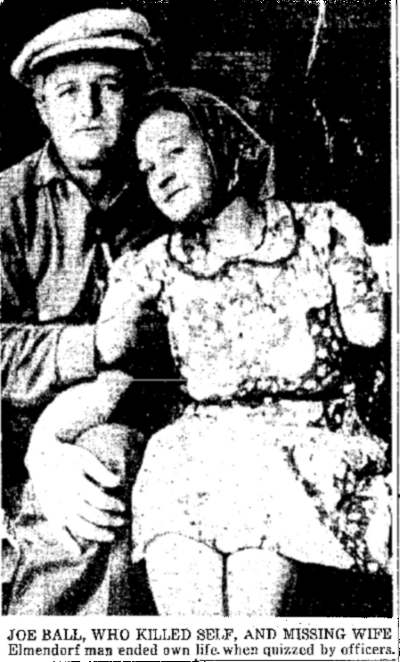
The barmaids working at the Sociable Inn changed often, and so did Joe’s women, and over time some girls in the area began to go missing.
According to the most popular version of the story, in 1937 the parents of Minnie Gotthardt, a twenty-two-year-old barmaid at the tavern, went to the police because they had not heard from their daughter for days. Joe was questioned and said the girl had found another job and left. With no evidence against him, he was let go.
A few months later another family reported their daughter missing, Julia Turner, also a barmaid at Joe’s.
Joe said Julia had had some trouble and wanted to leave the area after a fight with a friend, and that he had given her money for the trip. But in her room the police found all her clothes still there.
The investigation and Joe’s death
In the following months more barmaids disappeared and, again according to the stories, the case went to the Texas Rangers. One of the missing women was Hazel Brown, known as “Schatzie”, who had fallen for a regular customer and wanted to stop working for Joe. It was also said that several former barmaids and some of Joe’s wives had never been seen again.
On September 24, 1938 two Bexar County deputy sheriffs came to the tavern to question him. Joe pulled a gun from the cash register and took his own life in front of them.
The accomplice and the victims
A handyman at the tavern, Clifford Wheeler, confessed to helping Joe get rid of the bodies of two women. He said Joe had killed Minnie Gotthardt in June 1937 and later Hazel Brown, and led the police to their remains. Wheeler was sentenced to two years in prison as an accessory to murder, while the alligators were donated to the San Antonio Zoo.
In the version of the story that spread over the years, Wheeler allegedly said that Joe had killed at least 20 more women and that their remains had been fed to the alligators.
How much of it is true?
This, the most gruesome part, is also the most doubtful. In 1957 Dolores “Buddy” Goodwin, one of Joe’s wives, whose temporary disappearance had been blamed on him, said in an interview that no woman had ever been thrown into the alligator pond and that there had only been two murders.
Very few written sources from the time confirm Joe’s crimes. In 2002 journalist Michael Hall investigated the case in depth for Texas Monthly. Joe’s nephew, Richard “Bucky” Ball Jr., has attributed the crimes to the violent trauma his uncle went through in the war.
The case inspired the 1976 film “Eaten Alive“, directed by Tobe Hooper, famous for “The Texas Chain Saw Massacre” two years earlier. In the film a hotel owner feeds his victims to a Nile crocodile. Joe Ball was also referenced in an episode of the TV series Bones.
🦋 Emadion lives through its readers. If this story kept you up at night, buy me a coffee: it helps me bring you the next nightmare.
☕ Support Emadion on Ko-fi