 Posted by
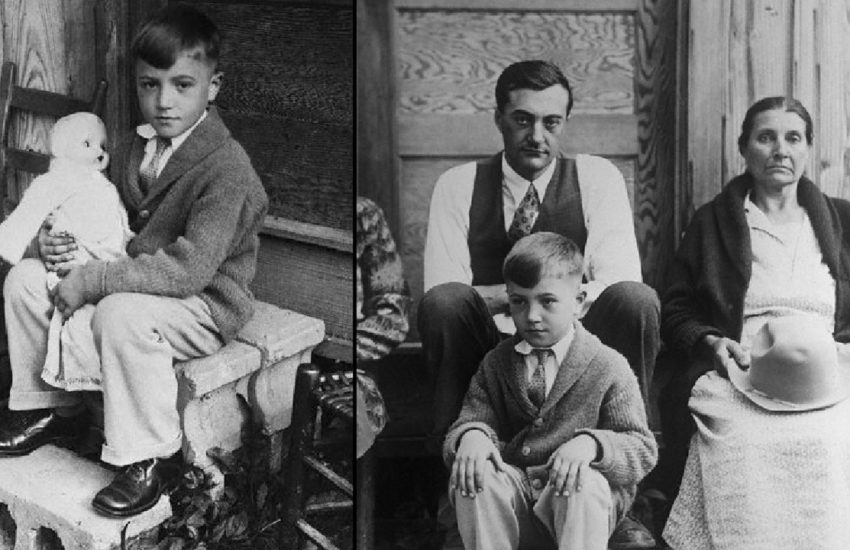
Carl Newton Mahan was six years old when he killed an eight-year-old friend with his father’s shotgun. His case, in 1929 Kentucky, is still remembered as that of the youngest murder defendant in American history: a little boy who dozed off at the defence table while a jury of adults decided his fate.
Paintsville, 1929
Paintsville is a small town in Johnson County, eastern Kentucky, in the hills of the Appalachians. At the end of the 1920s it lived mostly on coal. Mining families were large and poor, and the Great Depression, which would break out in October with the Wall Street crash, had already been felt there for some time.
Even children tried to bring home a few cents. One of the most common ways was collecting scrap iron to sell. That is what two local boys were doing on 18 May 1929: Carl Newton Mahan, six, the son of a taxi driver, and Cecil Van Hoose, eight, who lived nearby.
The piece of iron
While they were searching, Carl found a piece of iron, a small treasure for two poor children. Cecil snatched it from his hands and, according to accounts at the time, hit him. Carl answered with a threat nobody took seriously in that moment: if Cecil didn’t give it back, he would kill him.
Then he ran home. His mother was out. His father’s 12-gauge shotgun hung on a nail on the back of a door, high enough that he had to climb on a chair to reach it. Carl climbed up, took it down and went back outside.
When he found Cecil again, he shouted something like “I’m going to shoot you” and pulled the trigger. The shot hit his friend in the chest. A neighbour, Mrs Fitzpatrick, who had seen the quarrel, helped put Cecil into a car to take him to hospital. He died shortly after arriving. According to reports at the time, the undertaker counted eighteen pellets in his body, three of them in the heart.
Cecil Van Hoose was buried in the Mayo cemetery in Paintsville. He was eight years old.
A child before a jury
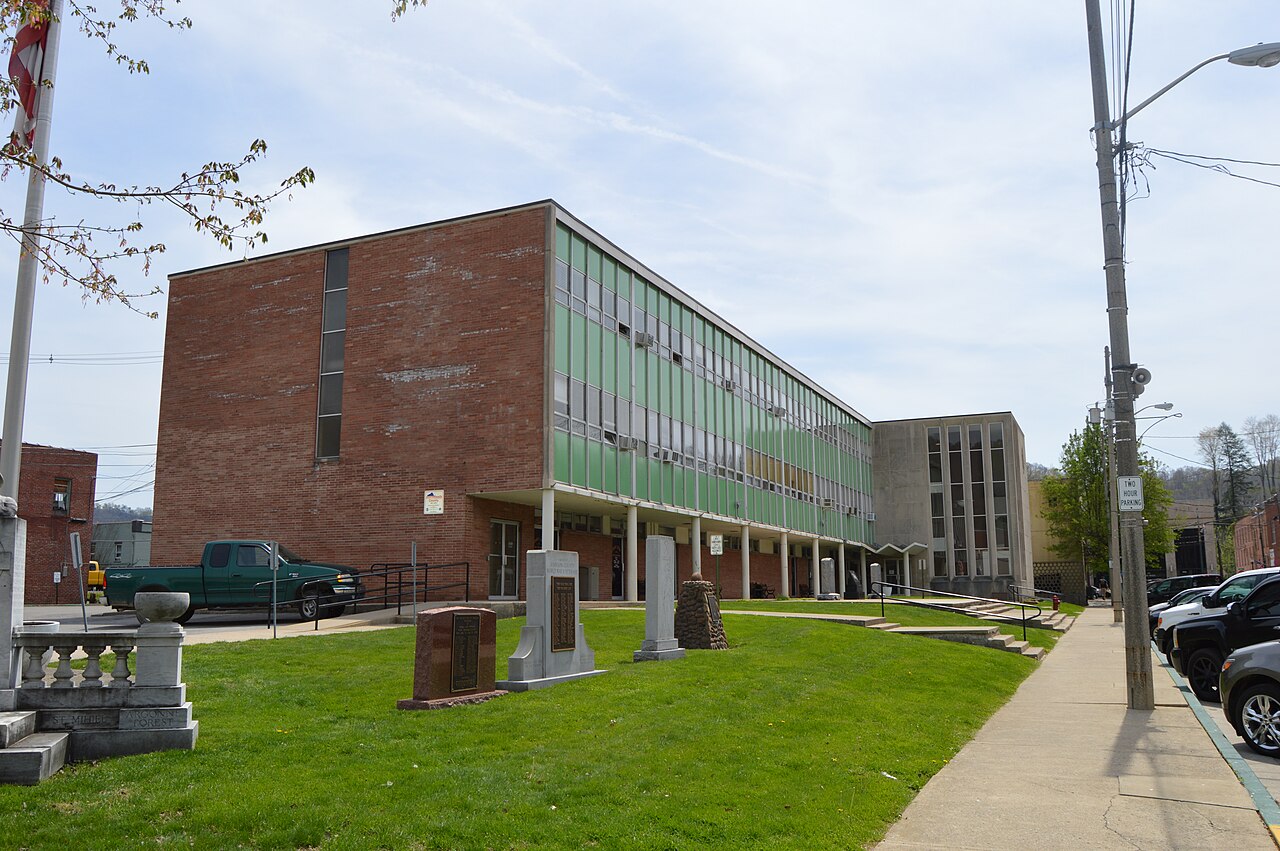
What happened next is perhaps the most incredible part of the story. Carl was not handed over to a child welfare service or simply sent home to his parents: he was put on trial. The county judge, John W. Butcher, who also presided over the juvenile court, decided to hold a real jury trial, as if Carl were an adult.
The trial took place less than a week after the shooting, on 22 and 23 May 1929, and effectively lasted one day. The jury was made up mostly of farmers and miners, plus one shopkeeper. Even jury selection was eventful: Sheriff Harry Adams argued with the judge over the number of extra jurors summoned and was fined three dollars.
Carl was defended by attorney John Wheeler. The boy sat at the defence table and told in his own words what had happened. His mother testified that after the shooting her son had told her he didn’t know the gun was loaded. For the rest of the day Carl sat there among the adults, playing with whatever was in front of him and sometimes falling asleep, like any six-year-old made to sit still for hours.
The verdict
The jury withdrew and came back after about half an hour: not murder, but manslaughter. Judge Butcher ordered Carl to be sent to the state reform school in Greendale, near Lexington, until he turned 21; newspapers at the time spoke of a fifteen-year sentence. While waiting for the sentence to take effect, the boy was allowed home on a 500-dollar bond, which his family managed to pay with help from relatives and friends.
Wheeler immediately announced that he would seek a new trial. His arguments were technical but serious: the county juvenile court had no power to hold a jury trial on a homicide charge, which belonged if anything to the Circuit Court, and the instructions given to the jury were also open to challenge.
America takes sides
By then the case was on the front pages of Kentucky’s newspapers and then across the country, all the way to The New York Times. The image of a six-year-old convicted by a jury struck the public, which split down the middle. Some thought the sentence too lenient for a boy who had taken another child’s life; others found it absurd and cruel. The Mahan family received letters of support and letters of abuse.
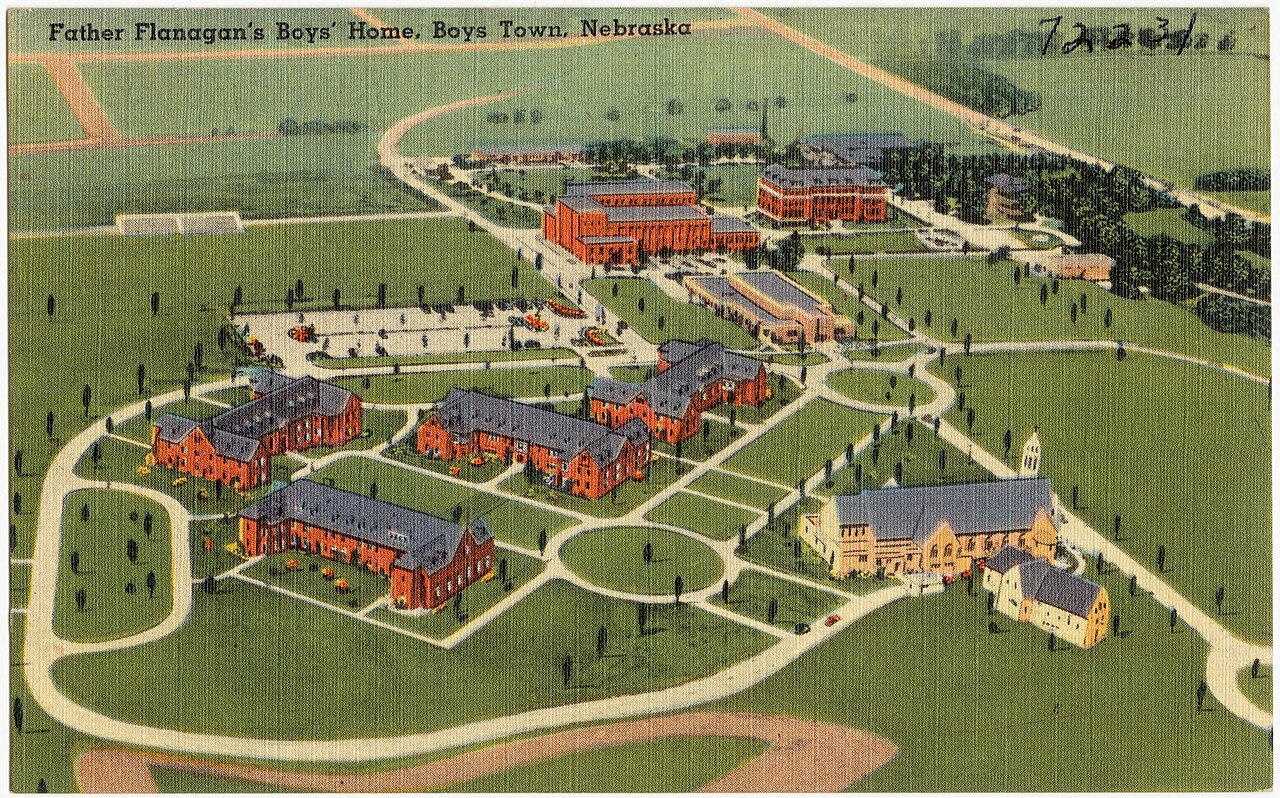
Well-known figures weighed in too. Father Edward Flanagan, the priest who had founded the famous Boys Town home in Nebraska, asked for Carl to be placed in his care. A Cincinnati judge, Charles Hoffman, suggested a psychological evaluation, and psychologist Ethel Goldsmith Muegle examined the boy and spoke to his mother. The governor of Kentucky, Flem Sampson, said press reports had been greatly exaggerated. Even Clarence Darrow, the most famous criminal lawyer in America, commented publicly on the case, angering the judges involved.
There was also a very practical problem: the reform school let it be known that it could not take children under ten. In practice, the sentence could not be carried out.
The writ of prohibition
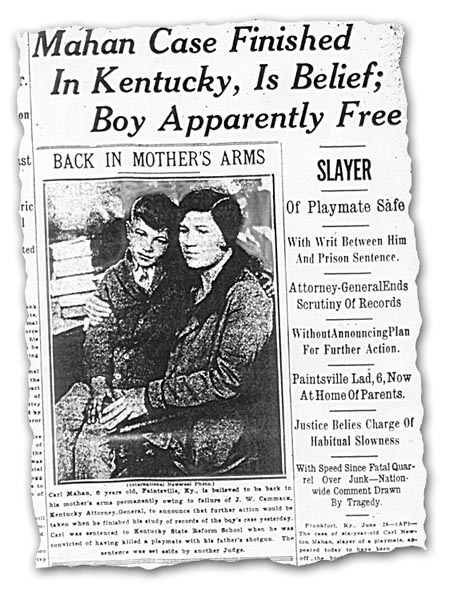
On 24 May 1929, just a day after the verdict, the matter came before Circuit Judge J. F. Bailey. He issued a writ of prohibition, an order by which a higher court forbids a lower one from exceeding its powers. According to Bailey, Judge Butcher had overstepped his authority by holding a criminal jury trial in a case involving a minor. Carl’s commitment to the reform school was blocked, and he stayed with his parents.
Behind it all was a very old principle of English common law: a child under seven was considered, by definition, incapable of committing a crime, because he could not truly understand the meaning of his actions. Carl was six.
Kentucky’s Attorney General, J. W. Cammack, asked for the full trial record to decide whether the state should step in. At the end of June he announced that he would take no action. On 30 June Judge Butcher took up the case again, but this time not for homicide: Carl was dealt with as a “delinquent” child and placed under the supervision of the Kentucky Children’s Bureau. On 9 July the court ruled that he could stay with his family. The day before that hearing, as it happened, his father had been charged with drunk driving.
Guilty or not?
The question that gripped America in 1929 is the same one we ask today: can a six-year-old really be responsible for a killing?
Carl knew what a shotgun was, and he knew that shooting could kill: his threat to Cecil shows that. But knowing that something is “bad” is not the same as fully understanding what death is, or controlling anger the way an adult would. At six, children learn mostly by watching grown-ups, and 1929 Paintsville was a hard place, where there were guns in every house and violence was part of daily life.
The case also had practical consequences. It helped spread the idea, in Kentucky and beyond, that very young children should be kept apart from adult criminal justice and handled by courts and services designed for them. A road the United States would travel only slowly.
What became of Carl
Very little is known about Carl Newton Mahan’s life after the trial. At some point he left Johnson County and moved to Jefferson County, home of Louisville. He died in 1958, at just 35. According to some accounts, he took his own life.
What remains is two boys and a quarrel over a piece of iron. One never grew up. The other grew up carrying the weight of that May afternoon, and of a trial that made him famous across America before he had even learned to read.
🦋 Emadion lives through its readers. If this story kept you up at night, buy me a coffee: it helps me bring you the next nightmare.
☕ Support Emadion on Ko-fiSources
- Without Precedent (Paintsville, Johnson County, Ky) – Kentucky Cop Stories
- Carl Newton Mahan – Murderpedia (with period newspaper articles and a 2000 Cincinnati Enquirer article)
- List of youngest killers – Wikipedia