
 Posted by
In June 1629 the Batavia, flagship of the Dutch East India Company, ran aground on a coral reef off Western Australia. While the commander sailed off for help, the junior merchant Jeronimus Cornelisz took control of the stranded survivors and organised a massacre that killed more than a hundred of them. He was stopped by an ordinary soldier, Wiebbe Hayes, from behind a stone fort that still stands today.
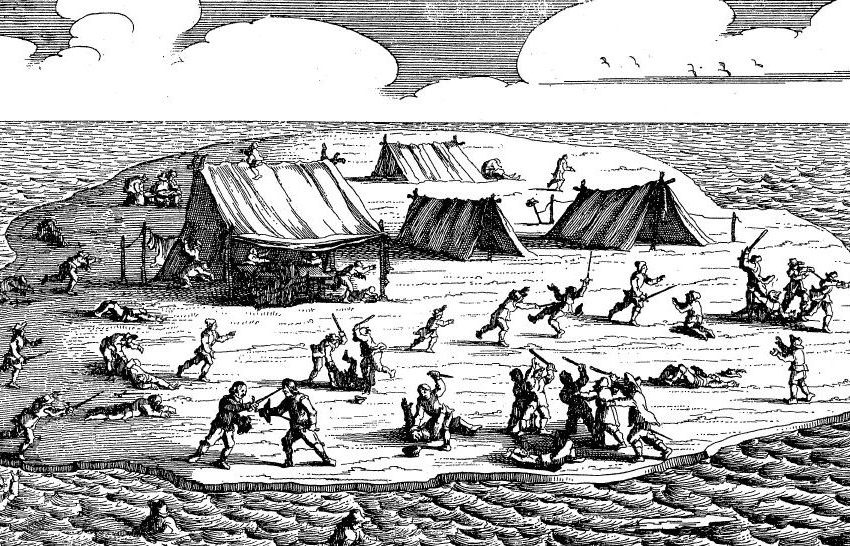
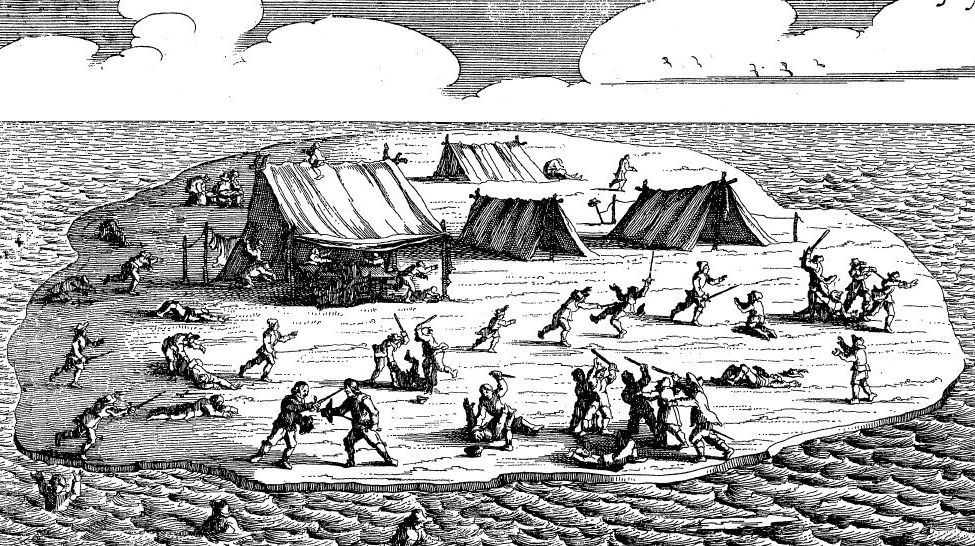
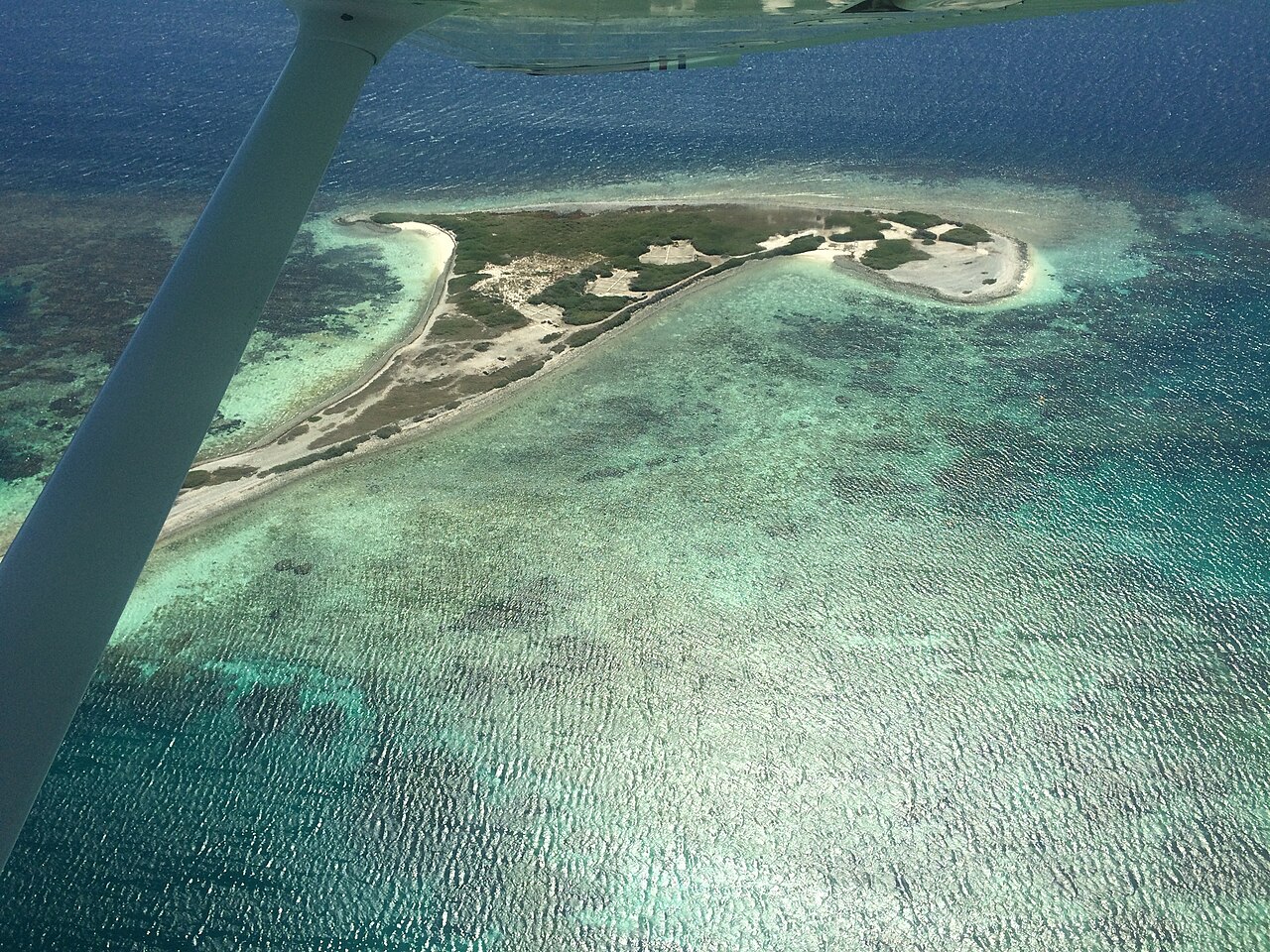
Beacon Island is a scrap of sand and coral barely three hundred metres long, rising no more than two metres above the sea. Seabirds nest there, and every so often an archaeologist turns up. It has an official name on the charts, but people who know its story call it something else: Batavia’s Graveyard. Almost four centuries ago, dozens of people who had survived a shipwreck were buried in that sand, killed by their fellow castaways.
It is one of the darkest chapters in European maritime history, and it begins on another island, Texel in the Netherlands, on an autumn day in 1628.
📍 This story is on the Mystery Map: see where it happened →
The Company’s richest ship
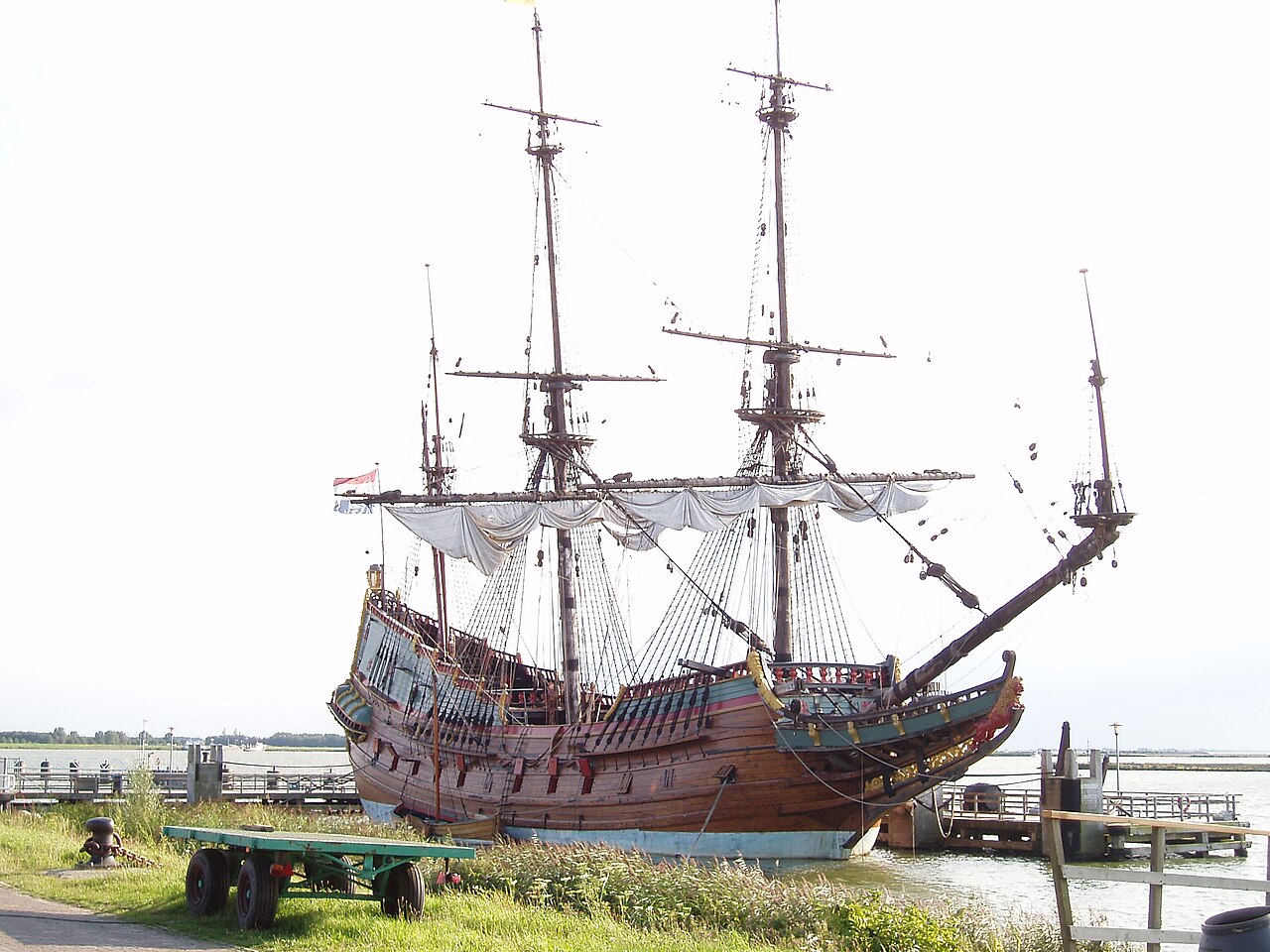
The Batavia was a large armed merchantman built in Amsterdam for the VOC, the Dutch East India Company, the most powerful trading enterprise of its age. She was on her maiden voyage when she left Texel on 29 October 1628, bound for Batavia, today’s Jakarta, carrying chests of silver and coin for the Company’s trade in Asia.
More than three hundred people were on board (sources range from about 316 to 341): sailors, soldiers, Company officials, and women and children travelling to join their families in the colonies. The fleet was commanded by the senior merchant Francisco Pelsaert; the ship herself was in the hands of skipper Ariaen Jacobsz, who loathed him. Among the officers was a man of about thirty, the junior merchant Jeronimus Cornelisz.
Who was Jeronimus Cornelisz?
Cornelisz was born around 1598 in Leeuwarden, Friesland, and trained as an apothecary. He later moved to Haarlem and opened a shop there. In 1627 his life fell apart: his infant son died, a lawsuit with the wet nurse followed, and his business was ruined. With nothing left, he signed on with the Company to seek his fortune in the East.
A popular but unproven belief links him to the painter Johannes van der Beeck, known as Torrentius, who was tried for blasphemy and heresy. What is clear is that Cornelisz held views far outside the faith of his time; according to the sources, he claimed that everything he did was inspired by God. Historian Mike Dash, who studied the case in depth, describes him as a likely psychopath.
According to Pelsaert’s account, Cornelisz and skipper Jacobsz plotted during the voyage to seize the ship and its treasure. It is worth remembering that much of what we know comes from Pelsaert’s own journal and from confessions extracted under torture.
The night of 4 June 1629
Before dawn on 4 June 1629, the Batavia struck Morning Reef in the Houtman Abrolhos, a chain of islands off the coast of Western Australia. The hull stuck fast and began to break up. Dozens drowned; most of the survivors were ferried by boat to the nearby islets, including the one now called Beacon Island.
The islands were low, windswept and, above all, without fresh water. Pelsaert, the skipper and the senior officers, along with some sailors and passengers, about 48 people in all, set off in the longboat to look for water on the mainland. Finding too little, they decided to make straight for Batavia: a voyage of some 3,000 kilometres across open sea, completed in 33 days without losing a single person. It was a remarkable feat, but it left more than two hundred people alone on the reef.
Cornelisz takes control
On the islands, the highest-ranking Company official left behind was Cornelisz himself. He took control of the weapons and supplies and gathered a band of loyal men around him. Then he began to reduce the number of survivors.
His first move was to get rid of anyone who might resist. About twenty soldiers under Wiebbe Hayes, a private from Winschoten, were sent to a larger island, West Wallabi, to search for water, after being talked into leaving their weapons behind. Cornelisz was sure they would die of thirst.
Then the killings began. Over roughly two months, Cornelisz’s men murdered survivors they considered useless or dangerous: the sick, those who objected, entire families. At least 110 people died, perhaps as many as 125, men, women and children. Cornelisz, as far as we know, never killed anyone with his own hands; he gave the orders and his followers carried them out. Several women were held captive by his men.
Wiebbe Hayes and his stone fort
But Cornelisz had miscalculated. On West Wallabi, Hayes’s soldiers found fresh water and lit signal fires, as agreed. Meanwhile a few people who had escaped the killings reached their island and told them what was happening.
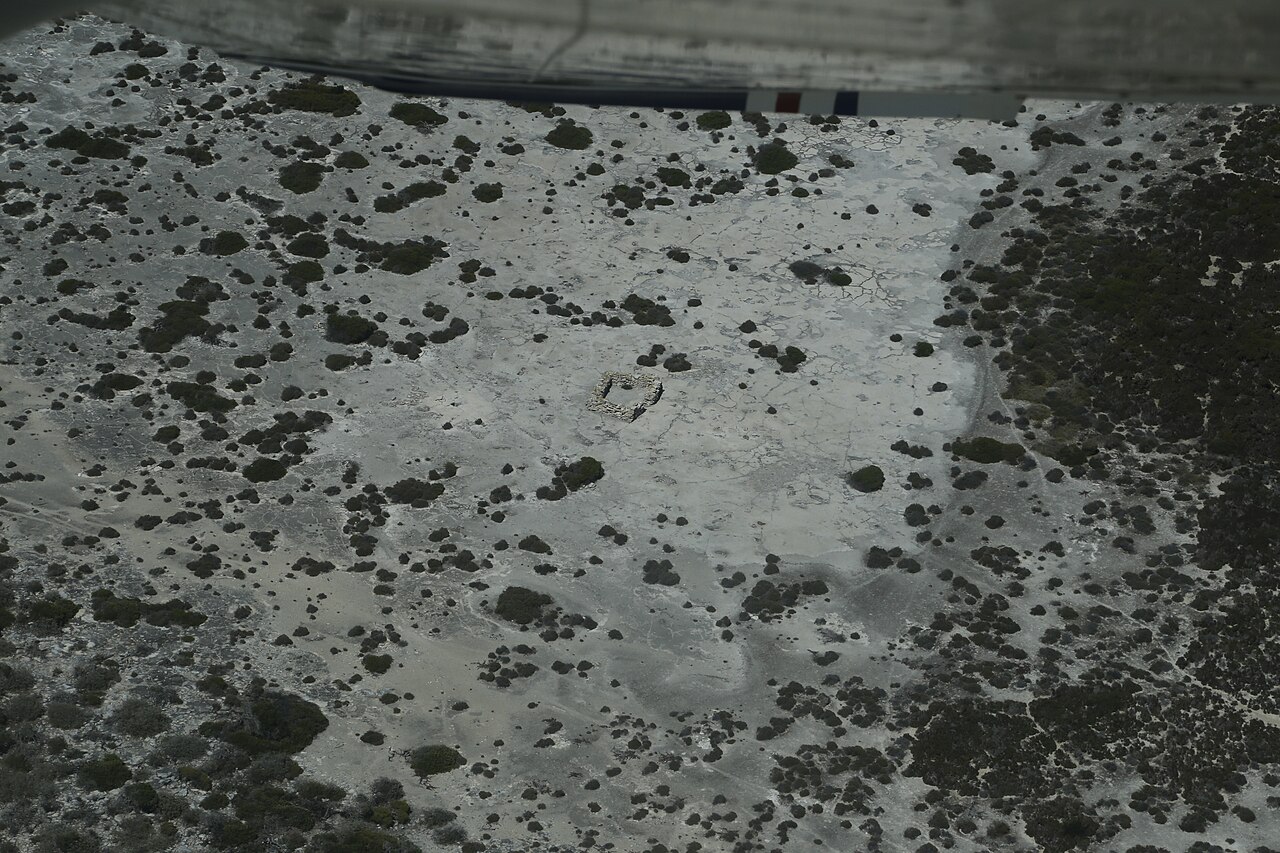
Hayes turned out to be a born leader. He had his men build a small dry-stone fort beside the well and armed them with whatever the sea gave back: planks from the wreck studded with nails, clubs, stones. In August and September 1629 the mutineers attacked several times and were driven off every time. In one of these clashes Cornelisz himself was captured and held prisoner by the soldiers.
The Sardam arrives
On 17 September 1629, in the middle of the final assault, a sail appeared on the horizon. It was the Sardam, bringing Pelsaert back to rescue the survivors and the silver. It became a race. Hayes reached the ship first in a small boat and warned Pelsaert before the mutineers could get aboard and seize her.
Pelsaert held a trial on the islands. On 2 October 1629 Jeronimus Cornelisz was hanged together with several of his closest accomplices, after his hands had been cut off. Two men found guilty of lesser crimes, the soldier Wouter Loos and a young cabin boy, were marooned on the Australian mainland. Nothing more was ever heard of them, but they are remembered as the first Europeans to stay, unwillingly, on the continent. Other mutineers were executed in Batavia; skipper Jacobsz was arrested and probably died in prison.
Hayes was promoted on the spot. Pelsaert, on the other hand, was blamed for failing to keep order, lost his assets and died of illness within a year. His account of the disaster was published in 1647 as Ongeluckige voyagie, “the unlucky voyage”, and became a bestseller.
The graveyard beneath the sand
For more than three centuries the Batavia was just a name in books. The wreck was finally located in 1963 by a crayfisherman, and in the 1970s archaeologists from the Western Australian Museum raised cannons, coins, astrolabes and part of the hull, now on display at the Shipwreck Galleries in Fremantle.
Then the land itself began to speak. Human bones had already surfaced on Beacon Island in the late 1980s; from 2015 a new excavation uncovered the remains of further victims, in single and shared graves. One of them, reported by National Geographic in 2017, held five people laid out carefully in a row with no signs of violence: possibly people who died of thirst in the first days, before the massacre began.
What remains
In 2014 the fishermen’s huts were removed from Beacon Island to return it to the wild, and the island is now protected on Australia’s National Heritage List. On West Wallabi, the low walls of Hayes’s fort still stand against the wind. In Lelystad, in the Netherlands, a replica of the ship built with period tools and materials welcomes visitors.
One question still troubles historians: how could a ruined apothecary with no military experience persuade dozens of men to slaughter their fellow passengers within a few short weeks? Perhaps the answer lies buried with the victims, under two metres of sand and coral in the middle of the Indian Ocean.
If you are drawn to stories of castaways and ill-fated ships, read also The Cannibals of the Mignonette and The mystery of the Mary Celeste.
🦋 Emadion lives through its readers. If this story kept you up at night, buy me a coffee: it helps me bring you the next nightmare.
☕ Support Emadion on Ko-fiSources
- Batavia (1628 ship), Wikipedia
- Jeronimus Cornelisz, Wikipedia
- Wiebbe Hayes, Wikipedia
- Beacon Island (Houtman Abrolhos), Wikipedia
- The Batavia shipwreck disaster, Australian National Maritime Museum
- Batavia, Western Australian Museum
- Archaeologists Discover New Mass Grave From Notorious Shipwreck, National Geographic (2017)
- Wreck of the Batavia, World History Encyclopedia
Images: engraving from Ongeluckige voyagie (1647), public domain; Batavia replica, Malis, public domain; Wiebbe Hayes fort and Beacon Island, Vunz, CC BY-SA 4.0. All from Wikimedia Commons.