 Posted by
On 23 January 1897, in West Virginia, Zona Heaster Shue was found dead and her death was put down to natural causes. Her mother said her daughter’s ghost had appeared to her and told her that her husband Edward had broken her neck. The body was exhumed, the autopsy confirmed it, and Edward was sentenced to life. This is the case of the “Greenbrier Ghost”.
Zona Heaster Shue was a young woman who died in mysterious circumstances. But it was her ghost, so the story goes, that helped bring her killer to justice.
The death of Zona Heaster Shue
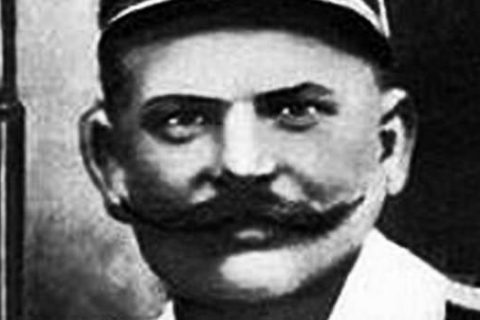
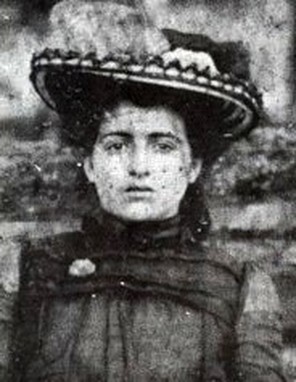
In October 1896 Zona is 23 and lives in Greenbrier County, West Virginia. There she meets the blacksmith Edward Shue, a recent arrival in town, and falls in love with him.
He is older than her and has already been married twice. His first marriage ended in divorce, with his wife accusing him of great cruelty, and his second wife died in unexplained circumstances less than a year after the wedding. Despite this, the two marry soon after meeting.
Just three months later, on 23 January 1897, Zona is found dead at the foot of the stairs in the house she shared with her husband. Her body is found by a boy from nearby who was running an errand for Edward.
Zona lies on the floor with her feet together, one hand on her belly and one arm along her side, her head tilted and her eyes wide open. The boy runs to his parents, who call the police and a doctor.
Help takes about an hour to arrive, and by the time it gets to Zona’s house Edward has already carried the body indoors. He has already dressed his wife, in a high-necked dress and a scarf, going against the custom of the time that the female relatives of the deceased should wash and prepare the body for the funeral.
When the doctor arrives, Edward stays by his wife’s body, crying desperately. So as not to disturb him, the doctor examines the body only superficially. Edward prevents any further examination and the death is put down to natural causes: the coroner’s jury closes the case with a verdict of death from heart disease.
During the wake many notice Edward’s strange behaviour and the odd looseness of the dead woman’s neck. Zona’s mother, Mary Jane, who had never liked her son-in-law, is convinced he killed her daughter.
Zona’s ghost
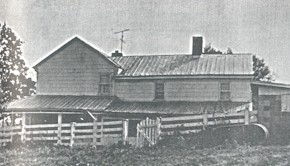
Mary Jane decides to pray hard to get in touch with her daughter and find out the truth. Edward had put rolled-up sheets in the coffin to support his wife’s head, and Mary Jane was sure she had noticed stains that looked like blood.
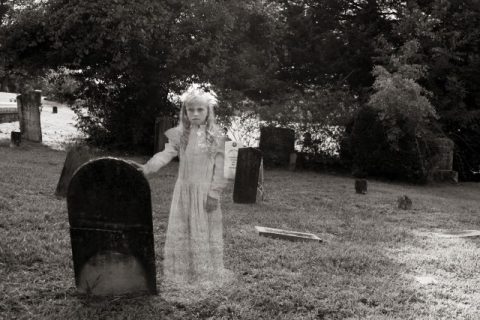
It is 1897, and trying to contact the dead is not that unusual. About four weeks after her daughter’s death, Mary Jane has visions. For four nights in a row her daughter’s ghost appears to her and tells her what really happened.
On the day she died, Zona and her husband had argued. Edward thought his wife had not made dinner, flew into a rage and attacked her, breaking her neck and killing her. After telling her story, Zona’s ghost turns its head all the way round, until its face looks backwards.
Mary Jane does not think twice and goes to the local prosecutor, John Alfred Preston, spending hours in his office persuading him to reopen the case. We do not know whether Preston believed in the ghost, but many in town were beginning to suspect Edward. The prosecutor spoke to the doctor, who admitted he had not examined the body properly, and that was enough to order an exhumation.
The autopsy was carried out on 22 February 1897 in the village’s one-room schoolhouse and lasted three hours. The result was clear: Zona’s neck was broken between the first and second vertebrae, her windpipe was crushed, and on her throat were the finger marks of someone who had strangled her.
The trial
Edward was arrested and held in the jail at Lewisburg. While awaiting trial he told reporters he wanted to marry seven women and said he was sure he would be freed, since there was so little evidence against him. The trial began on 22 June 1897.
For obvious reasons, the prosecutor did not want to use the ghost story at trial, but Edward knew about it. He told his lawyer, who cross-examined Mary Jane about her daughter’s appearances, hoping to discredit her in front of the jury.
The woman, however, retracted nothing and told, with conviction, how her daughter’s ghost had appeared to her and accused her husband of killing her. Many people believed her, and Edward, indignant, addressed the jury trying to defend himself.
His manner, however, won him no sympathy from the public or the jurors, and on 11 July the verdict came: guilty of first-degree murder.
On the jury’s recommendation he was sentenced to life imprisonment rather than death. A mob even formed in town determined to take him from the jail and hang him, but it was dispersed by the deputy sheriff. Edward died on 13 March 1900 in the Moundsville penitentiary, killed by an epidemic.
It must be said, however, that officially the ghost played no part in his conviction: the prosecution never mentioned it, and it only came up because the defence raised it. The writer Katie Letcher Lyle, who studied the case, believes Mary Jane invented the ghost story to get the investigation reopened.
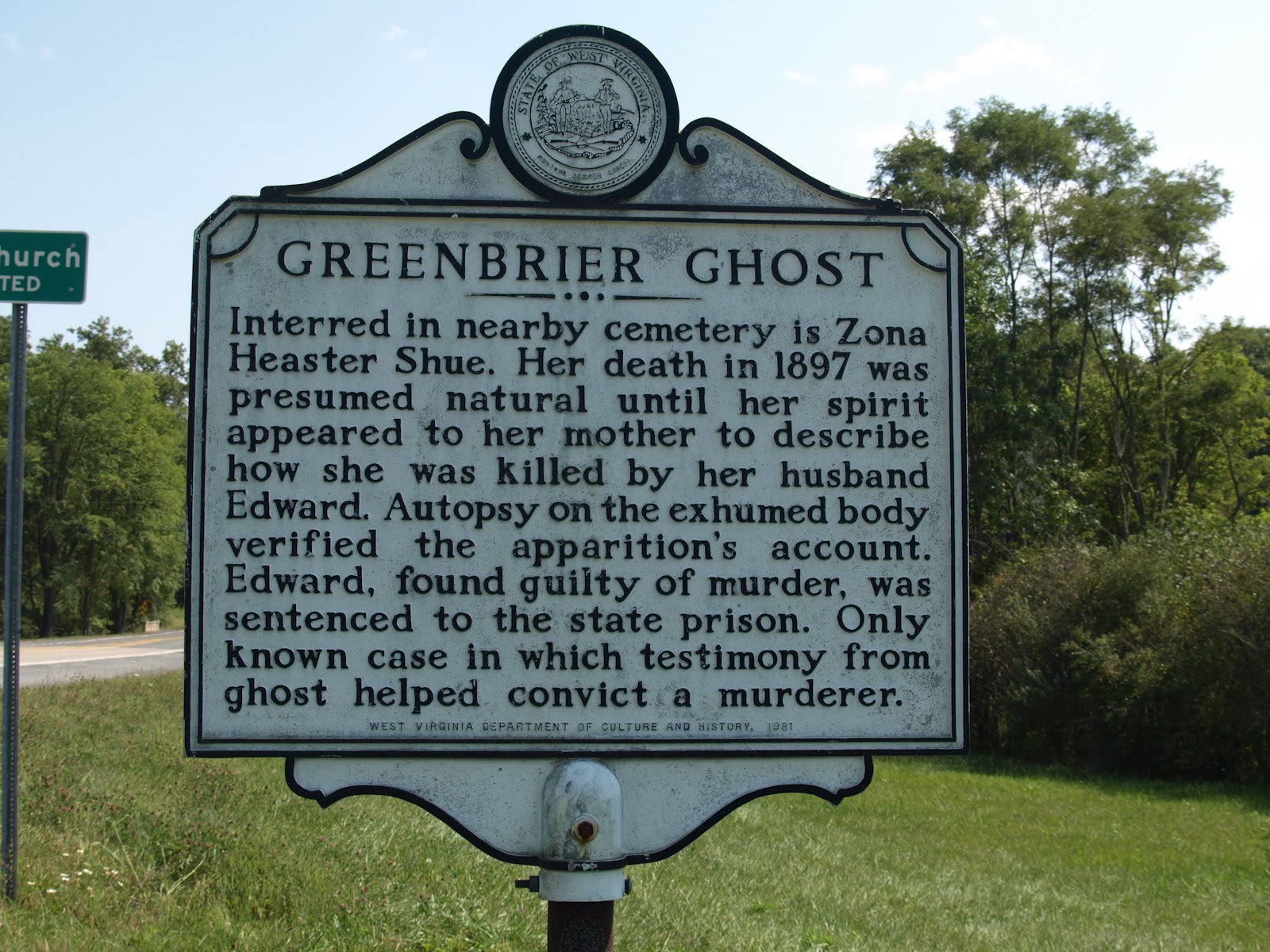
Near the cemetery where Zona is buried there is still a West Virginia state historical marker that tells her story: it says her death was thought to be natural until her spirit appeared to her mother, that the autopsy confirmed the ghost’s account, and it calls this the only known case in which a ghost’s testimony helped convict a murderer.
🦋 Emadion lives through its readers. If this story kept you up at night, buy me a coffee: it helps me bring you the next nightmare.
☕ Support Emadion on Ko-fi