 Posted by
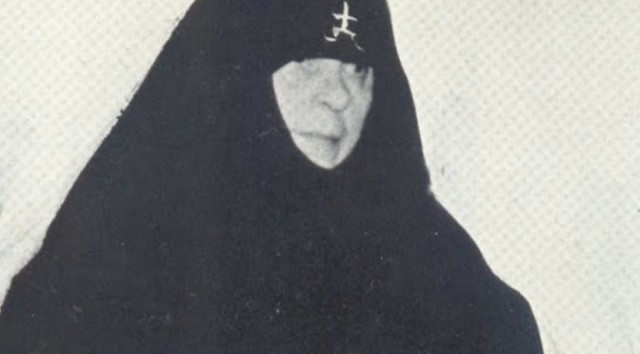
It is the night of 4 December 1950. More than eighty police officers and gendarmes climb a pine-covered hill above Keratea, a farming town in Attica, Greece. A deputy prosecutor, an investigating judge and a coroner go with them. When the monastery gates open, they find starving old women, sick people left alone in their cells and dozens of exhausted children. The nuns scream curses at the officers. The woman in charge is called Mariam Soulakiotis. Within weeks the Greek press will call her “the female Satan”, and the foreign papers “the woman Rasputin”.
She is still described online as “Greece’s first female serial killer”, with death tolls ranging from 27 to more than 500. So what really happened at the Keratea monastery, and what did the courts actually prove? Set side by side, the Greek press of the time, modern Greek reporting, the wire stories of the 1950s and later research tell a story that is both better documented and messier than the legend.
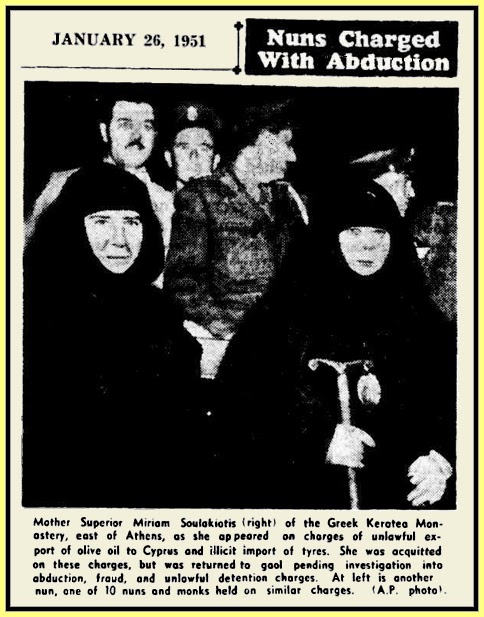
Marina from Keratea
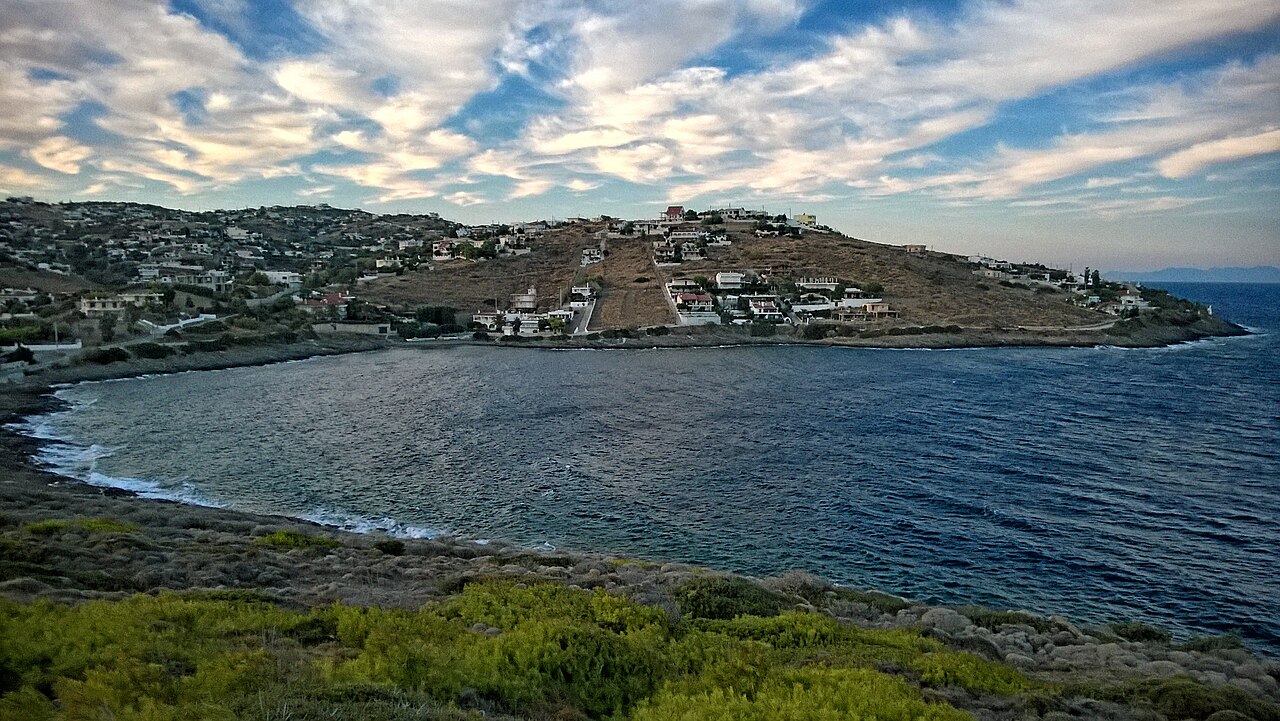
She was born Marina Soulakiotou (Μαρίνα Σουλακιώτου, also spelled Σουλακιώτη) around 1883 in Keratea, about 30 km south-east of Athens, now part of the municipality of Lavreotiki. Very little is known about her early life. Greek sources agree she came from a modest background. Some say she worked in a factory; the Greek daily in.gr says she sold ribbons and lace. Her family home, at 71 Megalou Alexandrou Street, was later absorbed into one of the monastery buildings.
Even her birth year is uncertain. When she died in 1954, Reuters gave her age as 71. A year earlier the same agency had called her 65. The earlier version of this article said she was born in 1900, which does not fit her age at death. Most sources settle on about 1883.
The calendar war
Her story starts with a dispute that sounds trivial today but split Greece in the 1920s. In 1923 the Greek state dropped the old Julian calendar for the Gregorian one used in the rest of Europe: 16 February became 1 March overnight. In 1924 the Church of Greece followed with a “revised” Julian calendar that lined up its fixed feasts with the West.
For many believers and priests this was betrayal, a surrender to Rome. Out of the protest came the Old Calendarists, who called themselves the True Orthodox Christians and kept the old calendar. The state and the official Church treated them as schismatics. For decades they faced church closures and arrests.
One correction is needed. Many articles, including our own earlier version, call the Keratea group “New Calendarists”. That is wrong. Mariam and her patron were Old Calendarists, and belonged to their hardest-line wing.
Bishop Matthaios
The man who changed Marina’s life was Matthaios Karpathakis (Ματθαίος Καρπαθάκης), a monk who had lived on Mount Athos and became a leader of the movement. Popular accounts say she met him at about 23 and quickly became his closest confidante. She took vows under the name Mariam.
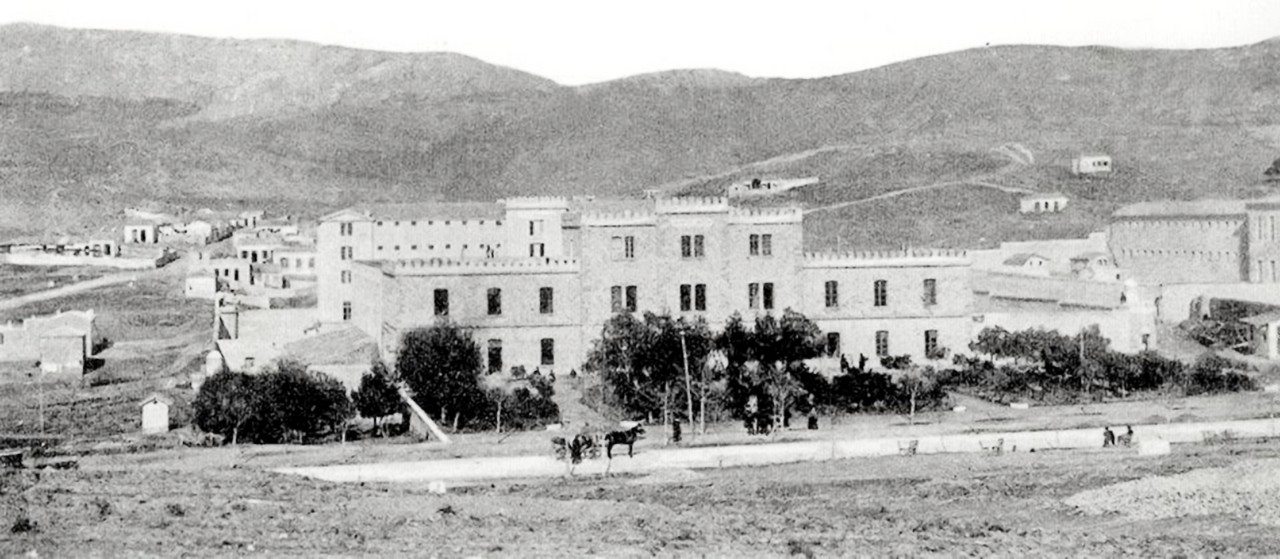
In 1927 Matthaios founded a monastery on the hill above Keratea, on the road towards the coastal village of Kaki Thalassa. It was called Panagia Pefkovounogiatrissa (Μονή Παναγίας Πευκοβουνογιάτρισσας), roughly “Our Lady the Healer of the Pine Mountain”. It was officially dedicated to the Presentation of the Virgin, but it had a stated second purpose: to raise money for the movement.
In 1935 Matthaios was consecrated Bishop of Vresthena along with three other new Old Calendarist bishops. In 1948 he broke with the other leaders and consecrated a bishop on his own, then created more bishops with him. Under Orthodox rules that was invalid. It produced a separate faction, the “Matthewites”, seen as schismatic by both the state Church and the other Old Calendarists. According to the prosecution, as reported by in.gr, his past was far less spiritual than his followers claimed, but those were allegations, never proven.
The abbess takes over
From about 1939, with Matthaios old, often away on ascetic retreats or in jail during crackdowns on the movement, Mariam ran the monastery day to day. She only became abbess formally in 1950, but for a decade she had decided everything: who came in, who worked and who ate. Her hold over the ailing bishop kept growing. She also ran the nearby men’s monastery.
At its peak the community had more than 400 followers, according to the sources. When police arrived, in.gr reports, about 370 nuns lived there, some 70 of them girls aged between 5 and 17.
Matthaios died in 1950. According to the Athens daily Eleftheria, Mariam spread word that his body gave off a miraculous scent, a sign of sainthood. Hundreds of pilgrims came from all over Greece. The paper claimed the body had simply been sprayed with perfume. His followers still venerate him as “St Matthew the New Confessor”.
A sanatorium without doctors
The whole system turned on one disease: tuberculosis. In the 1930s and 1940s TB was a scourge across Greece, modern treatment was in its infancy and most families could not afford a sanatorium. From 1938 the Keratea monastery advertised itself as a place where the sick could be cared for free, thanks to the clean mountain air and prayer.
The prosecution said there was no real treatment at all. Doctors entered mainly to sign death certificates. Patients lived in small, dark cells on a piece of dry bread a day. Some witnesses said the sick were told to die so that other souls could come and be sanctified.
Recruiters targeted wealthy older women, often widows, and families with land. New members took a vow of poverty and signed their property over to the monastery, sometimes on papers they did not understand. Reuters reported that at the time of the arrest the community controlled about 300 houses and farms, plus gold and jewellery. The prosecutor said the abbess had collected more than $150,000 from the “dowries” of women who joined. Some English-language accounts claim $750,000 in cash was found, but that figure does not appear in the Greek sources we checked.
The complaint and the American girl
Rumours about Keratea had circulated for years. The most common account says the investigation began with a complaint from the daughter of a follower who discovered her mother had signed away her land to the abbess. The Athens paper Embros printed testimony against the monastery on 25 November 1950, days before the raid.
The story soon reached the United States. In January 1951 the Chicago Tribune and the New York Daily News covered the case of Simela Spyrides, an 18-year-old from Toledo, Ohio, born in Greece, who had vanished in 1949. Her father said a nun visiting America to collect a $10,000 bequest had lured her to the convent, and that the FBI had traced her there. The Associated Press later reported that he had made contact with his daughter, without saying whether she had actually been at Keratea.
Our earlier article also mentioned a girl who was led to believe she was an orphan and held at the convent, a case for which Mariam was said to have been convicted. The sources confirm that unlawful detention was among the charges, but they do not let us identify that girl with certainty.
The December 1950 raid
Sources disagree on the exact date: some say the night of 4 December, others the 5th, which is also the date given for the abbess’s arrest. Between 80 and 85 officers took part, with magistrates and a coroner, and they stayed for two days.
They found dozens of frail old women and 36 children and teenagers, described by the papers as exhausted and in a state of “religious delirium”. The children were put on buses and taken to a children’s home in Lavrio while the nuns protested and cursed. Mariam, several of her aides and the bishop who had succeeded Matthaios were arrested.
Some English-language websites add that the remains of more than 170 bodies were found, along with naked old women locked in a basement. Those details do not appear in the Greek press accounts and should be treated with caution.
Olive oil, tyres and a nervous country
Oddly, the first charges had nothing to do with deaths. Mariam was held over trade offences: illegally exporting olive oil to Cyprus and illegally importing tyres. Minor crimes, but they kept her in custody while the investigation grew.
In January 1951 the Greek government outlawed all Old Calendarist organisations. In February prosecutors charged Mariam and thirteen other monks and nuns with murder, fraud, forging wills, extortion and torture. Her indictment was the heaviest. Followers took to the streets to demand their leaders’ release, and police guarded the home of Archbishop Spyridon of Athens over fears that someone might kidnap him as a bargaining chip, the Boston Daily Globe reported on 23 February 1951.
The investigation took months. The final file held the defendants’ statements and more than a hundred testimonies from victims and relatives.
What the witnesses said
The testimony reported in the Greek press of the time, and retold over the years by Newsbeast, OneMan and Mixani tou Chronou, describes a life of hunger, labour and punishment. One woman spoke of torture “in the German style”, a phrase with a very clear meaning in a country just out of Nazi occupation. Nuns being punished were stripped and beaten with a wooden board by one of the abbess’s trusted women, or taken into the woods and tied to trees from dusk to dawn. The most common punishment was hanging people upside down to “drive out demons”.
One woman said she spent months with almost no food and was made to eat olive pits and onion skins. A man who wanted to become a monk was searched and stripped of a pouch of gold rings and coins sewn into his clothes; to keep him quiet he was given poppy tea, which contains opium. Reduced to skin and bone, he escaped. A 15-year-old girl who had followed her mother, already a nun, watched her die of deprivation within months. She herself hauled stones by day and fished from a boat at night for the “Holy Mother”, and suffered abuse the papers described as torture.
Some of the stories were about children. A witness, Serafeim Silvestrou, said his sister and brother-in-law had died of TB at the monastery. One of their three children was hung upside down and beaten unconscious, and the nuns told the boy he had to catch the disease too, or he would turn into a devil. The family’s property, 65 stremmata of land (about 6.5 hectares) and a house, had gone to the monastery. A ten-year-old girl, punished for licking a potato, was tied up naked all night in a stable and found unconscious from the cold. A six-year-old boy was beaten with a rope and dunked in the cistern.
Other testimony was about deaths. Sister Theodoti was said to have been beaten to death. A woman with TB who tried to run away was locked in a cell for six months on almost no food and died. A couple who had given away everything they owned starved soon after. A nun named Maria, who had signed over her land without understanding, was attacked by other nuns while picking olives in her old fields and died in hospital. Another woman said her mother, cut off from everyone inside, had been tricked into handing over $10,000 inherited from her brother.
Three trials, fourteen years
The legal saga was long and fragmented, and the sources do not always agree. The fullest account, based on wire reports from the time, describes three trials.
- First trial (1951-52). It opened in September 1951 and ended with a 26-month sentence. Some sources say it covered the trade offences; others, including our earlier article, say it concerned the illegal custody of a girl.
- Second trial (November 1952 – February 1953). This was the main trial, before the Kakourgiodikeio, Greece’s felony court. In the dock were the abbess, eight nuns and the Old Calendarist bishop. In early February 1953 Mariam got ten years for embezzlement, fraud and mistreating her followers; some sources say the verdict also covered several deaths. One nun was convicted with her, the others got lighter sentences and some were acquitted. OneMan says she got life, but Reuters reports from the time say ten years.
- Third trial (1953). Four more years for unlawful detention, to be served on top of the previous sentence.
Fourteen years in all. She was never given a life sentence, although many sources say so. At her age, it amounted to the same thing.
Her lawyer, Panos Panayotakos, argued that property had been registered in Mariam’s name only because the monastery, belonging to an unrecognised church, could not legally own anything. He even produced a letter from British Field Marshal Harold Alexander thanking the Keratea clergy for helping Allied soldiers during the occupation. Mariam denied everything to the end, calling the charges “satanic fabrications”. Accounts of how she took the verdict differ: some say she listened without emotion, crossed herself and silently prayed to St Matthew for vengeance; others say she broke down in tears, saying her conscience was clear before God.
How many victims?
Nobody really knows. The figures in circulation vary wildly and come from different places:
- 7 murders: according to English Wikipedia, drawing on Greek journalist Nina Kouletaki’s book Fonisses (2019), these are the deaths she was held responsible for: the Baka couple, the Panagiotopoulou couple, a woman named Michalakou, Sister Theodoti and Sister Maria.
- 27 victims: the most widely quoted murder count, excluding deaths from disease.
- More than 100 deaths by negligence: TB patients left untreated, again according to Kouletaki.
- 150 deaths: the number the prosecutor (named Kostopoulos by the Greek legal blog Nomikos Palmos) shouted in court, interrupting a witness to say Keratea was “a disgrace to Greece” where 150 girls with TB had died. It was a prosecution claim, not the verdict, yet many Greek sites still say she was “convicted for 150 deaths”.
- 177 victims: the total proposed by American author Kerry Segrave in Women Serial and Mass Murderers (1992), adding murders and negligent deaths. Our earlier article wrongly presented it as “confirmed by the authorities”.
- More than 500: a figure floated by the authorities at one point and never proven. It matches the number of people some sources say left everything to the monastery and died there.
Nuns who defend the abbess’s memory say most of the dead were elderly or gravely ill when they arrived. What is certain is that many people died in a doctorless “sanatorium” in the middle of a TB epidemic. How many of those deaths were intended, hastened or simply not prevented is a question the Greek courts answered only in part.
Death in Averof prison
Mariam Soulakiotis never got out. She died on 23 November 1954 in the women’s wing of Averof prison in Athens, aged 71 according to Reuters. Some sources say other cases against her were still pending. She was buried within the monastery grounds, next to Bishop Matthaios.
Her death did not end the story. The community carried on semi-underground. In 1959 Greek police were still investigating missing girls they linked to the “rebel convent” of Keratea, and in 1961 they admitted they did not know who had replaced the abbess.
Saint or killer?
The Panagia Pefkovounogiatrissa monastery still exists. In 2008 reporters from the Greek paper Espresso visited and found young nuns praying daily for Mariam, convinced she had been wrongly convicted. Some Matthewite believers see her as a martyr of the state’s campaign against the Old Calendarists, and the monastery calls the charges slander.
That view cannot be dismissed out of hand. As LiFO’s podcast Oraia Pragmata points out, the case broke just as the Greek state was trying to stamp out the Old Calendarists, who were banned weeks after the raid. The first charges were financial, the nastiest nicknames were coined by newspapers, and some numbers have grown over time as they passed from site to site. But there remain more than a hundred witness statements, the verdicts of three separate trials and a system that, in the eyes of the Greek courts, turned faith and illness into profit.
From courtroom to screen
The Keratea story inspired two episodes of the Greek TV series Anatomy of a Crime, which never name the abbess. In 2024 she got a mention in the American series Grotesquerie, where a character calls her a favourite serial killer.
In November 2025 Variety announced Sound of Silence, a gothic horror film directed by Joyce A. Nasawaty, who was born in Lebanon and raised in Greece, starring Millie Brady and Elsa Lekakou and shot partly at the Vorres Museum in Attica. It moves the story to the 1970s: two young women seek shelter in a remote monastery and find themselves trapped in a cult run by a ruthless abbess. The filmmakers say it is not a faithful reconstruction but a reflection on the real events.
Seventy years on, the bells on the pine hill above Keratea still ring by the old calendar. Climb up there and you find a monastery, a grave and two versions of the same woman: the persecuted saint of her nuns and the “woman Rasputin” of the newspapers. Between them are the voices of people who entered that convent hoping to be healed and never came out.
For the origin of her nickname, read the mystery of Rasputin.
🦋 Emadion lives through its readers. If this story kept you up at night, buy me a coffee: it helps me bring you the next nightmare.
☕ Support Emadion on Ko-fiSources
- Mariam Soulakiotis – Wikipedia (with references to Reuters, AP and newspapers 1950-1961)
- Ηγουμένη του Σατανά: Η καλόγρια Μαριάμ Σουλακιώτη και το ματωμένο κολαστήριο στην Κερατέα – in.gr (Greek)
- Η σκληρή αλήθεια για τη Μαριάμ Σουλακιώτη – LiFO, Ωραία Πράγματα podcast (Greek)
- Το κολαστήριο της Μονής Κερατέας και η αιμοσταγής ηγουμένη – Newsbeast (Greek)
- Η Ελληνίδα ηγουμένη που σκότωνε καλόγριες και τους έκλεβε τις περιουσίες – OneMan (Greek)
- Ηγουμένη Μαριάμ, ο «γυναικείος σατανάς» – Μηχανή του Χρόνου (Greek)
- Η «σατανική» ηγουμένη της Μονής Κερατέας – News 24/7 (Greek)
- Μαριάμ Σουλακιώτη: Η σοκαριστική αληθινή ιστορία – News 24/7 (Greek)
- Μαριάμ Σουλακιώτη under today’s law – Nomikos Palmos (Greek)
- Sent from the Devil? Mariam Soulakiotis, “Mother Rasputin” – Historic Mysteries
- Old Calendarists – OrthodoxWiki